Interior sealing wasn't keeping mice out of a Langley home
The homeowner had already done a fair amount on their own. They had sealed what they could reach from inside and were trapping the house themselves. That had brought the activity down to a minimal level, but mice were still getting in. The client wanted to keep handling the interior trapping, so our job was the outside of the house.
The assessment showed why the indoor work had stalled. Mice were getting in through several structural gaps on the exterior at ground level. Until those gaps were closed, any trapping inside would be up against a steady supply of new animals.
Entry gaps at the siding, rock siding, windows and rear deck
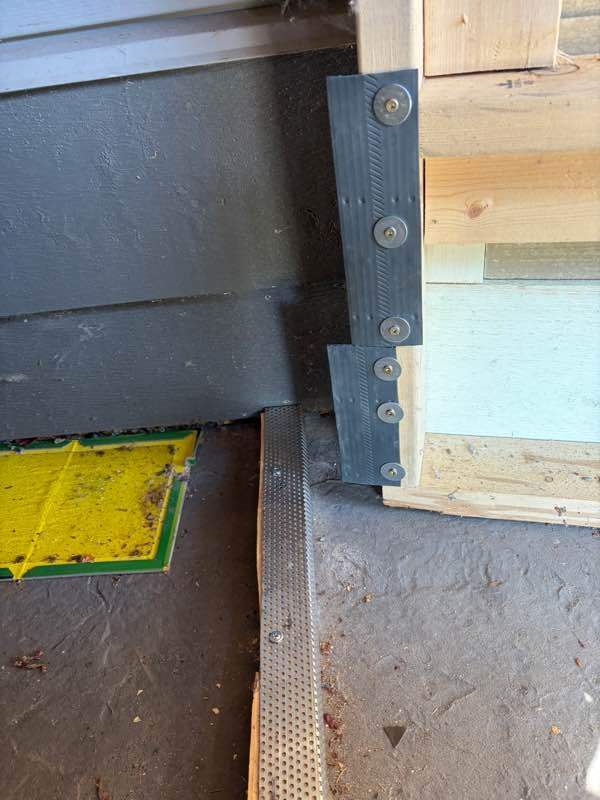
The gaps were spread around the lower part of the house. There were openings in the siding, gaps around the rock siding at the front, and spaces under the windows. At the back, the soffit met the concrete wall beneath the rear deck, and mice could reach that line by getting under the deck.
That last spot is easy to miss. Young mice can squeeze through a gap of about half an inch, and a line hidden under a deck can't be reached from inside the house at all. That is why the exterior routes kept working after the indoor sealing was done.
Custom flashing on the siding seam and a sealed deck line
Before the work, the homeowner was asked to pull the rear deck stairs away so we could get under the deck, and to move belongings about three feet back from the perimeter of the house.
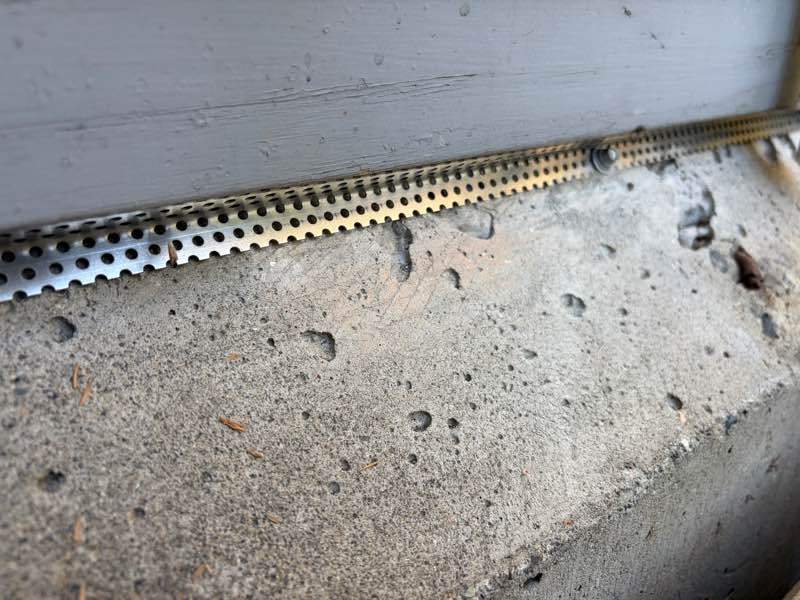
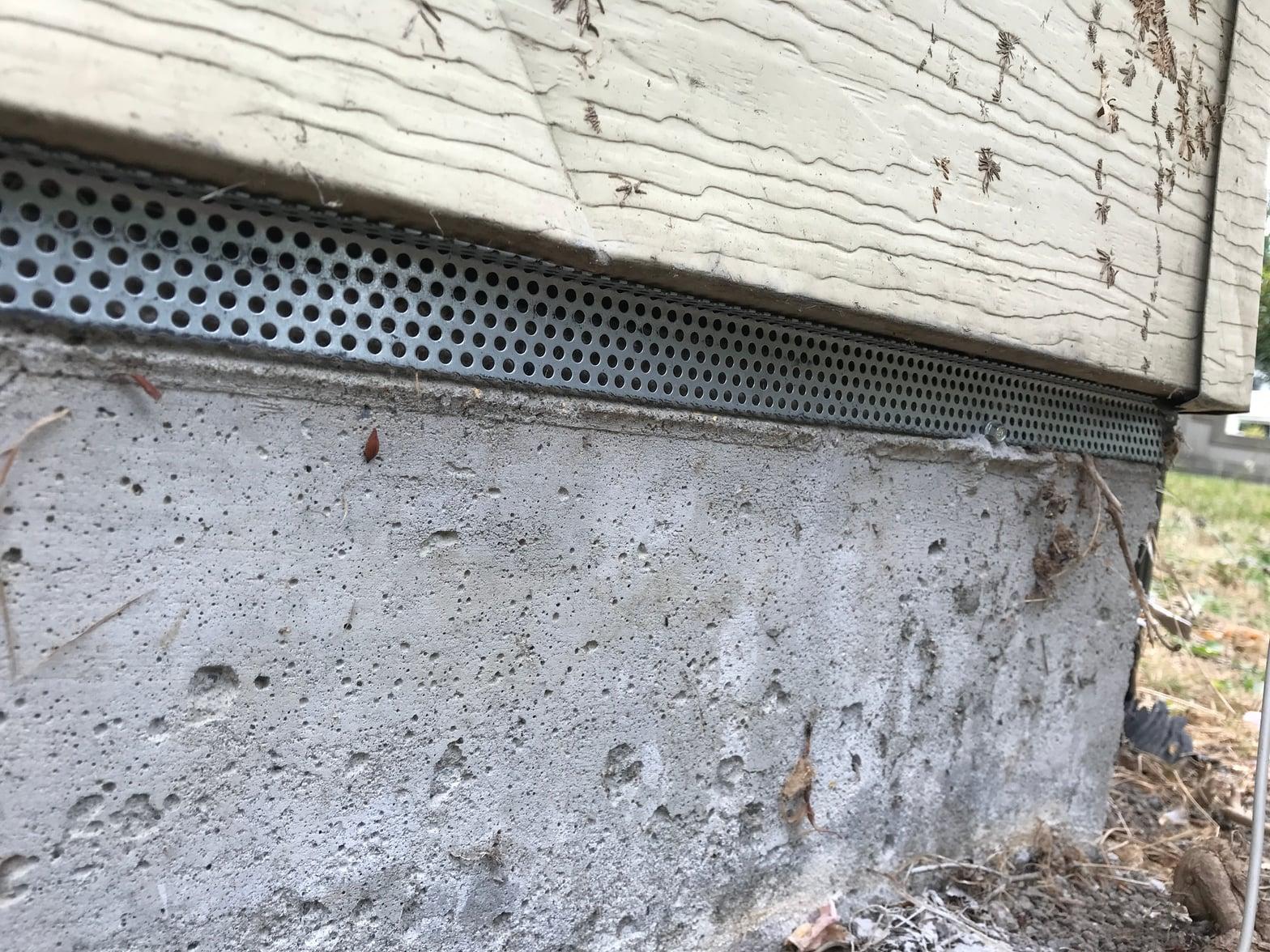
The exclusion itself was one main visit by one technician. We repaired entry points, gaps, cracks and any chew holes at ground level, spot treated the siding gaps where needed, and fitted excluders under the windows. We pest proofed around the rock siding, sealed the line where the soffit meets the concrete wall under the rear deck, and pest proofed under the deck. Along the seam between the siding and the foundation we installed custom perforated flashing where it was needed, about 75 feet in total.
The front porch was kept in reserve. If mice were still active in the home after the main exclusion, the next step would have been to lift the porch deck boards and seal underneath it as a separate job.
The follow-up visit in December checked the exterior work and the inside of the home. By then the client had reported no mouse activity in the first two weeks after the exclusion.
The Outcome
We were hired to stop mice from getting into a Langley home through ground-level gaps. The exterior entry points are sealed, and the client reported no mouse activity in the first two weeks after the work.
Ground-level entry sealed, no mice reported
- The mice were coming in through gaps outside the house, and those gaps are now closed.
- The client reported no mouse activity in the first two weeks after the exclusion.
- Custom flashing on the siding seam, along with the rock siding, window and rear deck work, closes off the lower structure.
- Workmanship on the treated areas is warrantied.
Interior trapping can deal with mice already inside, but it can't close the route they used to get in. With the exterior sealed, the homeowner's own interior trapping is no longer up against new mice coming in.
If mice keep showing up in your home despite indoor sealing, our ground-level pest proofing and entry point exclusion work starts outside, finding the routes so the sealing goes where the animals actually get in.
Some photos on this page are representative photos from similar jobs our crews have done, not photos of this property.
Need Pest Proofing?
Comprehensive exclusion audit and sealing of all entry points. The last pest service your property needs.
View Pest Proofing More pest proofing in Langley