

In this article
Yes, but it's a construction detail, not a product you buy. A pool area can be made rodent-proof with a concrete apron around it and a glass barrier at least a couple of feet tall, set flush to the concrete. A fence can be mouse-proofed from one side with buried mesh and climb guards, or with glass or acrylic panels on a footing. Either way, it's a big project.
What makes a pool area rodent-proof?
The version we'd guarantee starts with the ground. A concrete patio or walkway runs all the way around the pool, and a glass barrier at least a couple of feet tall sits flush to that concrete. The panels fit tight against each other, and the door closes flush.
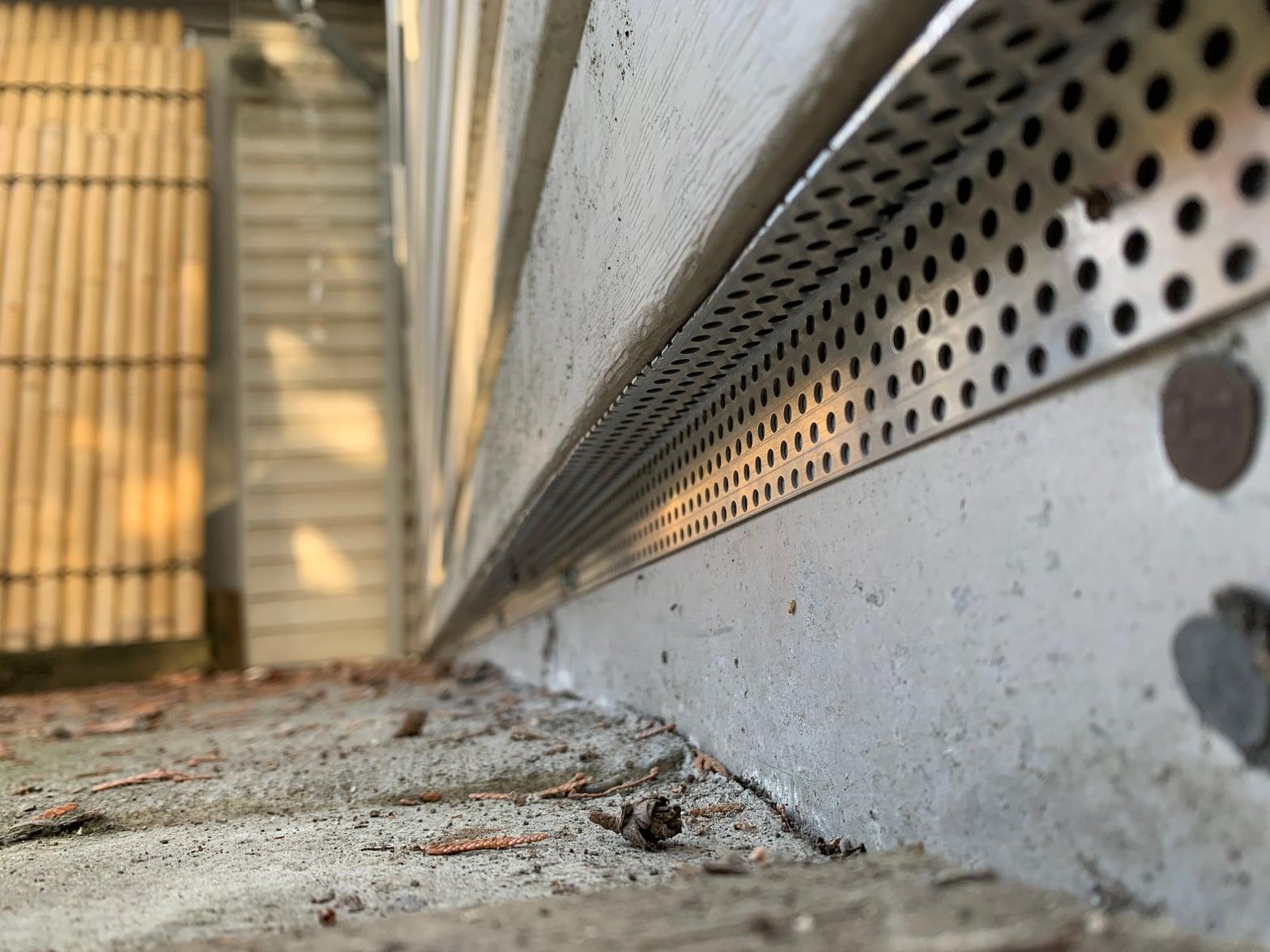
Flush is the detail that matters most. A barrier standing on soil, loose gravel or a lawn edge leaves a line along its base, and that line becomes the route. Set it on a hard surface with no gap underneath and there is nothing to dig under and nothing to squeeze through.
This is an old principle in building science. A 1994 review by Baker, Bodman and Timm states that rodent-proof construction is the most effective means of limiting rodent damage. The same review says new buildings should be designed to prevent rodent entry, so if your pool is still on the drawing board, that's the time to get this detail right. For the rat side of the problem, see our rat control for homes page.
Can a fence be mouse-proofed from one side?
Yes. We can fully mouse-proof a fence from one side so mice stay out of the yard behind it, but it takes one of two builds: a very well-built wood fence with buried mesh and climb guards, or a glass or acrylic fence on a footing with a mouse-proof mesh configuration under it. Neither is a bolt-on product.
| Option | What it needs | What to expect |
|---|---|---|
| Buried mesh alone | Mesh dug into the ground along the line | We wouldn't count on it past a few years without repair |
| Well-built wood fence | Buried mesh, climb guards and a tight base | Depends on keeping the boards in good repair |
| Glass or acrylic fence | A footing with a mouse-proof mesh configuration under it | Mouse-proof from one side when built this way |
| Pool apron and glass barrier | Concrete apron, panels tight to each other, a door that closes flush | The version we'd guarantee |
A mesh fence buried in the ground can work for a while. Treat it as a stopgap, not a permanent line.
The wood option depends on upkeep. Mouse entry warranties typically run one year, and deterioration such as rotting boards isn't covered, so plan on maintaining the boards yourself.
Why does the house have to be sealed first?
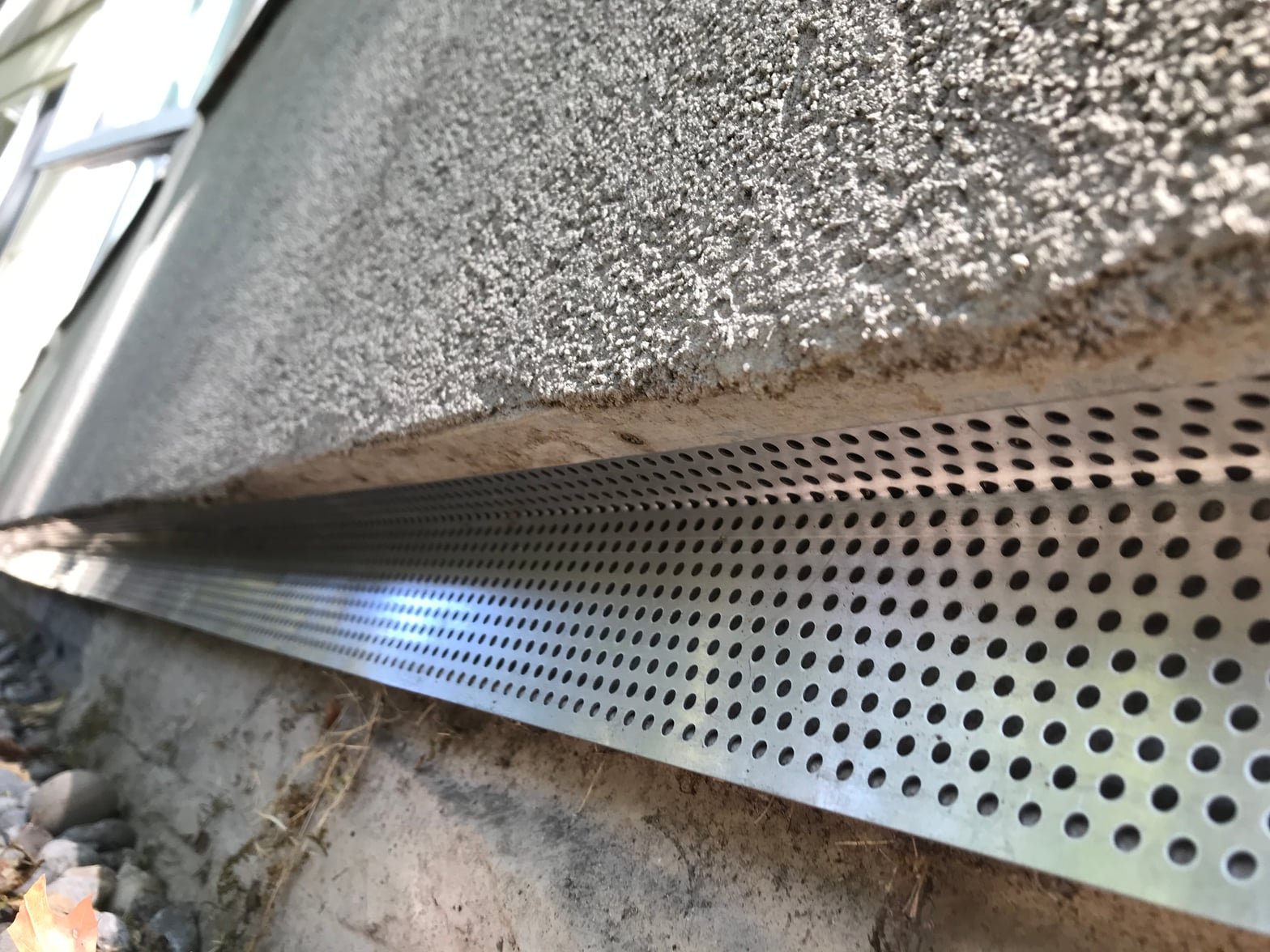
A fence does nothing about a hole in the foundation, so the house comes before the yard. We pest-proof the structure from top to bottom, including hidden entry points such as foundation holes and oversized utility line holes. In our experience, mouse problems usually trace to findable gaps at the foundation line, utility penetrations or the roofline. Baker, Bodman and Timm also note that poor maintenance or management practices can make even the best-constructed building susceptible to rodent entry.
Traps and bait on their own don't find the way in. On one of our jobs, a single mouse kept coming and going from under the dishwasher and stove. It dodged glue and snap traps, and copper wool and bait boxes placed outside earlier hadn't stopped it.
On another job, a homeowner suspected the route was where a cable runs from the basement into the garage, behind a board he couldn't remove. Years of DIY traps and a previous three-month bait contract hadn't solved it.
What goes wrong when a barrier isn't mouse-proof?
Mesh that looks like a barrier can still let mice through. On one of our jobs, mice were entering from a garbage area at a neighbouring apartment block, and the chicken wire the property manager had installed wasn't mouse-proof.
Chicken wire is easy to buy and easy to assume works. Mice fit through openings much smaller than most people expect, so the test is whether the mesh is fine enough, fastened down and closed at the edges, not whether it looks solid from a few metres away. A wood fence with a gap at the bottom fails the same way, and so does a glass panel with a gap under it.
How big a project is a rodent-proof yard?
It's a big project, and it comes after the house is sealed. If there's one company set up to take it on, it's us. For the house, scope depends on how severe the entry points are rather than the size of the house, which is why we can only define the work after an inspection. A yard adds the fence line itself and the material you choose.
If mice are already active, deal with that first. On a building with a year of intermittent mouse complaints despite bait stations, we recommended population trapping before the exterior exclusion inspection. We recommend trapping right away so activity doesn't build, and improper DIY trapping can feed the population rather than reduce it, so that part belongs with a technician.
Timing matters too. The exclusion team may be booked for weeks, and if the work is postponed, a new inspection may be needed because structural changes can happen in the meantime. In our service area, mouse calls peak in August, September and October. A trapping program can be paired with an exclusion assessment, where a technician maps the entry points and scopes the sealing work. You can contact us to arrange one.
Sources
- Rex O. Baker, Gerald R. Bodman and Robert M. Timm, Rodent-Proof Construction and Exclusion Methods (1994, University of Nebraska-Lincoln Digital Commons)
Frequently Asked Questions
NewGen Pest Control Team
Pest control specialists serving Greater Vancouver since 2016.7× Consumer Choice Award winners.