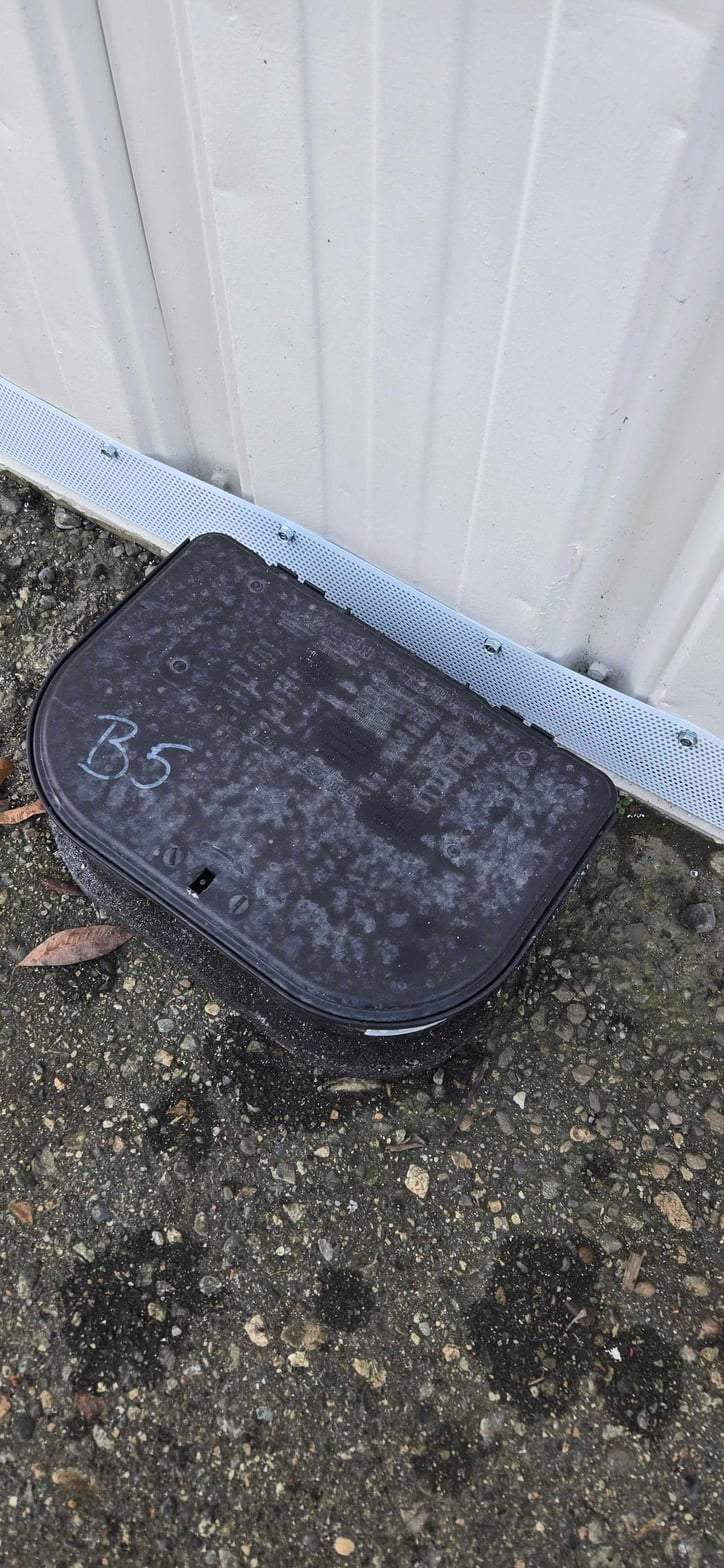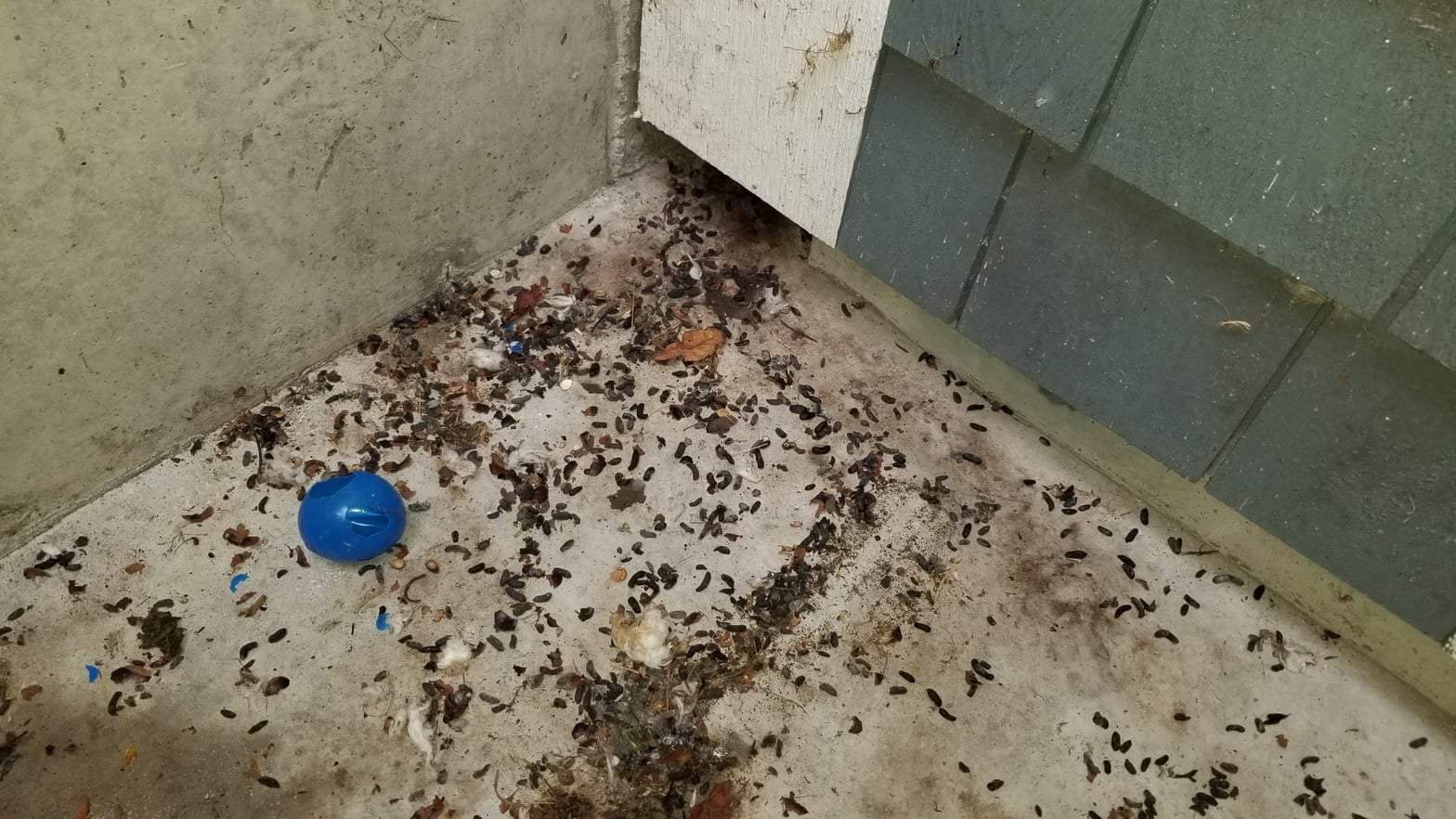
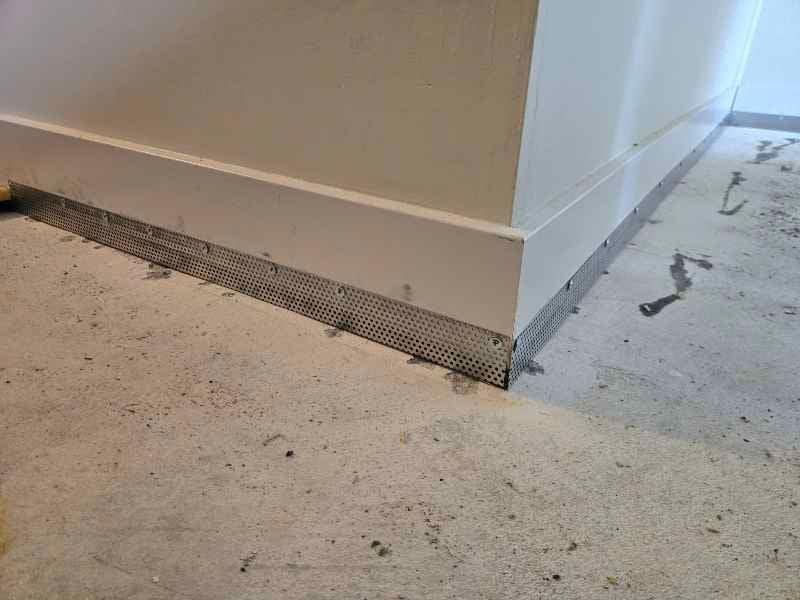
Rats working under a shared fence into a backyard garden
The homeowner kept a garden in his back yard, and rats were getting in along the fence between his property and the neighbour's. He had two questions: would a barrier along his own side of the fence be enough, or did the neighbour's side need the same treatment? And could the neighbour's corner, under concrete or roots, become a nesting area later?
Those questions shaped the job. Rats don't need a large opening. They travel along the base of a fence and dig through soil, gravel and root gaps, so a fence that looks solid from above can still have a route underneath. Paving stones and stored items along a fence line also give them cover, so those had to come out before any digging started.
An open route below grade and a garden in wooden planters
The fence line ran along an alley, and the alley-facing side had a wood fence, a metal fence and a garage foundation that each needed sealing. The garden itself was planted in wooden boxes, and that detail mattered for a second recommendation.
Planters have drainage holes in the bottom, and rats can climb up through them into the soil and the plants. That is a separate access point from the fence, which is why the planter advice was written up as its own recommendation rather than folded into the fence work.
On the neighbour's side, meshing both sides of the fence was an option for extra certainty against tunnelling, but the team's view was that it wasn't necessary. The work covered the homeowner's side of the fence and the alley-facing structures.
Trenching and mesh along the fence perimeter
The crew cleared the patio paving stones and stored items from along the fenceline, trenched along the fence perimeter and laid 1/2 inch mesh into the trench, then backfilled over it. That puts the barrier below grade, where rats dig. The alley-facing wood fence, metal fence and garage foundation were sealed with mesh as well, and eight rat trap stations went along the fenceline to monitor activity after the install.
The install ran over two days. The first day left a gap in the middle of the trench, which was flagged with neon ribbon and shown to the homeowner for safety. The crew returned the next day to finish the trenching and connect the alley mesh to the trench mesh.
Digging near roots can stress plants even when a crew works carefully. The team worked around the existing plants and landscaping and protected roots where possible, and the homeowner had the option of moving plants out of the work area beforehand.
Mesh is a deterrent, not a guarantee on its own. The service report made that clear: the exclusion will not single-handedly keep rodents out of the yard, so clean storage, sealing new gaps and watching for signs of activity still matter.
The Outcome
We were hired to stop rats getting into a backyard garden along a shared fence. The fenceline exclusion is complete.
Route under the fence closed
- The fenceline is trenched, meshed and backfilled, closing the ground-level route under the fence.
- The alley-facing wood fence, metal fence and garage foundation are sealed with mesh.
- The final visit to collect the trap stations recorded no pest activity along the fenceline.
- The planter recommendation gives the homeowner a clear next step for the drainage holes.
- A two-year warranty covers rats getting back in through the treated areas.
The fence exclusion stands on its own. The planter recommendation deals with a different route: lining tall metal planters with mesh anchored to the bottom, before the soil goes in, stops rats climbing up through the drainage holes. When the homeowner asked whether the fence work was enough, that was the explanation, and he accepted it.
For more on this kind of work, see our entry point exclusion and rat control services.
Some photos on this page are representative photos from similar jobs our crews have done, not photos of this property.
Need Entry Point Exclusion?
Professional-grade sealing of gaps, vents, soffits, and utility penetrations across the entire structure.
View Entry Point Exclusion More entry point exclusion in Vancouver