

In this article
Most rodent warranties cover the materials, not the result. Read the fine print and you'll usually find the company guarantees that its screws, foam and mesh stay in place, not that rats or mice stay out. Before you sign, ask three things: does it cover the result, are gaps they didn't treat covered, and what changes if you call back a fourth time? Get every answer in writing.
What does a typical pest control warranty cover?
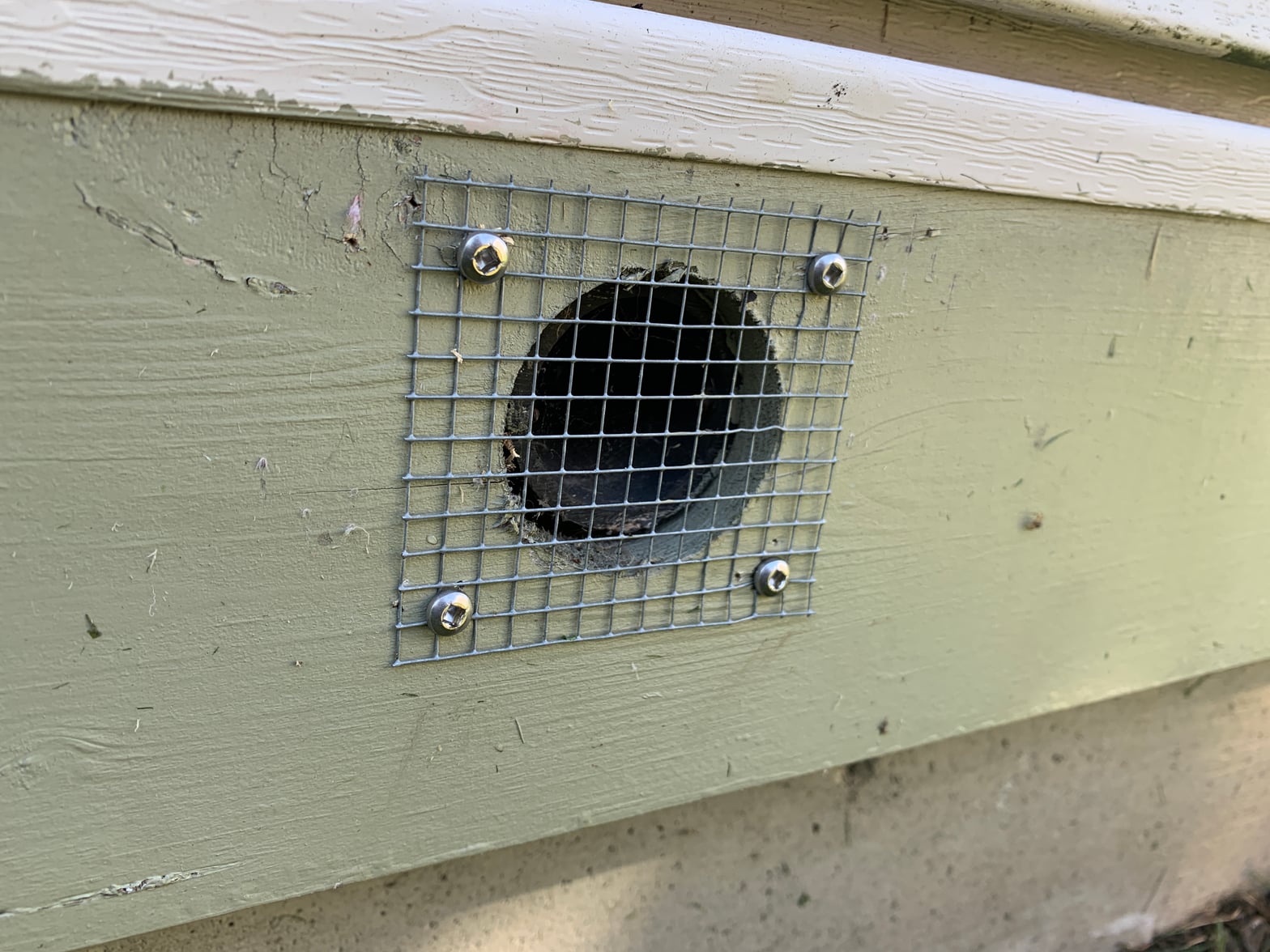
Usually the hardware. A typical rodent warranty promises that what the company installed will stay where they put it. If a mesh patch pulls loose or a foam seal fails, they come back and redo that patch. That is a materials warranty. It says nothing about whether you'll hear scratching in the attic next fall.
Texas A&M's extension guide to choosing a termite company tells homeowners to read the warranty carefully because it is "a guarantee of service, not a guarantee of the termite barrier," and warns against accepting guarantees that only vaguely refer to control ( Texas A&M AgriLife Extension). The same reading habit works for any rodent contract you're handed.
| What you're asking | Materials warranty | Result guarantee |
|---|---|---|
| What is promised | The installed hardware stays installed | You stay pest-free |
| Pests get in through a spot nobody treated | Outside the warranty, often labelled a "new" entry point | The company finds that entry point and fixes it |
| Pests come back | A repeat of the same service, or a free "treatment" | Re-investigation to find what was missed and fix the cause |
| What the work covers | The area you called about | The whole structure, inspected and sealed |
| What you get on paper | Terms on the parts | Documented entry points and the result, in writing |
Why isn't a gap they missed covered?
Because the warranty only applies to the sections they treated. If rats get in through part of the house nobody sealed, the contract treats it as a new entry point, even though the real problem was never fixed. That gap may have been there on day one. Nobody looked at it.
Termite contracts show where this logic comes from. The University of Kentucky's entomology department notes that most reputable firms won't warrant spot treatments at all, "since it is likely that termites will eventually find other points of entry into the building" ( UK Entomology). Penn State Extension adds that companies limit their liability where additions to the original structure haven't been treated ( Penn State Extension). In plain terms: a partial job can't honestly carry a whole-house promise. Rodents work the same way. Seal the hole you were shown and they use the next one along the foundation, the roofline or the vent you didn't check.
Why does the same service keep coming back?
Because for a lot of warranties, the callback is the guarantee. Call enough times and someone returns to repeat the service that already failed, or offers a free "treatment." That isn't a fix.
Traps and bait deal with animals already inside. They don't change how those animals got in. As long as the entry stays open, the next rats from the yard, the neighbour's property or the sewer line find the same route. This is one reason we don't use rodent poison around homes: it can make a house quiet for a while without making it closed.
Ask yourself what is different about visit four. If the honest answer is "nothing," you're paying in time and frustration for a cycle, not a result.
Why do some companies wait for no activity before sealing?
Some companies won't do exclusion until there has been no rodent activity for a set period. That means they seal up when no rodent is around to show whether the work holds, and even then they don't guarantee you'll be rodent-free.
We seal while animals are still present, because that is when you learn whether the work is right. One-way doors let rodents leave and stop them coming back. On one of our jobs where rats and mice were both present, the rat door went in first and was replaced with a mouse door after about two weeks. The building gets tested by the animals that were actually living in it.
What we find when earlier treatments didn't work
On one job, the owner of a duplex reported two to three years of unsuccessful treatments by other companies on large rats inside the building. On another, rats came back after the homeowner tried their own poison. On a third, trapping and baiting alone had not stopped the problem, and we recommended a trapping program with an exclusion assessment because sealing the entry points was what lasting control needed.
What the full inspection turns up varies a lot from house to house:
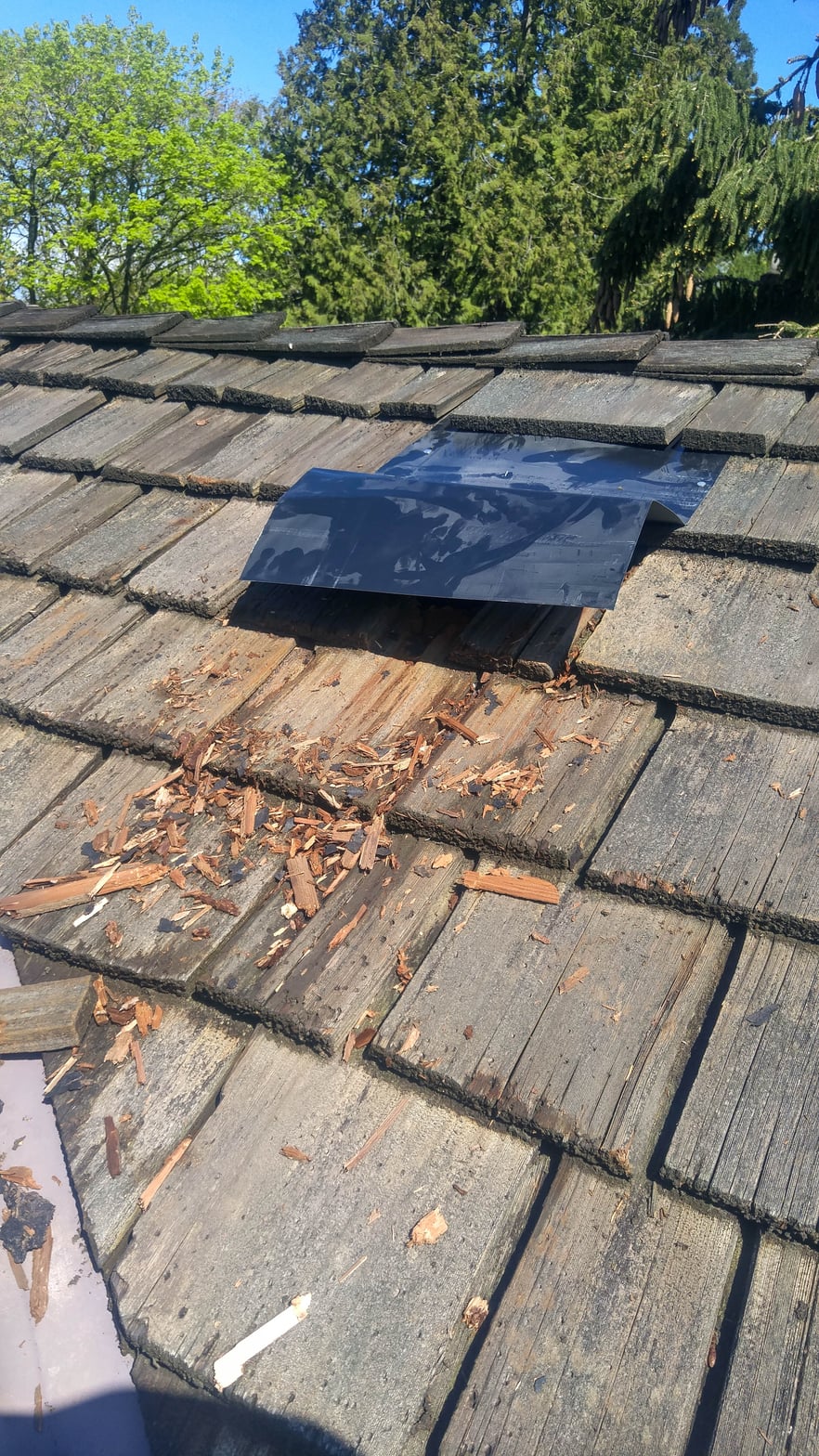
- On a home with a clay tile roof, gaps ran along the entire gutter line, and rats were jumping across from the neighbour's overhanging roof. Full exclusion there was a multi-day, two-technician job.
- On another property, the gutter line was clean except for one hole. There was a single ground-level entry point, and many deep tunnels suggested a burrow complex.
- On another, roof rats had jumped over from neighbouring properties and were living in the attic.
- In multi-unit buildings, rodents move easily between units, so we recommend getting building management involved for long-term results.
The point is that you can't know which of these you have from the spot where you heard the noise. On one job, rain kept our technician off the roof, so the first inspection was incomplete and the roof entry points hadn't been checked yet. An inspection that skips the roof isn't a whole-structure inspection, and a guarantee built on it would be a guess.
Why can a result guarantee only come after a whole-structure inspection?
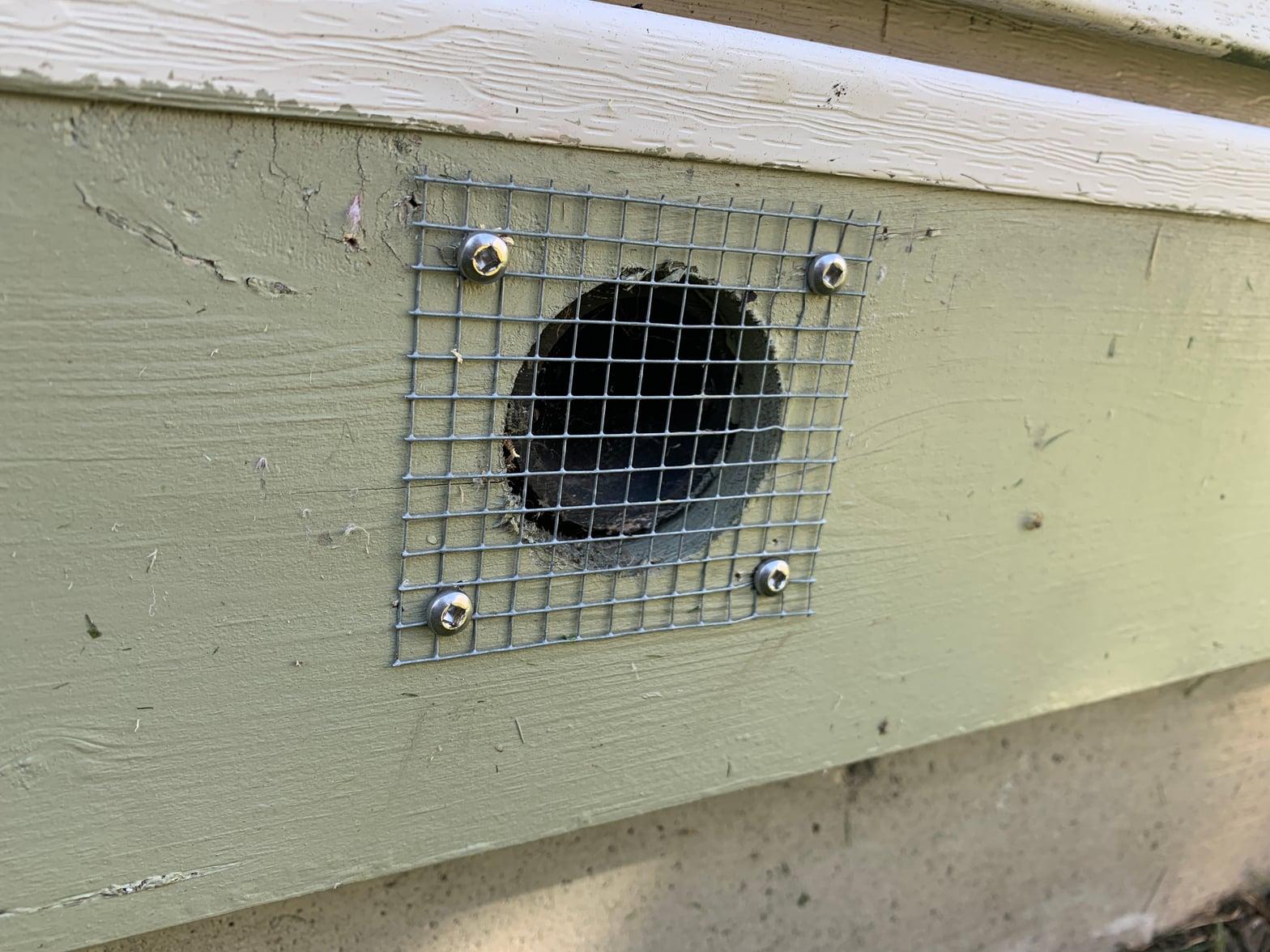
Because you can only promise a building is closed if you've looked at all of it. We inspect the entire structure: every gap, vent, pipe and construction flaw, not just the spot you called about. We document every possible entry point and fix every one. That is what lets us guarantee the result instead of the parts.
Here is what our guarantee covers. You stay pest-free. If pests find an entry point, we find it and fix it as part of the guarantee. If they come back, we re-investigate, find what was missed and fix the actual cause rather than repeating the same service. Every entry point is documented, and we stand behind the result in writing. You can read how this works on our guaranteed rodent exclusion page.
Any guarantee, ours included, has terms, and you should read them. On one job, our exclusion guarantee ran for a year on the condition that the work wasn't tampered with. Texas A&M's guide recommends asking for the conditions arising from the owner's own action or inaction that could void a warranty, along with any areas excluded from treatment ( Texas A&M AgriLife Extension). That's a fair request of anyone.
What should I ask before I sign?
Before you book anyone, including us, call two or three companies and ask the same three questions:
- Does your warranty cover the result, or just the materials you install?
- If pests get in through a spot you didn't treat, is that covered?
- If I have to call you back three times, what actually changes on the fourth visit?
Then ask us the same three. We'll put our answers in writing, and you should expect the same from every provider. As Texas A&M's guide puts it, a warranty is no better than the person or firm who gives it ( Texas A&M AgriLife Extension).
Timing matters too. In our call records, rat calls in our service area peak from August through October, with another rise in April. If you're signing a contract heading into fall, you want the coverage clear before the busiest stretch, not after the first callback. If you'd like the questions answered for your own home, get in touch or start with our residential rat control page.
Sources
- Texas A&M AgriLife Extension, How to Select a Termite Control Service: https://extensionentomology.tamu.edu/wp-content/uploads/sites/3/2017/01/How-to-select-a-termite-control-service-E369.pdf
- University of Kentucky Entomology, Termite Control: Answers for Homeowners: https://entomology.mgcafe.uky.edu/ef604
- Penn State Extension, Eastern Subterranean Termites: https://extension.psu.edu/eastern-subterranean-termites/
Frequently Asked Questions
NewGen Pest Control Team
Pest control specialists serving Greater Vancouver since 2016.7× Consumer Choice Award winners.