

In this article
Yes, when the job is complex: an attic that's hard to get into, a poison program that has already failed, or roofing work that needs coordinating. For a cabin out of town we don't come out to do part of an inspection. We plan a full site day that covers the whole structure, from ground level to the roof, and ends in a written report and plan.
What does a full site day cover?
The day is built to find every way in. Our crew works around the whole structure and looks for every entry point and flaw, from ground level up to the roof. We go through the roof vents with cameras and scopes, so we can tell you exactly what state the attic is in and whether it needs remediation. We also take the roof specs.
After the visit you get a full report and a plan for the work. That day pays off later. With the whole site assessed, the project can be put together efficiently, and you may not need four different contractors to get it done.
There's no point travelling out to do 80% of an inspection. Exclusion depends on finding every gap, and a partial look leaves some of them unfound.
Why can a site day include one-way doors?
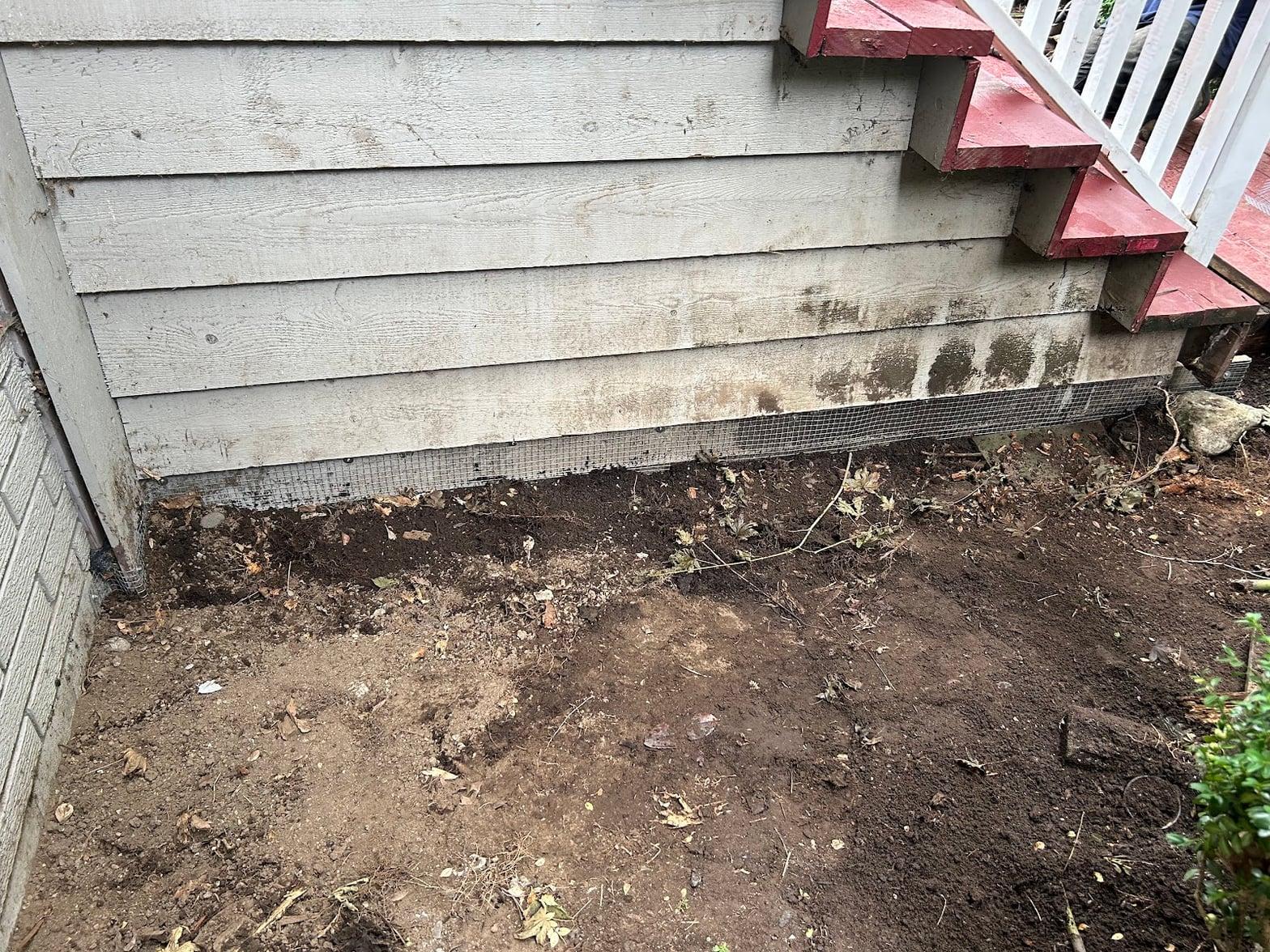
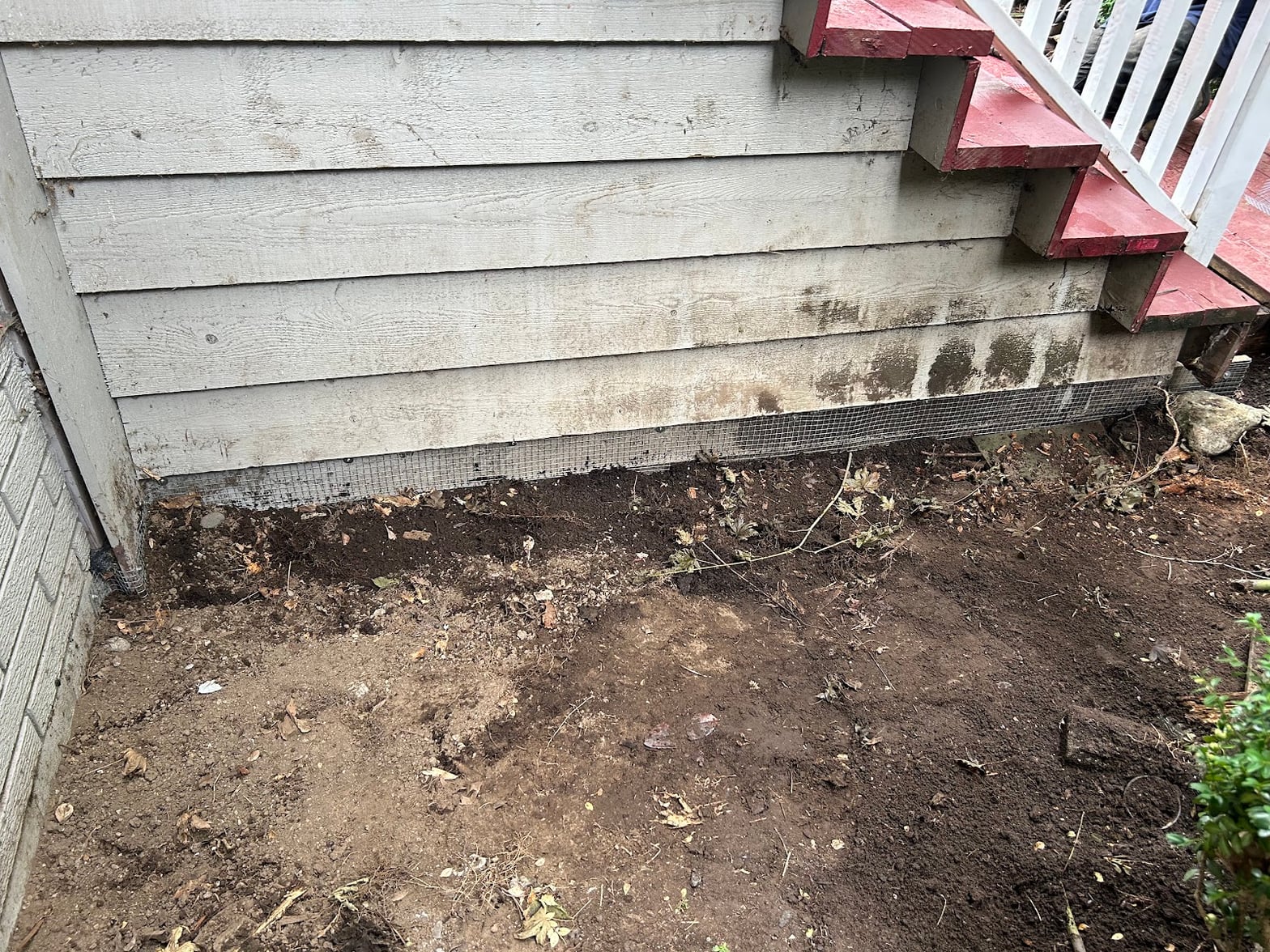
If we find on the day that rats are getting in at ground level, we may be able to do a couple of hours of work right then. One-way doors and temporary materials get the rats out and keep them out, which gives the owner some breathing room. The permanent, tidy work is quoted and done on a later visit, with no rush.
A one-way door lets animals leave on their own and stops them getting back in. When rats and mice are both present, the rat door goes in first and is replaced with a mouse door after about two weeks.
What should you send before the visit?
Photos and video let us plan the day before we arrive. Send:
- photos of the house from different angles, standing back so the whole structure is in frame
- close-ups of suspected chew holes or staining
- any video you have of the attic
If you know the building well, walk through it with us. Owners who know where the vents, pipes and utility lines go into the structure have local knowledge that helps.
When our crew commits to the travel, everything has to be ready on the day: access, any other trades and tarps. That's why we prefer to lead the communication with other trades ourselves.
When is the travel worth it?
It's worth it when the job is complex. These are the situations where a planned full day earns its place:
| Situation | What the full site day does |
|---|---|
| Attic that's hard to get into | Cameras and scopes through the roof vents show the attic's condition and whether it needs remediation |
| Poison program that has already failed | Finds and plans the sealing of every entry point, which bait doesn't do |
| Roofing work to coordinate | Roof specs, access and other trades are planned together |
| Rats getting in at ground level | One-way doors and temporary materials can go in on the day |
Exclusion only works if every gap is found. One missed crack and the rats can be back the next day. The same problem shows up in a historical study of ship rat guards: some were placed with large gaps between guard and rope, allowing rats to squeeze through ( Journal of Global History, 2023).
Failed programs are the other big reason. Many of our clients come to us after a poison-box program has left them with the same problem, because bait boxes don't fix the structure. On one of our jobs, a duplex owner reported two to three years of unsuccessful treatments by other companies, with large rats still inside. On another, trapping and baiting alone had not stopped the problem, so we recommended a trapping program together with an exclusion assessment, because sealing the entry points is what gives lasting control. Research on rural homes in the United States suggests that relatively inexpensive rodent proofing can decrease how often and how intensely rodents are active inside houses ( At home with Mastomys and Rattus, 2017).
Some roofs need more than a day of sealing, and the site day is where that becomes clear. On one clay tile roof, gaps ran along the entire gutter line and rats were jumping across from a neighbour's overhanging roof, which made full exclusion a multi-day, two-technician job. On another large clay tile roof with rats in the attic, we estimated about five to eight days of two-technician work.
The case for a full day is weaker when the problem is simple, such as a single known gap at ground level. Photos sent ahead help show which kind of job you have.
Why stop using poison before the house is sealed?
Stop using poison anywhere on the property until the house is sealed. The rats outside are the same ones living in the attic, and poisoned rats can die inside the insulation and the walls. Poison also does nothing to close the openings they use to get in.
If you're weighing a remote job, start with the photos and a clear picture of how the building could be letting rats in. Our rat control page explains how we approach homes, and you can also browse our pest library.
Sources
Frequently Asked Questions
NewGen Pest Control Team
Pest control specialists serving Greater Vancouver since 2016.7× Consumer Choice Award winners.