Rats climbing block walls into the rafters
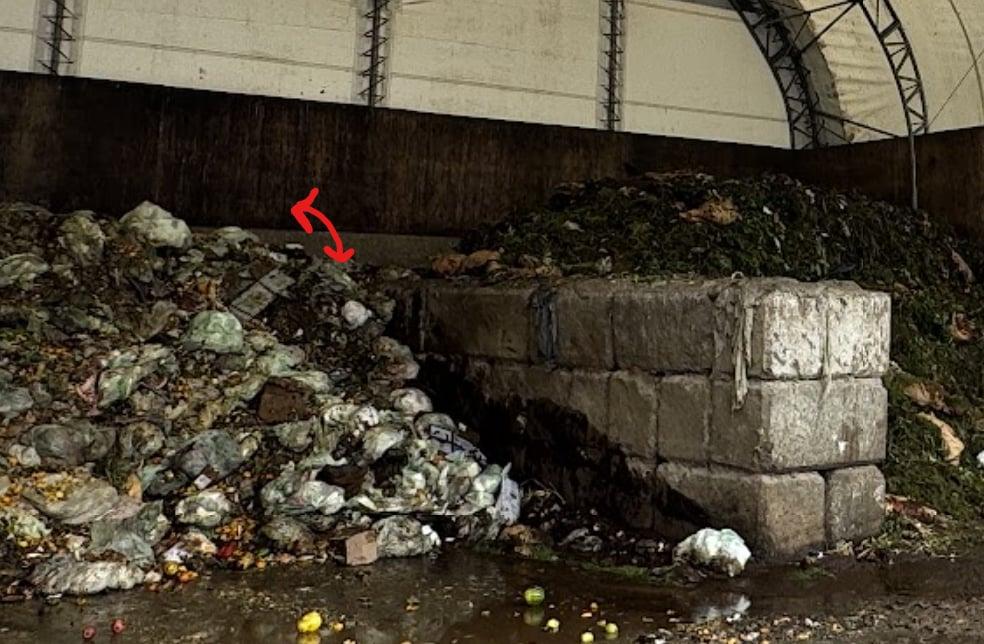
This North Vancouver site is a large covered tent structure built on concrete block retaining walls, with loaders moving product through the interior until late at night. Rats had worked out that the walls were a ladder. They climbed the perimeter and the middle dividing wall, reached the upper ledges, and got into the rafters, where they were causing damage.
The climb guard work was originally part of a larger rehabilitation of the structure, with several trades lined up. By the time the work was ready to go ahead, the washing and tent repairs were done. Inspection behind the plywood walls had found no evidence of nesting, so the plywood removal came out of the plan. What remained was the core problem: rats were still getting up the walls, and the building needed a barrier they couldn't climb.
A wall rats could jump from, and a reason to wash first
A climb guard only works if there is no way around it. On this site the weak point was where the middle retaining wall met the perimeter wall. Even with the perimeter flashed, a rat could climb the dividing wall, jump from its top across the flashing, and land on the perimeter ledge.
The simplest fix was to remove the top block at that junction so the jump became too far. That block was hard to reach, many blocks lacked working lift hooks, and the client planned to rework that whole section of wall later. Pulling one block out early didn't make sense. The plan became roughly 30 feet of extra flashing wrapped around the middle wall, so it could no longer serve as a bypass. We also recommended finishing any top-course wall work before guards went on in that area, because flashing installed on blocks that are about to be replaced would have to come off again.
Sequencing mattered on the main runs too. The flashing is set with construction adhesive as well as concrete anchors, and adhesive needs a clean surface. Installing after the blocks had been pressure washed gave a proper bond and a flush, watertight line. Our technicians judged there weren't enough rats left in the upper areas to undo that cleaning in the week or two between washing and installation, so the short gap was not a concern.
The biology also explains why the voids inside the upper walls mattered less than they first appeared. Once the guards are in and the middle wall can't be used as a jump-off point, any rat living up high has to come down to the floor to feed, and it can't climb back up. Burrows above the guard line stop being a long-term issue.
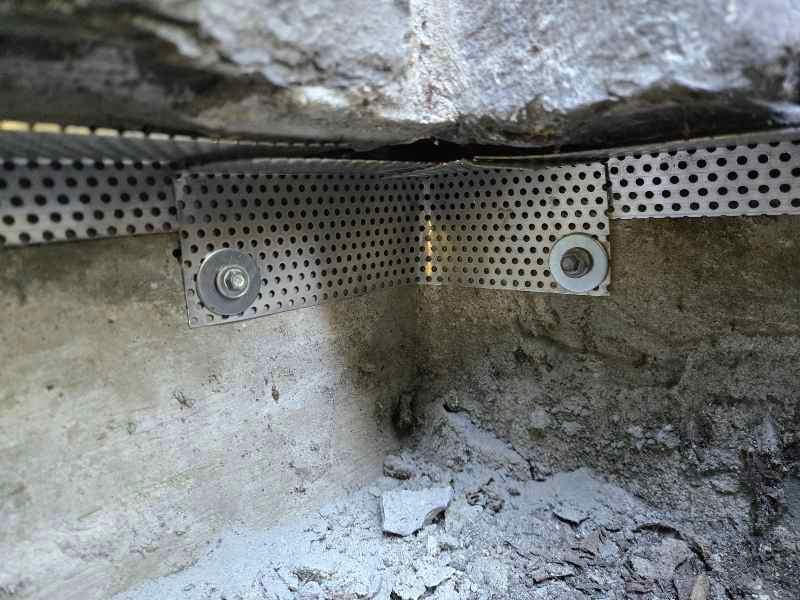
Anchored, adhered climb guard on both sides of the perimeter
The scope came down to one focused service:
- Interior and exterior climb guard flashing along about 500 feet of perimeter wall, adjusted to field conditions
- About 30 feet of added flashing around the middle dividing wall
- Concrete anchors plus adhesive on every run
- Treatment of accessible active burrows and voids during the after-hours portion of the work
The anchors hold the flashing in place against a working facility. The adhesive keeps the metal from warping or waving, which would give rats a grip, and stops water and moisture from collecting behind it. The installation started in mid-September. Exterior runs went in first while the facility was operating. Interior runs followed in the evening, once loader traffic eased and the product along the walls was cleared, so the crew could move continuously down each wall. A separate wood barricade removal was dropped from the scope.
The Outcome
We were hired to stop rats from climbing the walls into the ledges and rafters of this covered facility. The climb guard is installed on both sides of the perimeter and around the dividing wall, and the job is closed.
Walls guarded, climb route closed
- The interior and exterior perimeter walls now have a continuous smooth barrier that rats can't climb to reach the upper structure.
- The middle retaining wall no longer works as a jump-off point onto the perimeter ledge.
- Every run is anchored and adhered, so the flashing stays flat against a busy loader floor and doesn't hold moisture behind it.
- After the install, the client approved an extended rat population management program to keep pressure on the rats moving in at ground level.
The climb guards dealt with the damage overhead. The ground-level population was a separate question, and the client's own read was that most of the rats were coming from off site. The follow-on program is ongoing population management, with visit frequency reassessed as activity drops. It runs alongside the site's existing monthly service.
For facilities with block walls, open rafters and a steady food source, a physical barrier is usually what changes things. See our commercial pest programs, our approach to entry-point exclusion, and how we handle rat control on working sites.
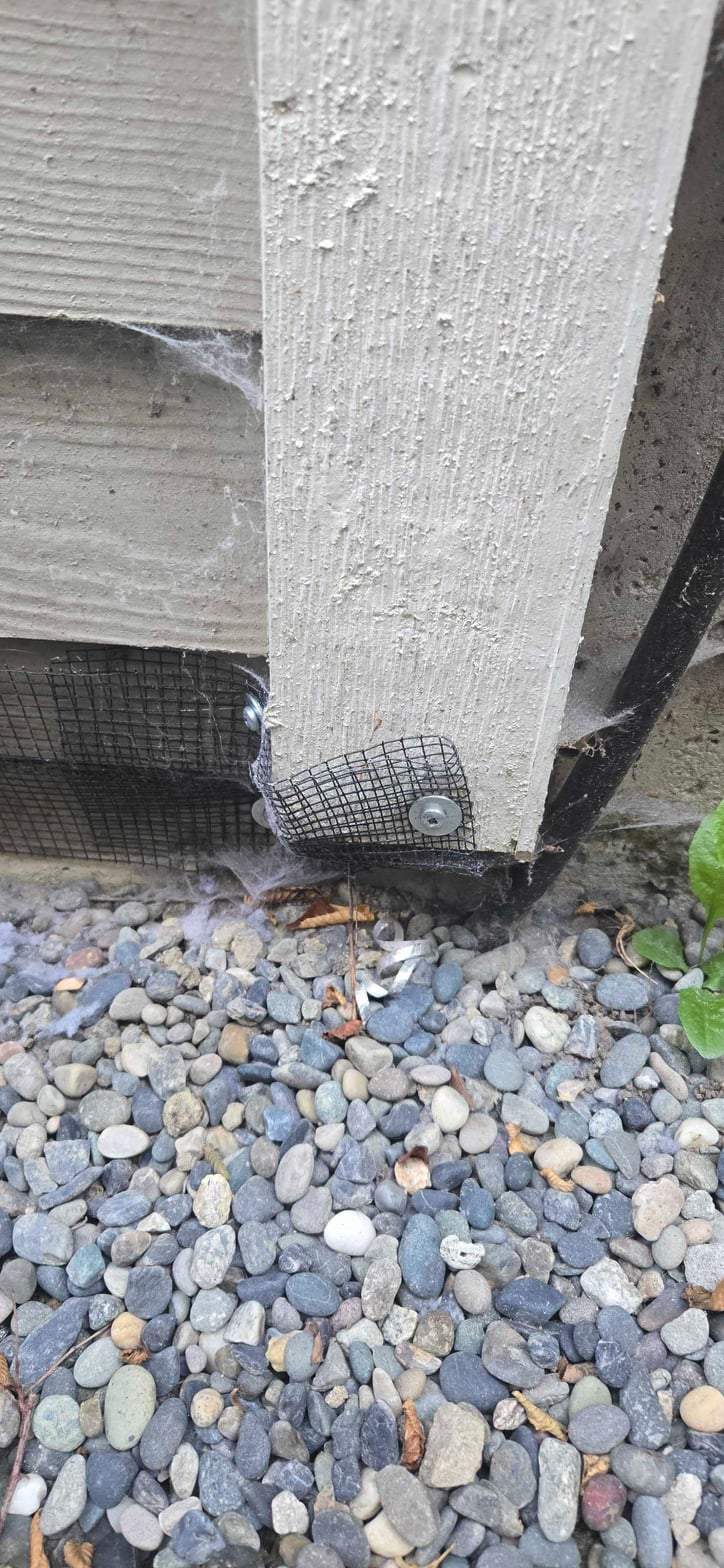
Some photos on this page are representative photos from similar jobs our crews have done, not photos of this property.
Need Rat Control?
Inspection-first rat control: we find how they're getting in, seal those access points, reduce activity, and follow up so results last.
View Rat Control More rat control in North Vancouver