

Rats and mice working through a mechanical bay
An auto shop in Surrey had a rodent problem that had outgrown whatever they'd tried before. Staff were finding droppings through the mechanical bay, chewed wiring, and dog food dragged into the trunk area of a parked vehicle. A previous pest control contractor had stations out along the building, but the activity wasn't slowing down and the shop was losing real money to vehicle damage most nights.
The owner wanted the rodents out and a program in place that would actually hold. That meant going past trap checks and looking at how the building itself was letting rodents in.
Gaps at every door and a shared fence line
A walk-through of the exterior found the building wasn't sealed anywhere near tight enough for the volume of rodent pressure on site. Garage door sweeps had worn down, with stuffing pushed up and no longer forming a seal. Man doors had gaps. Inside, droppings and small chewed holes through ceiling membrane in the mechanical bay showed mice working through from above, and fresh rat sign, including holes and droppings near a spot already sealed, showed rats had moved in separately from the mice, likely drawn from the neighbouring property along the building's east fence line.
There wasn't one single entry point doing all the damage. Multiple gaps around the building envelope were letting rodents in from different directions, which is typical for an older commercial structure with several garage bays and years of minor wear on door seals.
Sealing the envelope and building out the monitoring program
Exclusion work sealed the major entry points around the building using flashing, trench-and-mesh, and concrete infill, with new sweeps installed on the garage and man doors. One-way doors went in at known entry locations to let rodents already inside leave without coming back in, sized for rats and later swapped for mouse-sized doors once activity patterns became clearer.
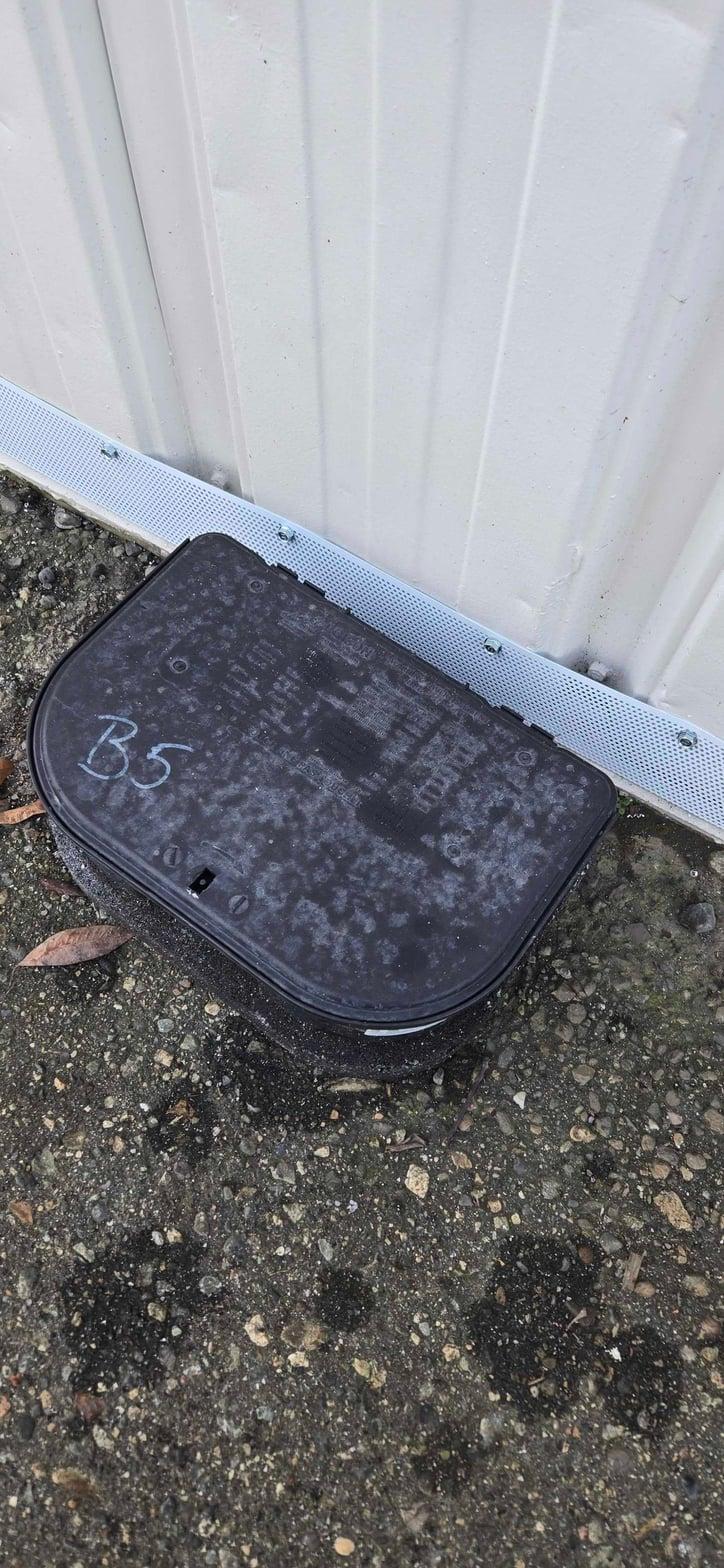
Monitoring was built out in stages as walk-throughs identified more coverage gaps, eventually settling at 35 interior and 19 exterior stations across the building, including spots near the front fence, the generator, and the covered service area support pillars. An early rat capture confirmed the exclusion work needed to extend to rat-sized gaps, not just mouse-sized ones.
The east fence line, shared with the neighbouring property, was flagged as a likely rodent corridor and scoped for a dedicated barrier on top of the building envelope work. Ongoing weekly service kept the program honest, and when later asphalt work on the property disturbed some of the sealing, the issue was caught on a routine visit and logged for repair rather than being left until the next complaint.
The Outcome
We were hired to stop rats and mice from getting into the shop and damaging vehicles and wiring, and to put a monitoring program in place that would catch problems early.
Rodent activity resolved, monitoring in place
- Major entry points around the garage doors, man doors, and exterior walls are sealed with flashing, mesh, and concrete infill.
- The one-way doors got rodents already inside out of the building, and were swapped to the right size once rat versus mouse activity was clear.
- The monitoring network covers 35 interior and 19 exterior stations, giving full coverage of the shop floor, utility areas, and exterior perimeter.
- Recent weekly reports show no rodent captures and no fresh signs of activity, with exterior bait consumption now tied to ants rather than rodents.
- Structural damage from later asphalt work was caught and logged for repair during routine service instead of waiting for a new complaint.
The east fence line, where the neighbouring property was feeding ongoing pressure, was scoped for a dedicated barrier alongside the building envelope work. For a facility this size with this many doors and this much vehicle traffic, closing the building isn't a one-visit job, which is why the weekly monitoring matters as much as the initial seal. Shops dealing with similar chewed wiring or vehicle intrusion can read more on our rodent control and entry-point exclusion pages, and on rats and house mice for the biology behind why they keep coming back through the same kinds of gaps.
Need Entry Point Exclusion?
Professional-grade sealing of gaps, vents, soffits, and utility penetrations across the entire structure.
View Entry Point Exclusion