

In this article
No, we don't use poison at all, good or otherwise. It works slower than people expect, rodents that eat it inside a house tend to die and rot in the walls, and it does nothing about the gaps they're using to get in. We seal the building first, install one-way doors, then trap. Once rodents are cut off from outside, they're usually caught very quickly.
Is poison the fastest way to get rid of rats?
No. Most commonly available rodent baits are multiple-dose anticoagulants, and rodents have to feed on them for several days before they work ( University of Missouri Extension). Anticoagulants kill by stopping the blood from clotting, and symptoms may not show for up to five days after exposure ( National Pesticide Information Center).
That means a week or more of a rat still running through your walls, chewing and leaving droppings. It also assumes the rat eats the bait. Rats are cautious feeders, and one bait-shy rodent that won't touch the station can keep a problem going for months. Even the National Pesticide Information Center describes rodenticide baits as providing short-term control of an infestation ( NPIC).
What happens when a rat eats poison inside your house?
It usually dies somewhere you can't reach. HealthLinkBC puts it plainly: poisoned rodents can crawl away and die, their bodies can be hard to find, and the result is an unpleasant odour ( HealthLinkBC).
In a house, "somewhere" means a wall cavity, a floor space or deep in the attic insulation. Getting to it often means opening drywall or a ceiling. So when a customer asks for the good poison, our answer is simple: if the rodents are in your house when they eat it, they will die and rot inside your walls.
The same HealthLinkBC guidance opens its section on poison by saying it is not a good idea to use poison or baits to control rodents at all.
Why doesn't poison stop rats from coming back?
Because the opening is still there. Poison removes some of the rats that are using a gap, then the next rats find the same gap. If baiting worked as well as it's sold, exclusion would never be needed.
We see this in our own work:
- On one job, rats were eating a homeowner's plants and came back after the homeowner used their own poison.
- At a duplex, the owner reported two to three years of unsuccessful treatments by other companies on large rats inside the building.
- On another job, trapping and baiting alone had not stopped the problem. We recommended a trapping program with an exclusion assessment, because sealing entry points is what gives lasting control.
There's a building-science reason behind this too. Rodent control programs often are not effective indoors unless rodents are also controlled outdoors ( University of Missouri Extension). The outside population and the inside population are the same animals, connected by whatever hole they're using. For more on why bait-first programs stall, see our piece on rethinking rodent control beyond the rodenticide trap.
Where should rodent poison never be used?
Never inside a home, and never outside anywhere the rodents could still get into the building. The second half matters as much as the first. A bait station against the foundation of an unsealed house is effectively an indoor poison program: the rat feeds outside, walks in through the gap and dies in your wall days later.
Then there's everything else that eats bait. All rodenticides can be toxic to mammals and birds when eaten, and people, pets and wildlife can suffer serious health effects from a single dose ( NPIC). Baits are made with attractants like peanut butter, molasses or grains, which also appeal to children and pets. Poison also travels up the food chain: secondary poisoning happens when an animal eats poisoned prey, and some anticoagulants carry high secondary risks to hawks, owls, dogs and cats ( NPIC fact sheet, 2016).
Even the guidance that allows for bait says to consider prevention, sanitation and exclusion before using a rodenticide ( NPIC). We just start there and stay there.
| Poison program | Seal and trap | |
|---|---|---|
| How fast it acts | Several days of feeding, symptoms up to five days later | Rodents cut off from outside are usually caught quickly |
| Where rodents end up | Often dead inside walls or ceilings | In a trap you can check and remove |
| Entry points | Left open | Sealed |
| Pets, kids and wildlife | Exposed to bait and poisoned carcasses | No toxicant on the property |
| What happens next | New rodents use the same gaps | Building stays closed |
How do we get rid of rats without poison?
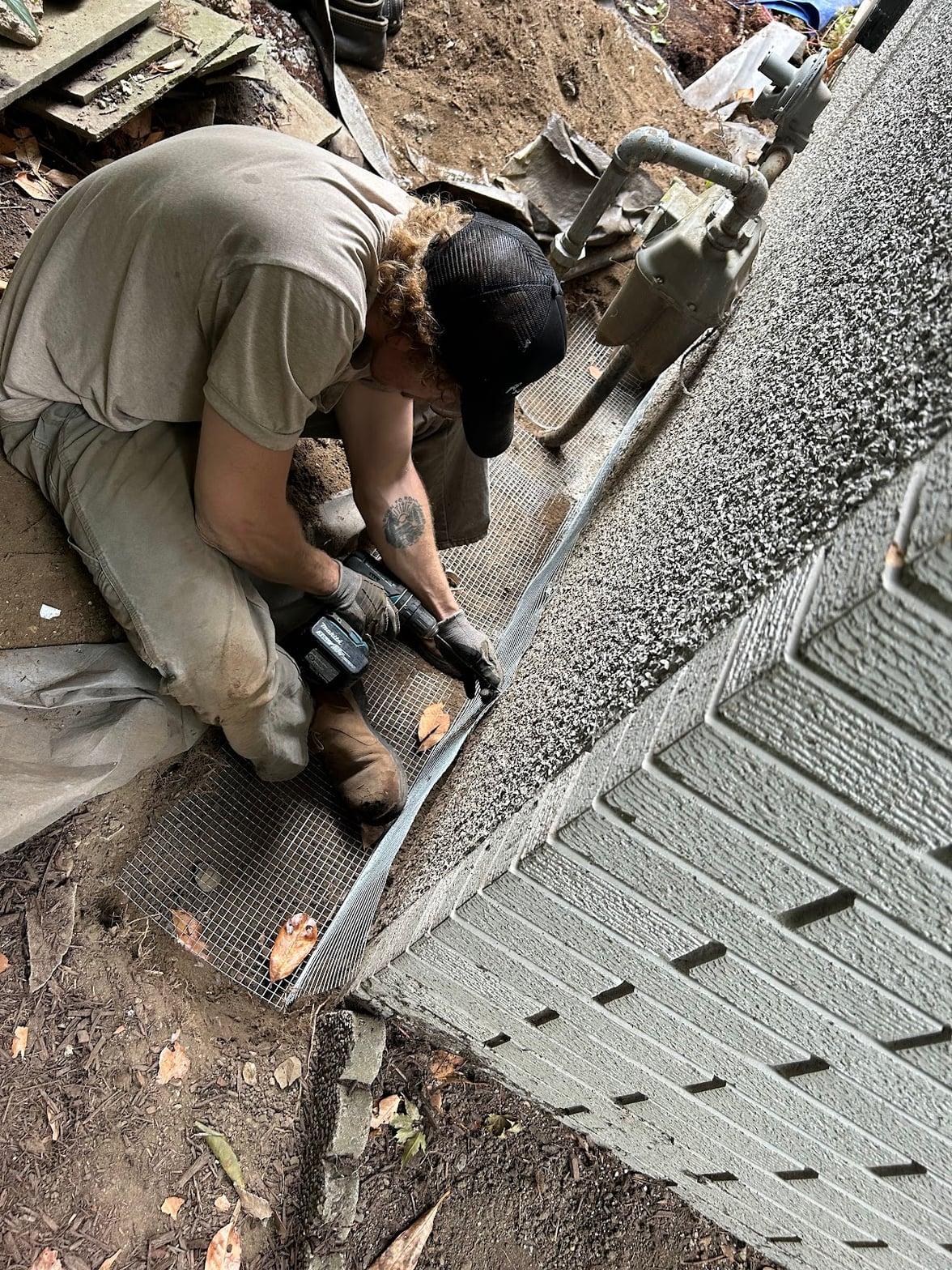
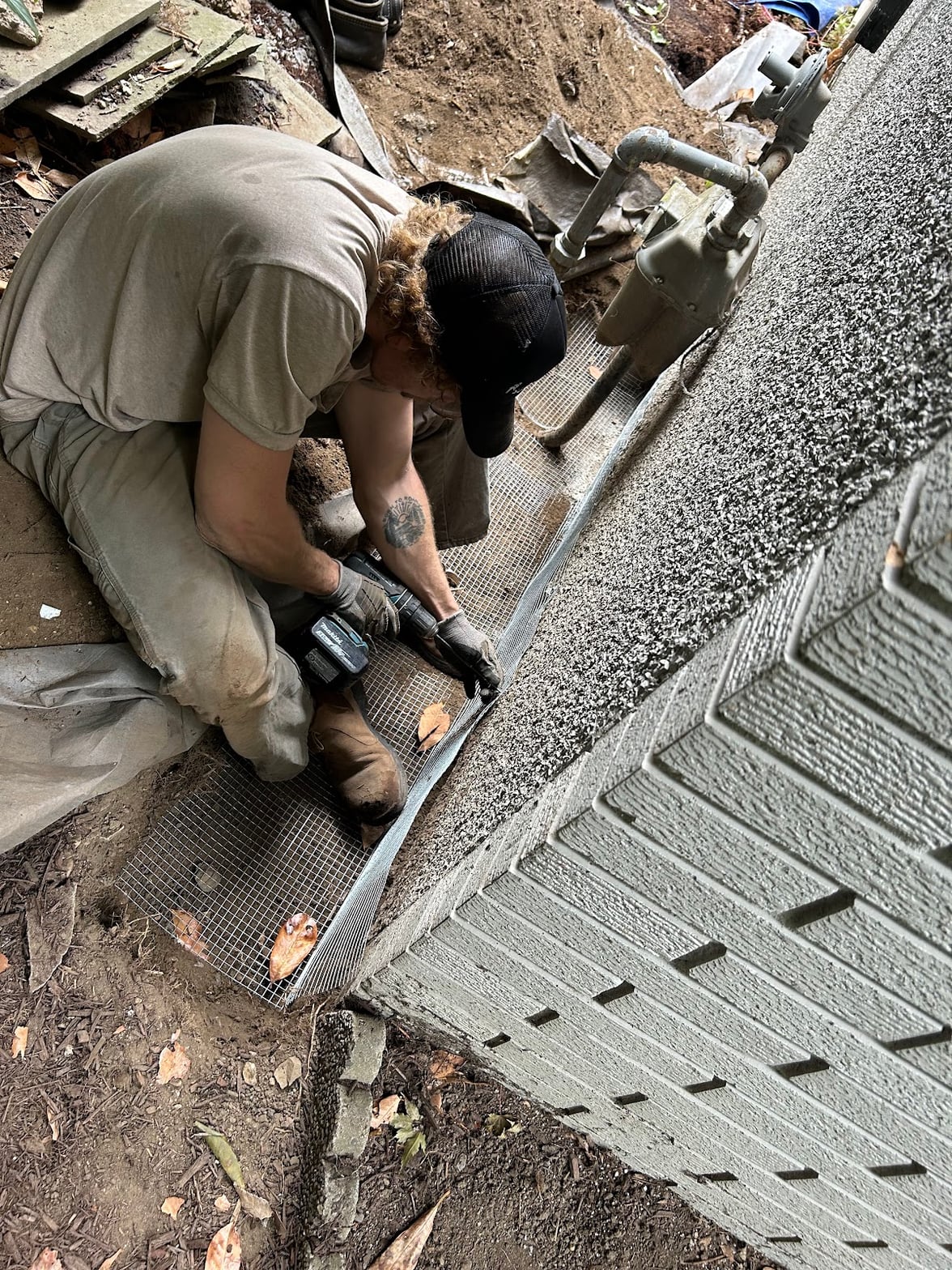
We seal first, then trap. The order is the whole point. Here's how a typical job runs:
- Inspect the full building. Roofline, gutter line, vents, decks, foundation and ground-level holes. On one job, rain kept our technician off the roof, so the first inspection stayed incomplete because the roof entry points hadn't been checked yet. A partial inspection isn't a finished one.
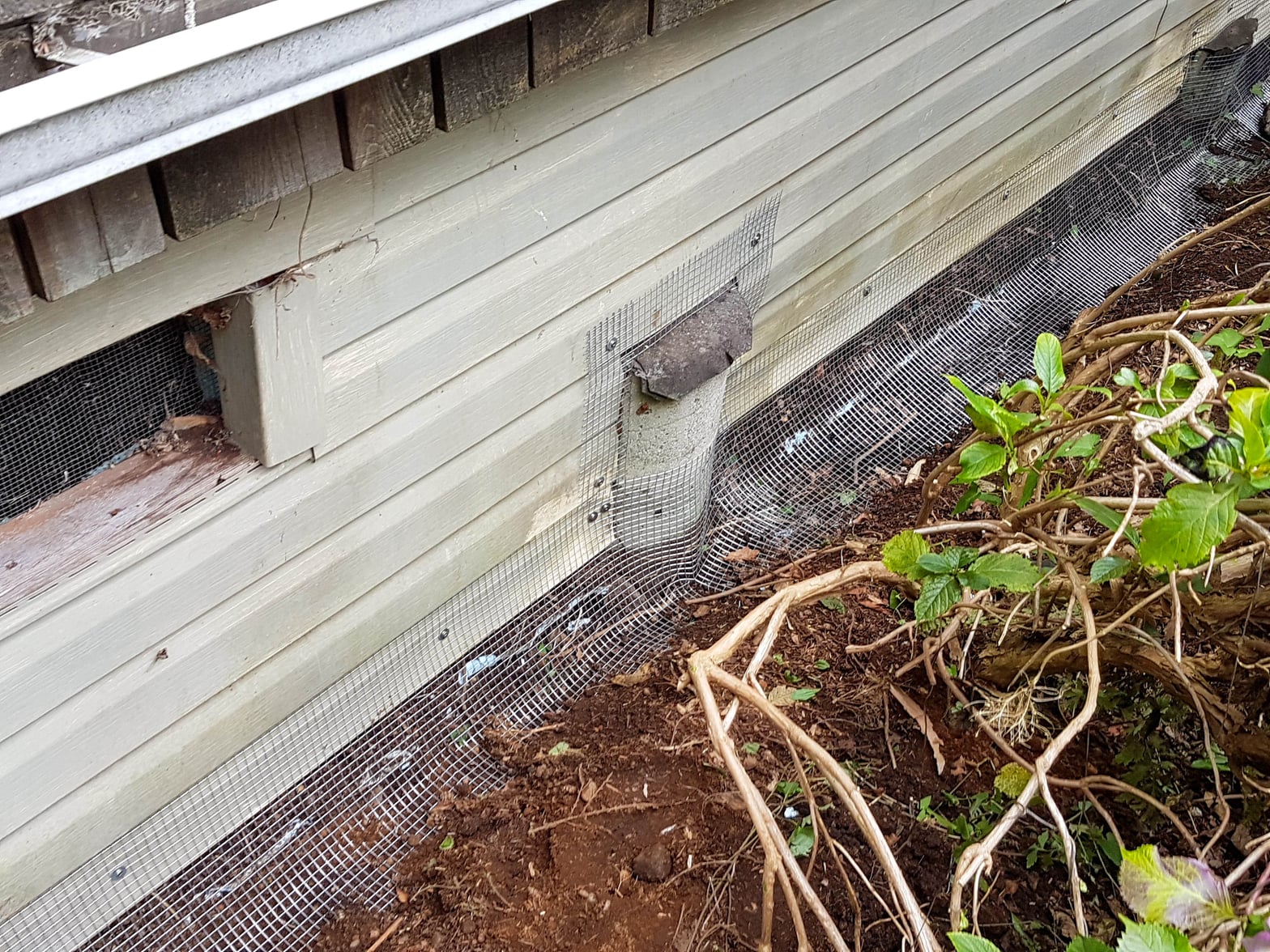
- Seal every entry point so rodents can't get back in.
- Install one-way doors on the active entries so rodents can leave but can't get back in. When rats and mice are both present, the rat door goes in first and is replaced with a mouse door after about two weeks. On one job, earlier reports described mouse activity, but the client and our technician identified rat activity at a backyard hole, so a rat door went in instead.
- Trap outside and inside. Outside traps catch rodents trying to chew back in. Inside traps catch any that won't leave.
- Close the last openings once activity stops.
Trap placement is a skill, and exclusion work teaches it. On one of our jobs, after we repositioned traps along the rat runways we'd seen during the exclusion work, catches rose to 15 rats in one check, up from about 3 to 5 before.
Our exclusion work seals all entry points without poison and is guaranteed for a year as long as the work isn't tampered with. You can read how that works on our guaranteed rodent exclusion page.
What decides how big a no-poison rat job is?
The building does. The number and location of entry points, the roof type and what's next door set the scope far more than the number of rats.
From our own jobs:
- On a clay tile roof with gaps along the entire gutter line, rats were jumping across from a neighbour's overhanging roof, which made full exclusion a multi-day, two-technician job. Another large clay tile roof with attic rats was estimated at about five to eight days of two-technician work.
- On a different house, the gutter line was clean except for one hole and there was a single ground-level entry, but many deep tunnels suggested a burrow complex underneath.
- Where rats were digging under fences, we proposed fence trenching with an L-footer and metal plates sealing the gates.
- Where roof rats jumped over from neighbouring properties into an attic, insulation limited traps to the area around the access opening.
- In multi-unit buildings, rodents move easily between units, so we recommend building management be involved for long-term results.
- If attic insulation is damaged, the ceiling has to be opened before anyone can scope that part properly.
Timing matters too. In our own call records for our service area, rat calls peak in August, September and October, with another rise in April. Sealing before fall means fewer rodents looking for a way in when the weather turns. Our entry-point exclusion and residential rat control pages explain the work in more detail, and the pest library covers how roof rats and Norway rats differ.
Sources
- HealthLinkBC, Getting rid of rodents (rats and mice) (2024): https://www.healthlinkbc.ca/healthlinkbc-files/getting-rid-rodents-rats-and-mice
- National Pesticide Information Center, Can rat poison (rodenticides) hurt kids and pets?: https://npic.orst.edu/faq/mouse.html
- National Pesticide Information Center, Rodenticides: https://npic.orst.edu/ingred/ptype/rodenticide.html
- National Pesticide Information Center, Rodenticides fact sheet (2016): https://npic.orst.edu/factsheets/rodenticides.html
- University of Missouri Extension, Bait stations for controlling rats and mice (2022): https://extension.missouri.edu/publications/g9444
Frequently Asked Questions
NewGen Pest Control Team
Pest control specialists serving Greater Vancouver since 2016.7× Consumer Choice Award winners.