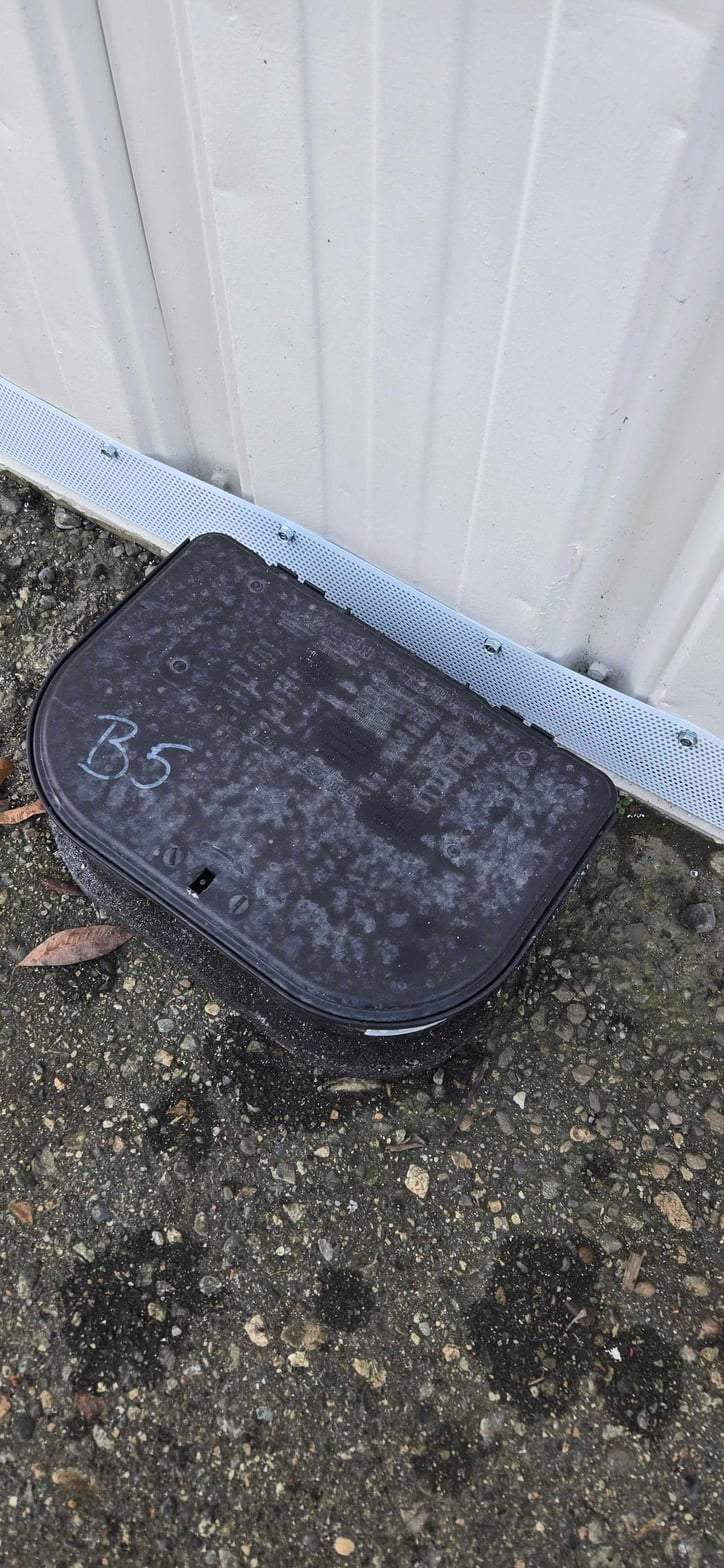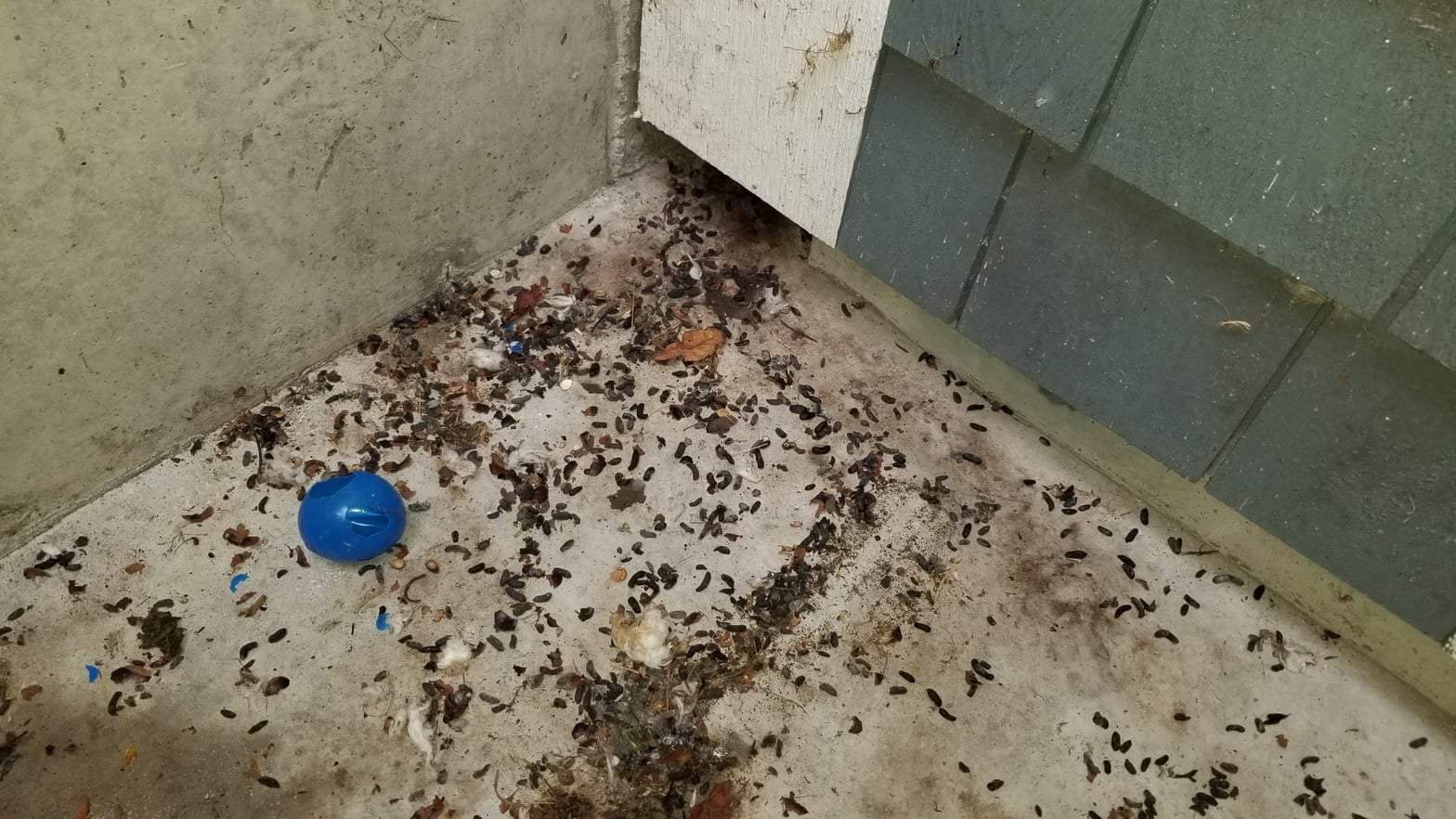
Mice getting into a residential building through its parkade
The mouse activity was inside the building, but the way in was the structure of the parkade itself. Mice were using the garage level as a route, and the building needed the openings closed.
The inspection did not turn up one bad spot. It turned up many small weaknesses that added up to a parkade that was open at its doors, its floor, its utility penetrations and its vents.
A hidden gap at the elevator shaft and eleven openings in the parkade
The assessment listed eleven structural fixes with exact locations and methods. The main points were:
- Gaps around the parkade door and the vehicle access door
- Six oversized old drain holes in the floor
- Seven areas of broken floor concrete, with some rotted framing
- Utility pipes passing through the foundation wall with gaps around them
- A seam where the elevator shaft pocket meets the pad
The inspection also flagged openings at the air vents, the base of the stairwell, a drainage grate, a stair gap, the stair doorframe and the wood stove ash cleanout. The elevator seam was the one that needed the most planning, because it could only be reached from inside the shaft.
Sealing the parkade one opening at a time
The crew was two technicians working from the inspection photos and the site map, so they could find each entry point before starting. They used 1/4 inch and 1/2 inch steel mesh for the gaps and voids, plywood to build an even base for the doors, and concrete to repair the broken floor. Asphalt went into building up curbs so both doors would sit flush instead of leaving a lip for mice to work under.
The elevator seam required the client to lock out the elevator, take it out of service and remove the safety gate before the crew went in. The technicians sealed the seam from inside the shaft, then restored the safety gate before leaving. Keeping the elevator out of service until the work was checked was part of the handover.
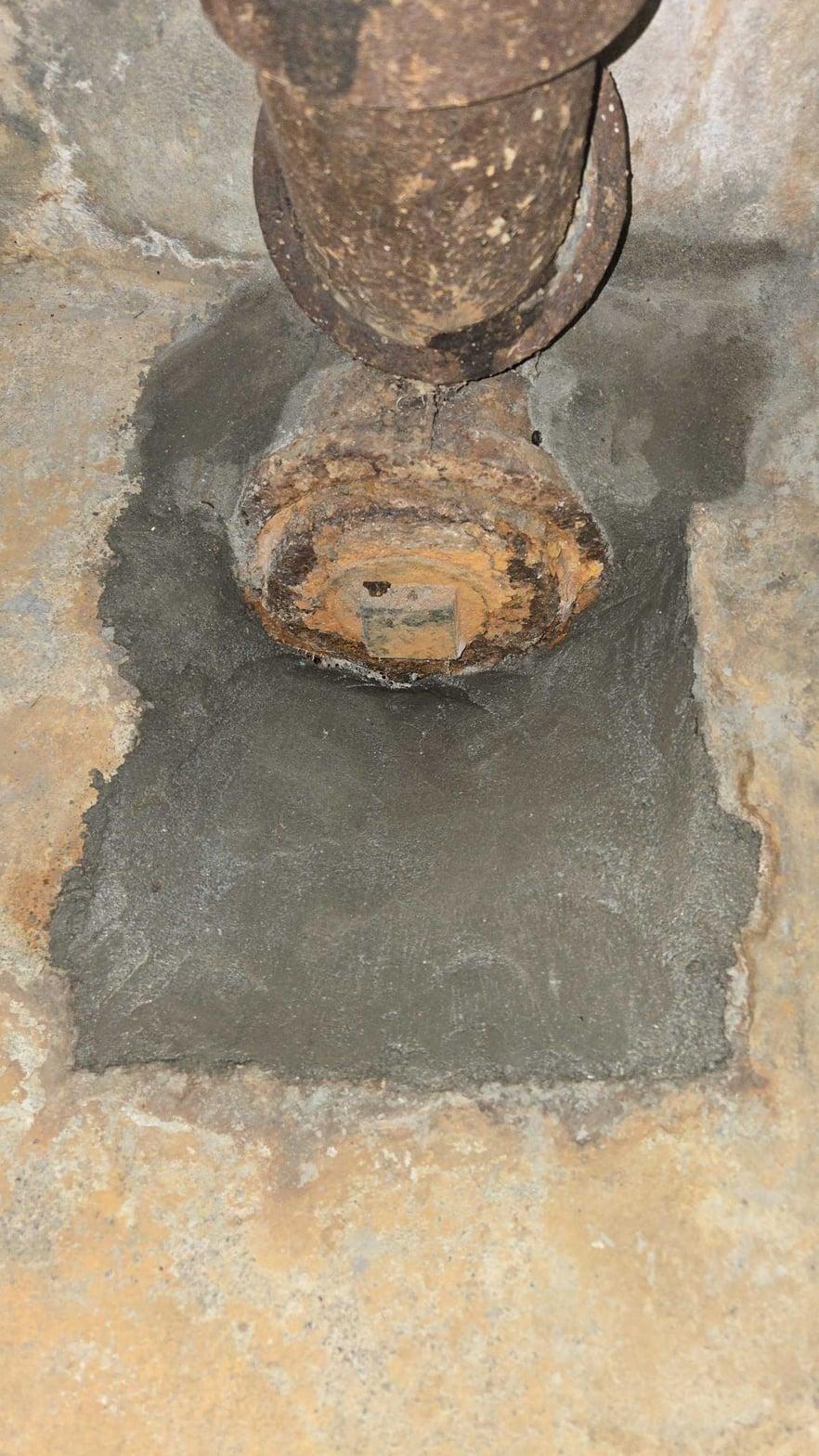
The ash cleanout got particular attention. It was sealed around, but it was also set up so the cap can be removed and any water can weep out through the bottom to the sump. That cleanout had not been opened in years, and the rust may mean it has to be cut open at some point.
The work ran a little ahead of schedule on the first visit. By 28 September, all but one curb was finished. That curb had been exposed to rain before the concrete could cure, so it has to be redone on a dry day, and the work already installed needs about 14 days to cure first. The job was closed in the record on 29 September.
The Outcome
We were hired to seal the parkade structure so mice had no open route from the garage into the building, and the eleven structural fixes are done. The job is closed, with the one exposed curb still waiting on a dry day.
Parkade structure sealed, one curb to finish
- The gaps at both parkade doors, the air vents, the drain holes and the utility penetrations were closed with steel mesh, concrete, plywood and asphalt.
- The elevator shaft seam was sealed from inside the shaft, and the safety gate was restored before the crew left.
- The wood stove ash cleanout was sealed around, and its cap can still be removed so water drains to the sump.
- One curb that was rained on will be redone on a dry day once the concrete can cure.
- Re-entry is covered by the warranty for as long as the ongoing rodent management program stays active.
The structural work is separate from the ongoing rodent management program, which is scheduled on its own. Sealing the building is what stops the route in, and monitoring is what shows whether anything is still getting through, which is why the two were kept apart. For more on how we approach exclusion work, see our entry-point exclusion service and pest-proofing service. If the question is ongoing monitoring after the structure is sealed, our rodent control service covers that side.
Some photos on this page are representative photos from similar jobs our crews have done, not photos of this property.
Need Entry Point Exclusion?
Professional-grade sealing of gaps, vents, soffits, and utility penetrations across the entire structure.
View Entry Point Exclusion More entry point exclusion in Vancouver