Rats finding a way in at the roofline
The homeowner asked us to inspect their Vancouver house. Before quoting, our technician walked the full exterior and the roof to work out where rats were actually getting in, rather than treating the symptoms inside.
He came back with two options. One was a full roofline exclusion that included the gutter line. The other was a targeted spot treatment focused on the specific gaps he had found. The homeowner chose the spot treatment, so the plan was built around closing those confirmed openings properly and proving the house was clear before sealing the last one.
Gaps clustered around the chimney and roof vents
Most of the problems sat around the chimney. There was a gap in the fascia above it, and lower down the gas line entered the building through the chimney clean-out door, leaving a gap around the pipe. A soffit opening beside the chimney was the active route that needed a one-way door.
The roof vents stood out too. None of the four were fastened down or sealed, and their sun fading matched the shingles around them, which told our tech they had sat that way for years. A loose vent gives a rat something to lift and squeeze under. Our tech also flagged that wind-driven rain was likely getting in under them, which is worth knowing for the roof as much as for pests.
At ground level, the pedestrian door into the garage had no rodent-proof sweep. The main overhead garage door was tight at inspection, but a standard garage door seal is not rodent-proof, so we noted it for the homeowner as something to watch rather than something we could guarantee.
Sealing the house and running a one-way door
Sequencing matters on a rat exclusion. If you seal every gap in one visit, any rats still inside lose their way out and start chewing new ones. So on the first visit we closed every entry point except one, and left that one fitted with a one-way door: rats can leave through it but cannot get back in.
That first visit covered:
- A rodent-proof door sweep on the pedestrian garage door
- Mesh over the chimney clean-out door to close the gap where the gas line enters
- Pest-proofing on all four roof vents
- Sealing the fascia gap above the chimney
- A one-way door on the soffit opening by the chimney, with traps set
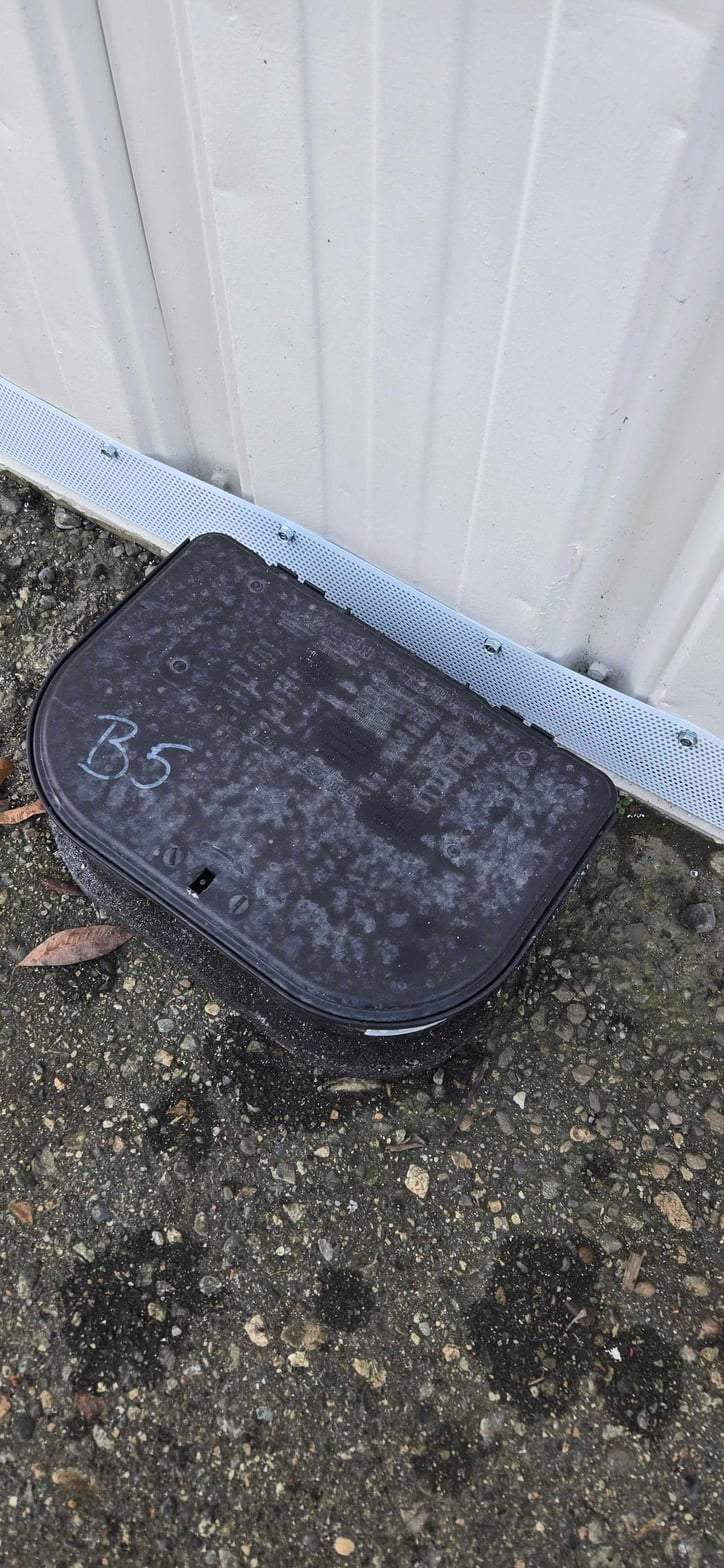
We also placed eight large rodent stations around the outside of the house: two along each of the front and side walls, one under the steps and one beside the garage. Their job was to show whether rats were still moving around the property while the one-way door did its work.
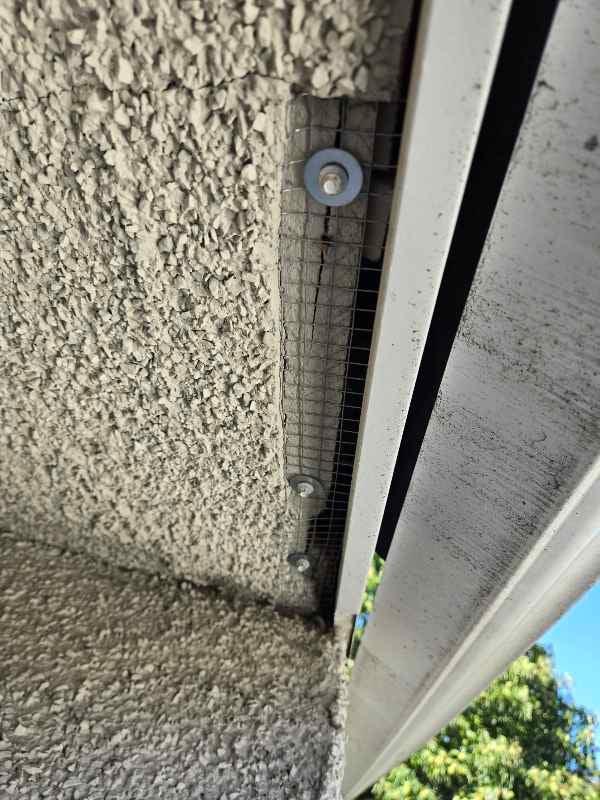
On the follow-up, the stations showed no sign of activity. We removed the one-way door, sealed that last opening permanently with 1/2" mesh, and pulled every station and piece of equipment off the property.
The homeowner had also asked us to tighten a row of loose soffit vents around the house. These were not entry points and were outside the exclusion scope, but on a return visit our tech went around from a ladder and tightened all ten for peace of mind.
The Outcome
We were hired to get rats out of this Vancouver house and close the gaps they were using. They're out, and every entry point we found is sealed.
Rats out, roofline sealed
- The rodent stations showed no activity at close-out, and the precautionary vent visit afterward found none either.
- The fascia gap above the chimney is sealed, the gas line entry is closed with mesh, and the old one-way door opening is permanently sealed.
- The four roof vents that had sat loose for years are now pest-proofed, so rats have nothing to lift and slip under.
- The garage entry has a proper rodent-proof sweep, and the loose soffit vents around the house are tightened down.
A job like this is a good example of why the one-way door comes before the final seal. Closing everything at once can trap rats inside a wall or attic, and the damage that follows usually costs more to fix than the original gaps. Running monitoring stations outside while the one-way door is in place gives a clear read on when it is safe to finish.
If you're seeing signs of rats around your own house, our rat control service starts with finding the actual way in. From there, entry-point exclusion and broader pest-proofing close the gaps so the problem stays solved.
Need Entry Point Exclusion?
Professional-grade sealing of gaps, vents, soffits, and utility penetrations across the entire structure.
View Entry Point Exclusion More entry point exclusion in Vancouver