Rats getting into an empty house beside the deck
Nobody was living in the house, so there was no one to notice day to day that rodents had found a way in. The inspection showed the work that mattered most: securing the building and cleaning out the crawl space.
The pest proofing had to wait. Lifting the rear deck boards showed uneven foundation areas underneath, and that repair pushed the quoted pest-proofing work back. Once the deck was repaired and usable again, the exclusion work went ahead on a planned return visit.
An open pipe penetration, siding gaps and a loose water box cover
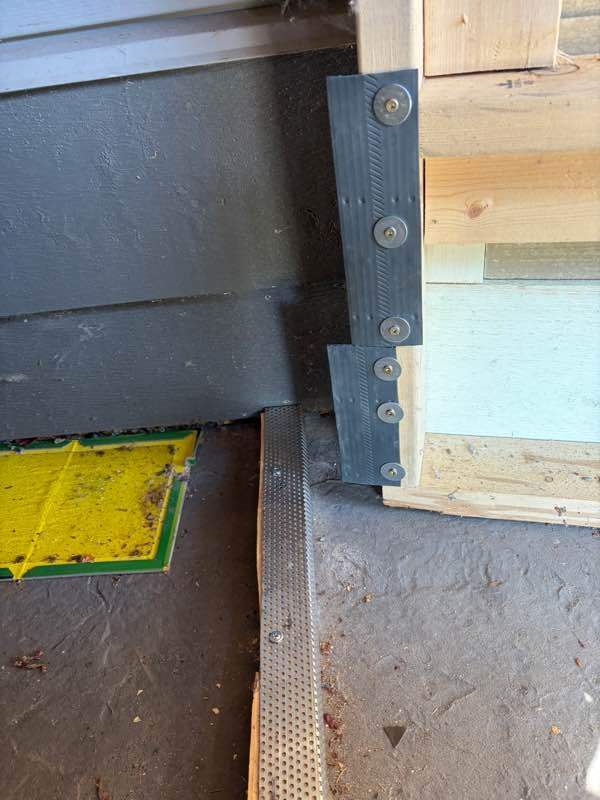
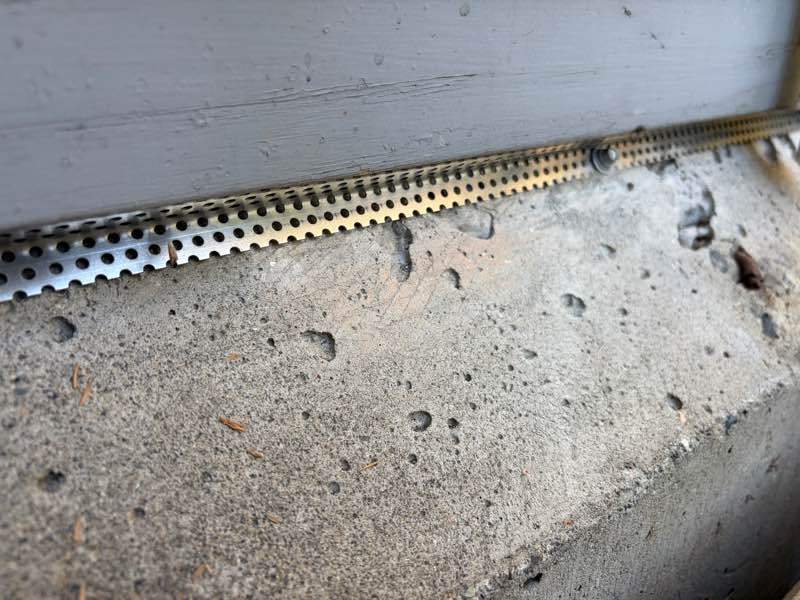
The active entry point was where a pipe breaks through the foundation beside the deck. Around the rest of the house, the siding line had about 80 feet of gaps. There were also openings between the house and the garage, where the deck meets the front door, and around the stove utility line in the garage. The water box was covered only by a loose sheet of plywood, which was not enough of a barrier against pests.
Under the house, droppings had soiled the crawl space insulation, and the ground was holding too much moisture. Sealing the outside would close the way in, but the crawl space still had to be cleaned for the house to be in usable shape.
Sealing the siding line and cleaning out the crawl space
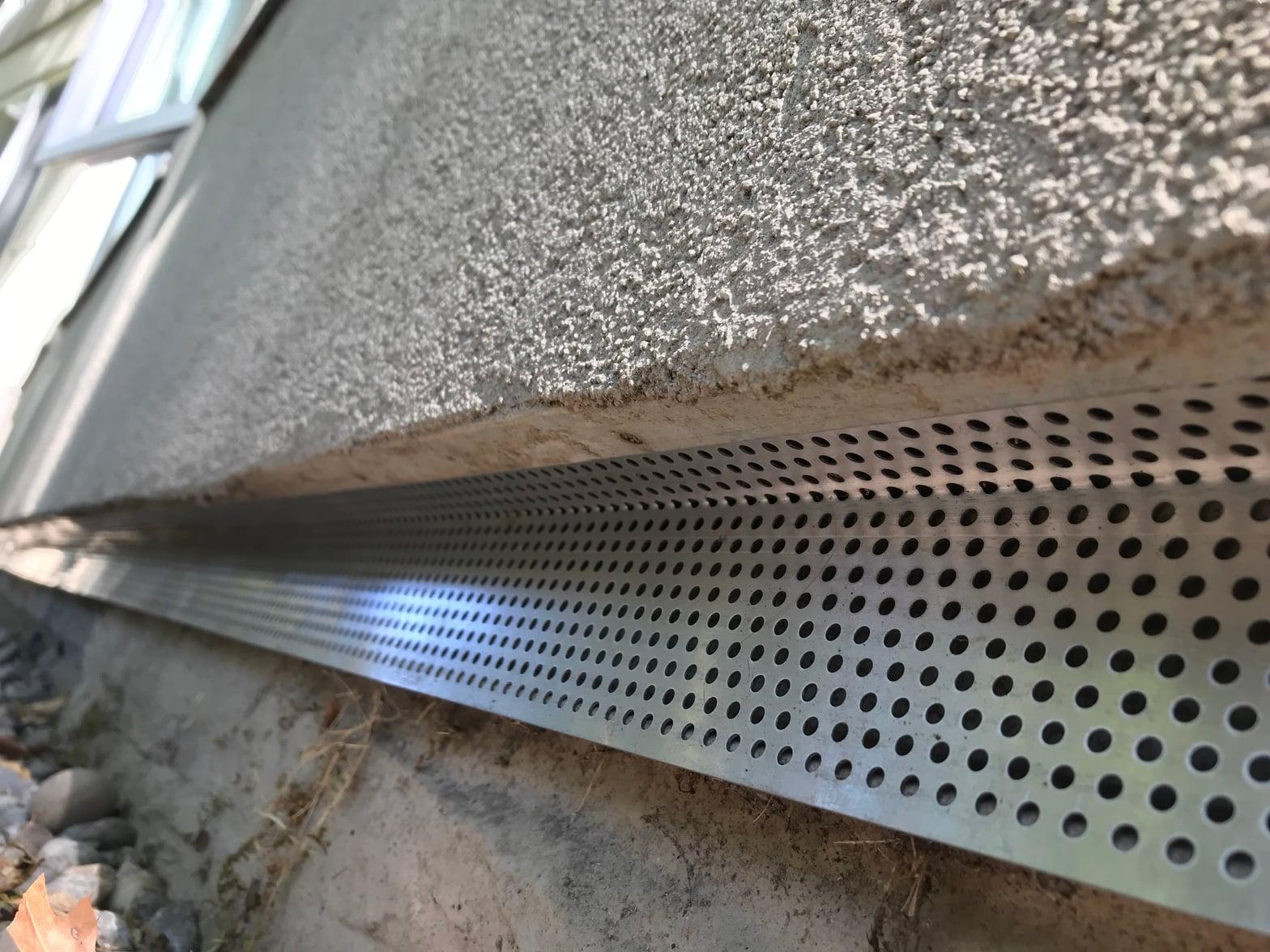
The exclusion visit was planned as a two-tech, two-day job, and the pest proofing was completed to scope inside and out. The siding line was capped with steel mesh and concrete. The old plywood over the water box came off, and we built a new frame from two-by-two lumber and covered it with steel mesh. The quoted scope also covered sealing the gaps at the garage and the front door, around the stove utility line, and around the drainage pipe in the crawl space with concrete.
At the main entry point beside the deck we installed a one-way door instead of sealing the hole straight away. A one-way door lets rodents leave but stops them from getting back in. That means the opening can be closed for good without sealing anything inside the house.
In the crawl space, droppings and the most heavily soiled insulation were vacuumed and bagged. We leveled the floor and built a berm to help manage the moisture, which also made the space more usable for storage.
Two weeks later we came back to close out the job. The one-way door came out, and the opening was filled with rocks, covered with steel mesh and topped with rocks again so the ground sits at its original level. All equipment and debris were taken off site.
The Outcome
We were hired to secure the house against rodents and clean out the crawl space. Both are done, and the job is closed.
House sealed, crawl space cleaned
- The pipe penetration beside the deck, the siding line and the water box no longer give rodents a way in.
- The crawl space is clear of droppings and soiled insulation, leveled and usable for storage.
- The old entry point is sealed under steel mesh and rock and sits level with the surrounding ground.
- The close-out inspection found no new activity and no further pest-proofing work needed.
The key decision on this house was the order of the work. The foundation under the deck had to be dealt with before the pest proofing, and the main entry point stayed fitted with a one-way door until the rest of the building was sealed. The permanent seal went in only at close-out.
The berm helps with crawl space moisture, but that moisture should still be watched. A damp crawl space can draw pests back over time. Our crawl space treatment and rat control pages explain how we handle both sides of that problem.
Some photos on this page are representative photos from similar jobs our crews have done, not photos of this property.
Need Pest Proofing?
Comprehensive exclusion audit and sealing of all entry points. The last pest service your property needs.
View Pest Proofing More pest proofing in Vancouver