Mice working their way in above a Richmond restaurant
A Richmond restaurant had mice coming in through utility gaps, mainly around the conduits running through the ceiling. The work had to happen outside business hours, so the job was planned around the restaurant's operating schedule rather than the other way around.
Keeping mice out of a restaurant unit means isolating it. That means checking shared walls, utility runs and the areas behind equipment that can't be moved easily, then sealing every way in. Sealing one hole and leaving the rest won't stop the mice.
Droppings above the ceiling showed an established problem
Our assessment found significant mouse droppings above the ceiling. That pointed to established activity, not a mouse that had wandered in once. The gaps around the conduits were the way in.
The second weak point was the wall structure. Along the drywall edges and corners, mice had a route to climb the wall studs and chew through. A fix that only dealt with the conduit gaps would have left that route open.
Sealing the conduit gaps and armouring the wall edges
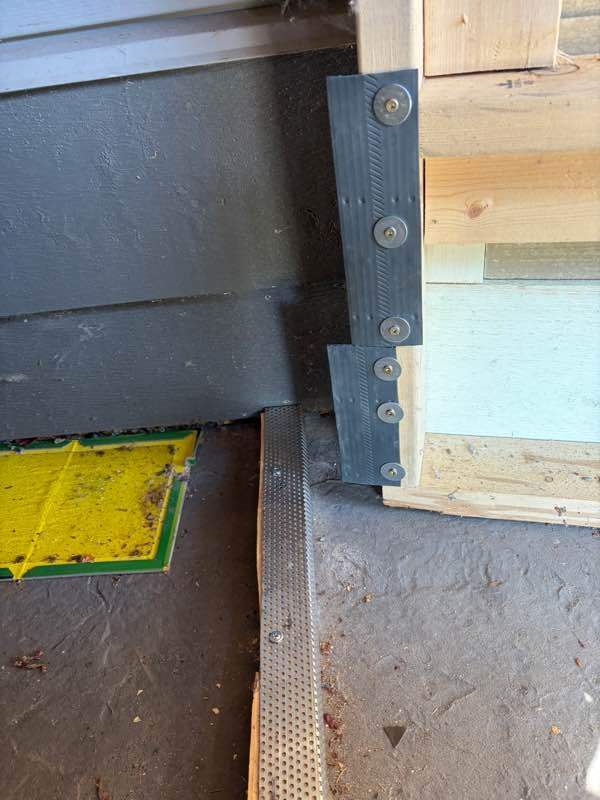
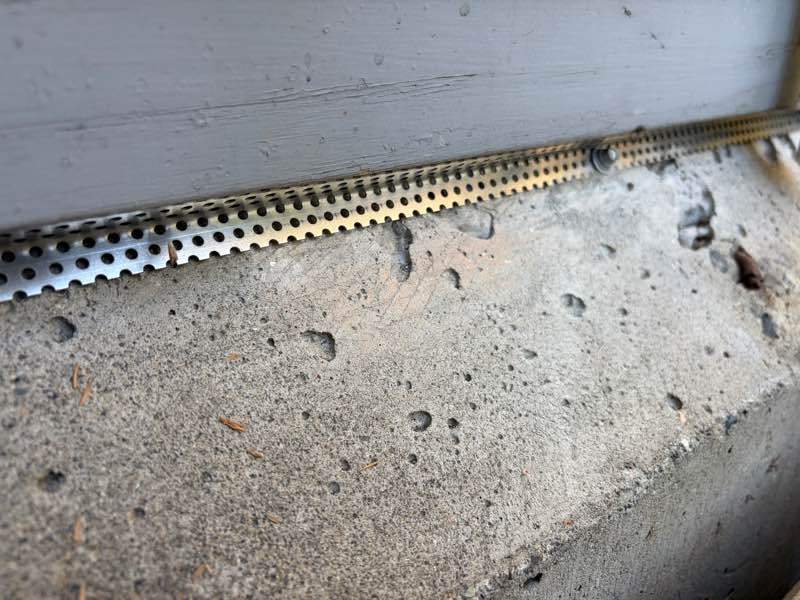
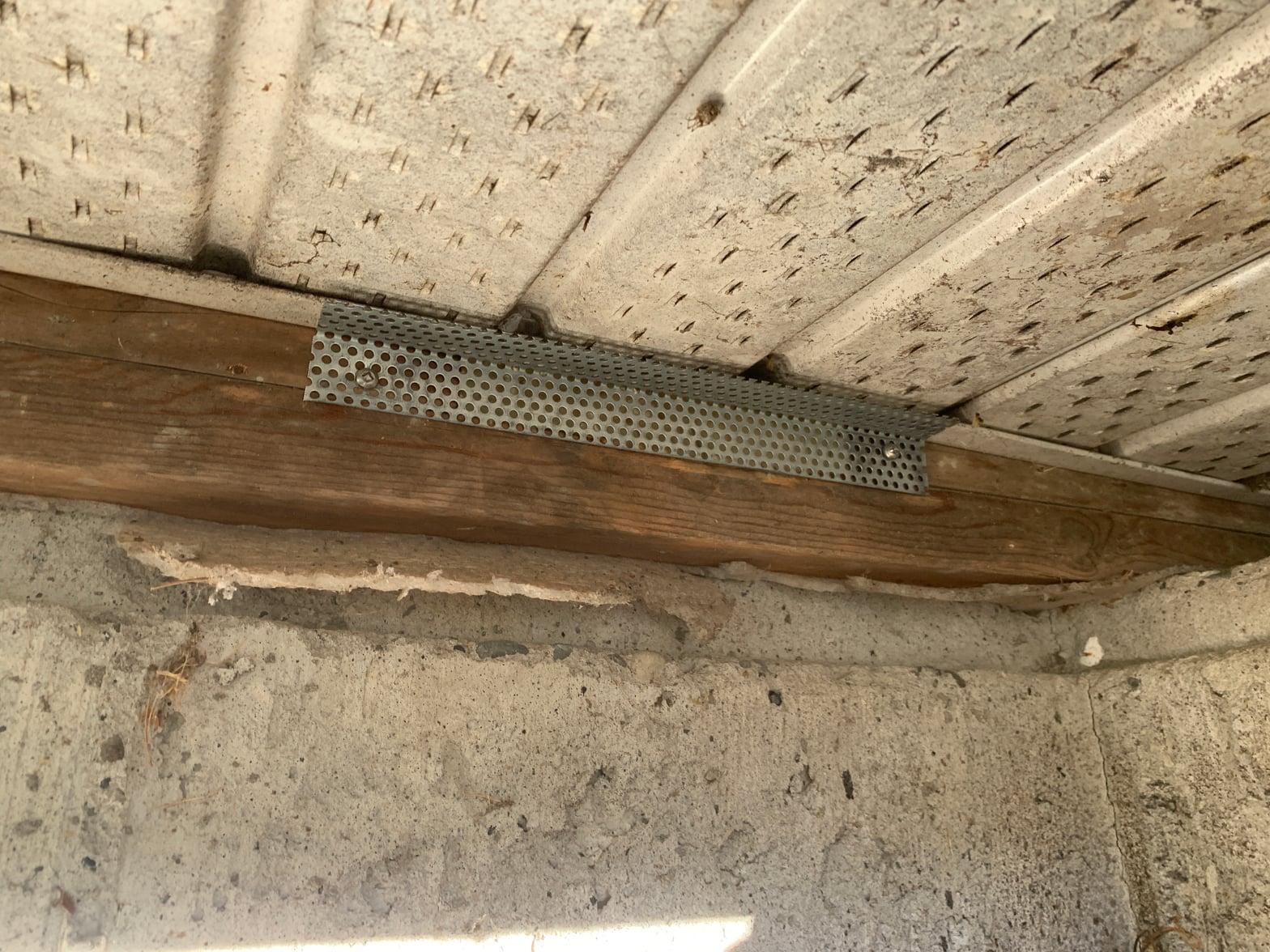
The job was scoped for two technicians and an estimated four hours. Items were moved to expose the utility areas, and the gaps around the conduits were sealed. Flashing trim went along the drywall edges and corners so mice could no longer climb the studs and chew through the wall.
Because mice were already living above the ceiling, closing the gaps could trap some inside. A high volume of traps was set to catch any mice shut in when the exclusion was finished. Trap removal was planned as a follow-up visit, to be booked 10 to 14 days later.
The Outcome
We were hired to stop mice getting into the restaurant through the utility gaps above the ceiling. That work is done.
Mouse entry points sealed
- The gaps around the ceiling conduits, the main way mice were getting in, are sealed.
- Flashing trim along the drywall edges and corners blocks the route mice used to climb the wall studs and chew through.
- Traps set during the exclusion target any mice shut inside when the gaps were closed, so the space doesn't keep a resident population.
- All of the work was scheduled outside the restaurant's business hours.
For a food service space, the durable fix is physical: close the entry points and the routes mice use inside the walls, then deal with any mice already inside. We also recommended our monitoring service to the restaurant, to keep watch for new activity after the proofing.
Our rodent control and pest proofing services cover this kind of work, and there's more on mouse behaviour on our mouse pest library page.
Some photos on this page are representative photos from similar jobs our crews have done, not photos of this property.
Need Pest Proofing?
Comprehensive exclusion audit and sealing of all entry points. The last pest service your property needs.
View Pest Proofing More pest proofing in Richmond