Mouse signs in a renovated rental house
A tenanted house in Coquitlam had been significantly renovated within the past five years, and the upgrades had not stopped the mice. Droppings turned up in a second-floor closet in the baby's room, in the furnace room and in the garage. Raccoons had also been reported in the attic, so access and the ladder needed planning before anyone climbed up there.
Outside, the backyard showed the rest of the picture. An old swimming pool had been covered with soil and grassed over, and seven burrows ran along its perimeter.
A hinge gap, a garage door edge and a pool line of burrows
The first visit set up interior monitoring stations inside the house and split the job into two tracks: population monitoring while the work was under way, and a structural assessment to follow. Inspection found droppings in those three rooms and the seven burrows. Three issues were flagged as high priority: a gap at the hinge of the baby's room closet, which the technician noted could admit juvenile mice; gaps on both sides of the garage door where the wood meets the concrete; and the burrows themselves.
Before anything was sealed, the monitoring data was meant to show which travel routes the mice were actually using, so exclusion would be aimed at the right places.
Monitoring across four visits, then a clear plan
The stations stayed where they were and were left undisturbed so activity could be followed accurately. By the September visit, the technician was documenting droppings and a possible entry point near the garage, several more possible burrows, and a stucco gap at the rear of the property.
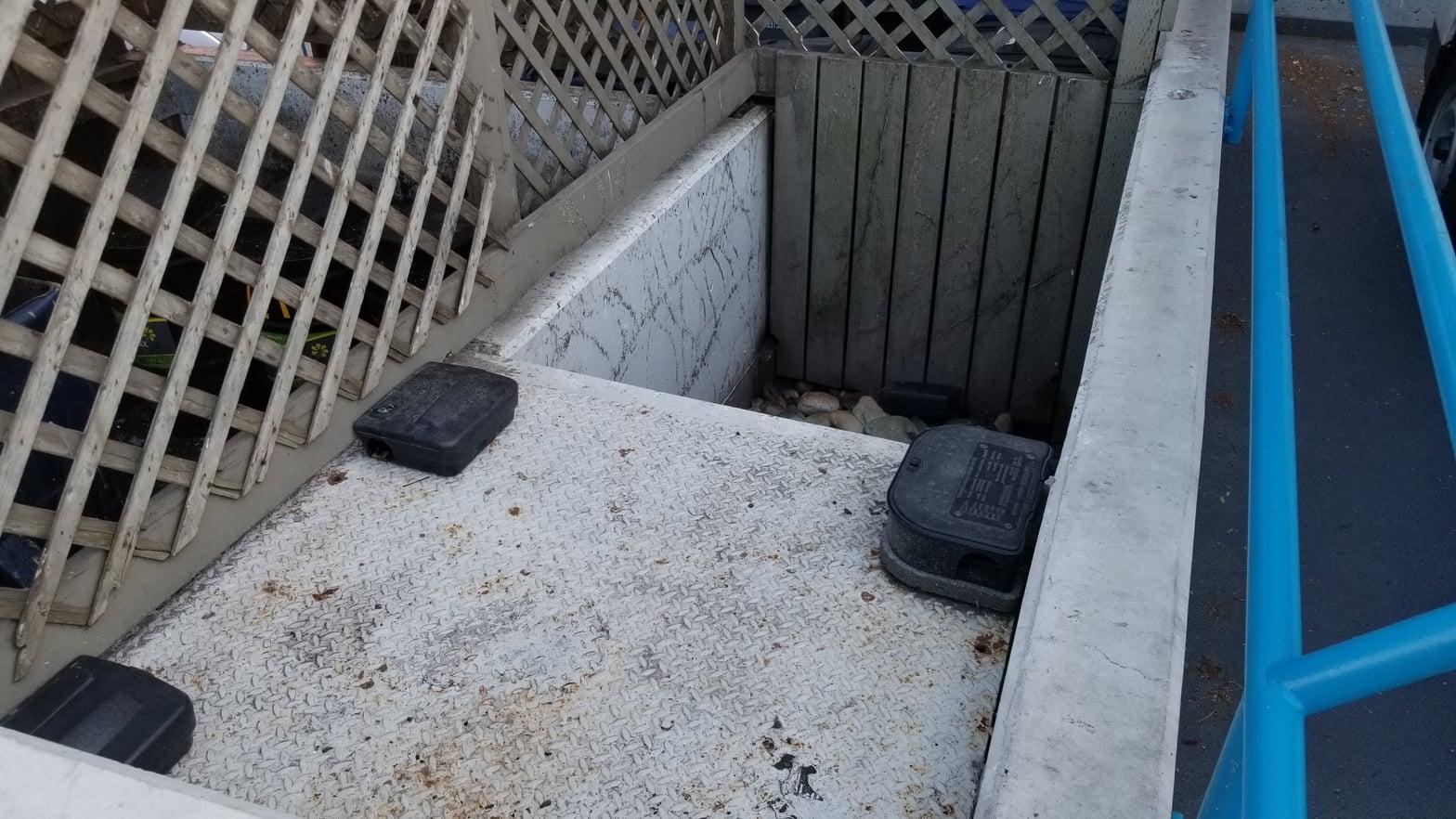
The client had reported sightings along the west fence, so the recommendations shifted outdoors as well. The September report called for an exterior rodent program with bait stations positioned along that fence line, rodent-resistant sealing at the garage door, and removal of the droppings near the garage so that any new activity would stand out against a clean baseline. Four new monitoring devices were added at that visit.
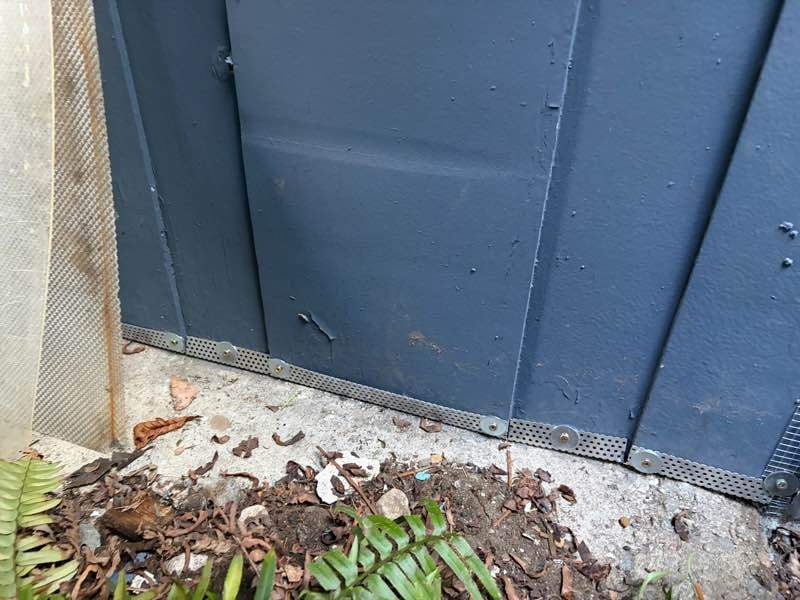
The structural side of the job is where the sealing decisions sit. Garage door edges and the closet hinge are the kind of openings that need rodent-resistant materials rather than a quick caulk, and the burrow line was flagged for treatment with scheduling to be confirmed. For the broader scope, see our mouse control program and entry point exclusion work.
The Outcome
We were hired to run a poison-free monitoring program on the mouse activity in this rental house and to find out how the mice were getting in. The program ran across four visits and closed out in October, with the exclusion and exterior recommendations documented for the property.
Monitoring closed out, entry points mapped
- Mouse activity was tracked from the first visit to the last, so each recommendation rests on what was seen in the house and the yard.
- The likely entry points, including the closet hinge, the garage door edges and the stucco gap at the rear, were identified and flagged by priority.
- The burrows along the former pool perimeter have a treatment recommendation, and an exterior bait program along the west fence is laid out in the visit reports.
The next stage of this kind of job is sealing the flagged openings with pest-proofing materials and confirming the burrow work, which is where the documented plan carries the property forward.
Some photos on this page are representative photos from similar jobs our crews have done, not photos of this property.
Need Mouse Control?
Full-property baiting, trapping, and entry point sealing to eliminate and prevent mouse activity.
View Mouse Control More mouse control in Coquitlam