Mice on both floors after the food was locked away
The homeowners had dealt with mice in this detached Vancouver home for several years. Until August, the activity came and went, and basic traps or bait would clear it. Since August, it hadn't. Mice were active upstairs and downstairs, even though the household had moved all food into sealed containers and stepped up cleaning. The homeowner believed the mice were getting more desperate now that the food was secured, and suspected there might be only a few, while accepting there could be more. They wanted traps in quickly and a clear plan for a long-term fix.
The crawl space under the stairs had also been dealt with. It had recently been emptied completely, and it has a finished surface, with linoleum laid over the base material rather than bare dirt.
A tunnel at the front door and chewed garage doors
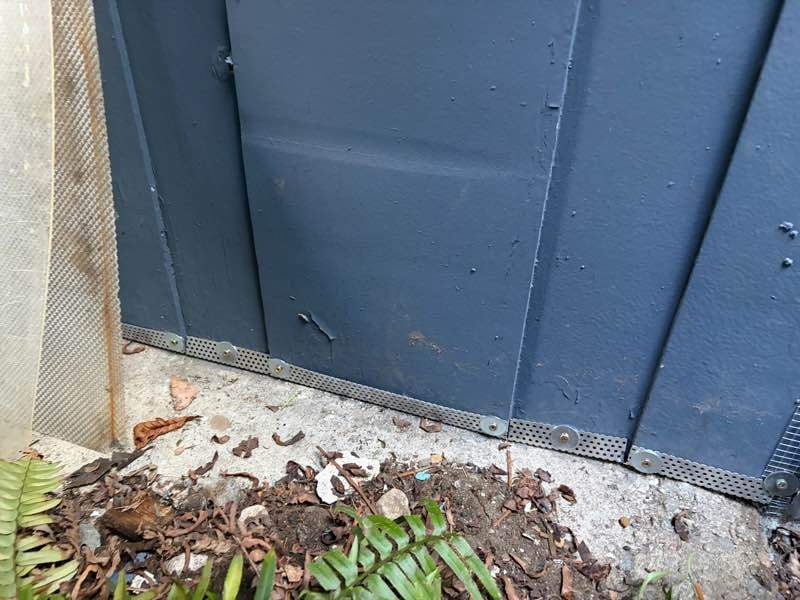
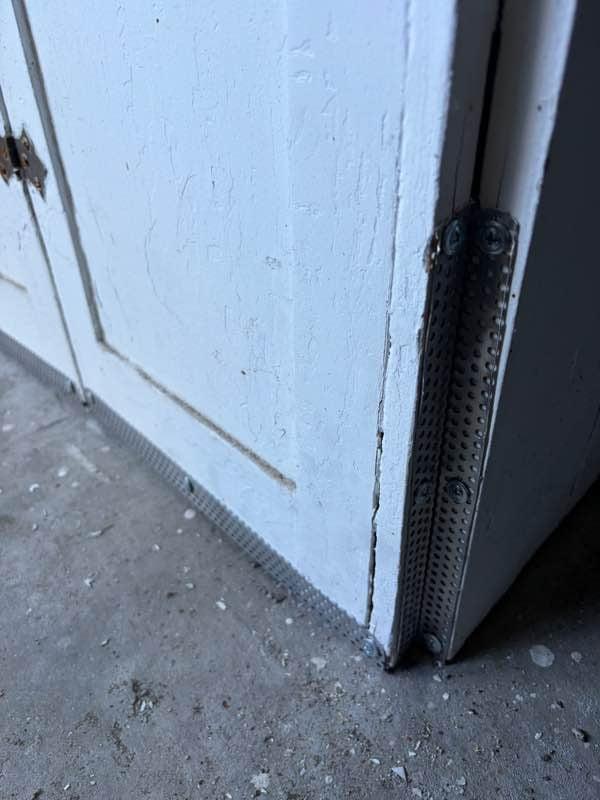
The exterior assessment showed where the mice were getting in: mainly through the garage and by tunnelling under the front door. The garage pedestrian door had a wooden sweep that mice had chewed through. The large garage door had no sweep at all, and mice were running through the gap beneath it. Both garage doors had chew holes. The siding had a gap that needed flashing and concrete. Behind the wooden back deck stairs, there was only spray foam, and that area was not properly excluded.
Mice move along floor level and need very little room to get in, so a missing or chewed sweep leaves an open door. Spray foam fills a gap, but mice can chew through it. Sealing food away changes what is on offer inside the house. It does nothing to the routes in, which is why the entry points were the core of this job.
Trapping inside, a sealing plan for outside
The first visit set up poison-free interior mouse trapping. The exterior assessment came next. It covered the garage doors, the front door area, the back deck stairs and the siding, and it logged each issue with photos, a severity rating and, where it applied, the materials needed. The sealing scope is specific: a 9-foot sweep for the large garage door, a 36-inch sweep to replace the chewed one on the pedestrian door, flashing and concrete at the siding gap, proper exclusion behind the back deck stairs beyond the existing foam, and one-way doors. The concrete needs about a day to dry, so it has to be timed around treatment.
The assessment also noted the dog on the property, so any bait and station placement has to be adjusted for pet safety. At close-out, the seven interior monitoring stations were collected from the home.
The Outcome
We were hired for a two-visit, poison-free trapping program to deal with persistent mouse activity in a detached Vancouver home, along with a clear long-term plan. Both visits are complete, and the homeowners now know exactly how the mice were getting in.
Trapping complete, entry routes mapped
- The poison-free trapping program is finished, and all interior equipment has been taken out of the home.
- The close-out visit flagged nothing inside the house.
- Every entry route found, from the front door tunnel to the siding gap, is documented with photos and a severity rating.
- The long-term fix is spelled out down to sweep sizes: new sweeps on both garage doors, flashing and concrete at the siding, exclusion behind the deck stairs and one-way doors.
For years, traps or bait had dealt with the mice already inside, but not the openings that let them back in. This job finished the trapping and mapped those openings, so the exclusion work that keeps mice out has a defined scope with the materials already listed.
For the interior side, see our mouse control program. For the sweeps, flashing and stair work, see entry point exclusion.
Some photos on this page are representative photos from similar jobs our crews have done, not photos of this property.
Need Mouse Control?
Full-property baiting, trapping, and entry point sealing to eliminate and prevent mouse activity.
View Mouse Control More mouse control in Vancouver