Mice in the walls of a detached Richmond home
The homeowners were hearing mice in the walls and finding droppings in the living space from time to time. In a detached house, that means mice have found a way in from outside and are sheltering in the structure. The first job was to find where they were getting through.
Our recommendation had two parts. We would pest-proof the exterior so no more mice could get in, then run a trapping program to remove any mice left inside.
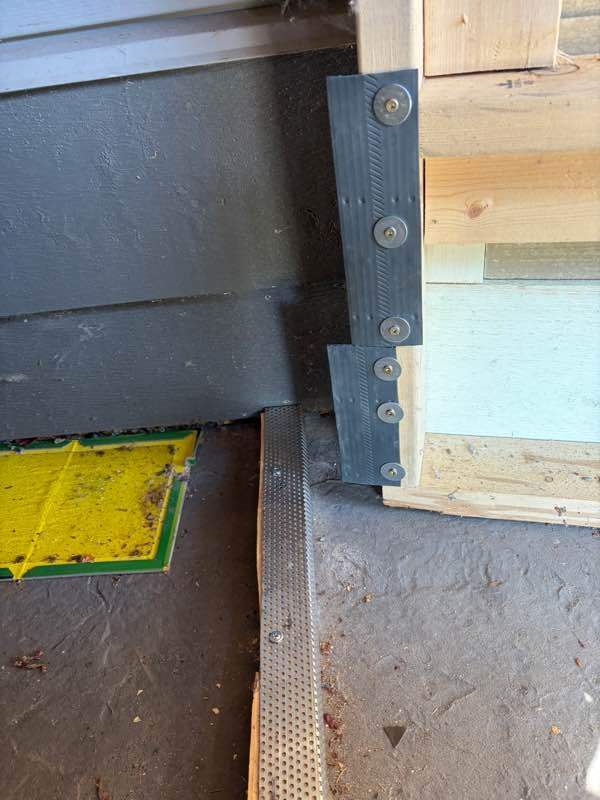
A gap in the flashing beside the garage door
The main point of entry was the flashing next to the garage pedestrian door.
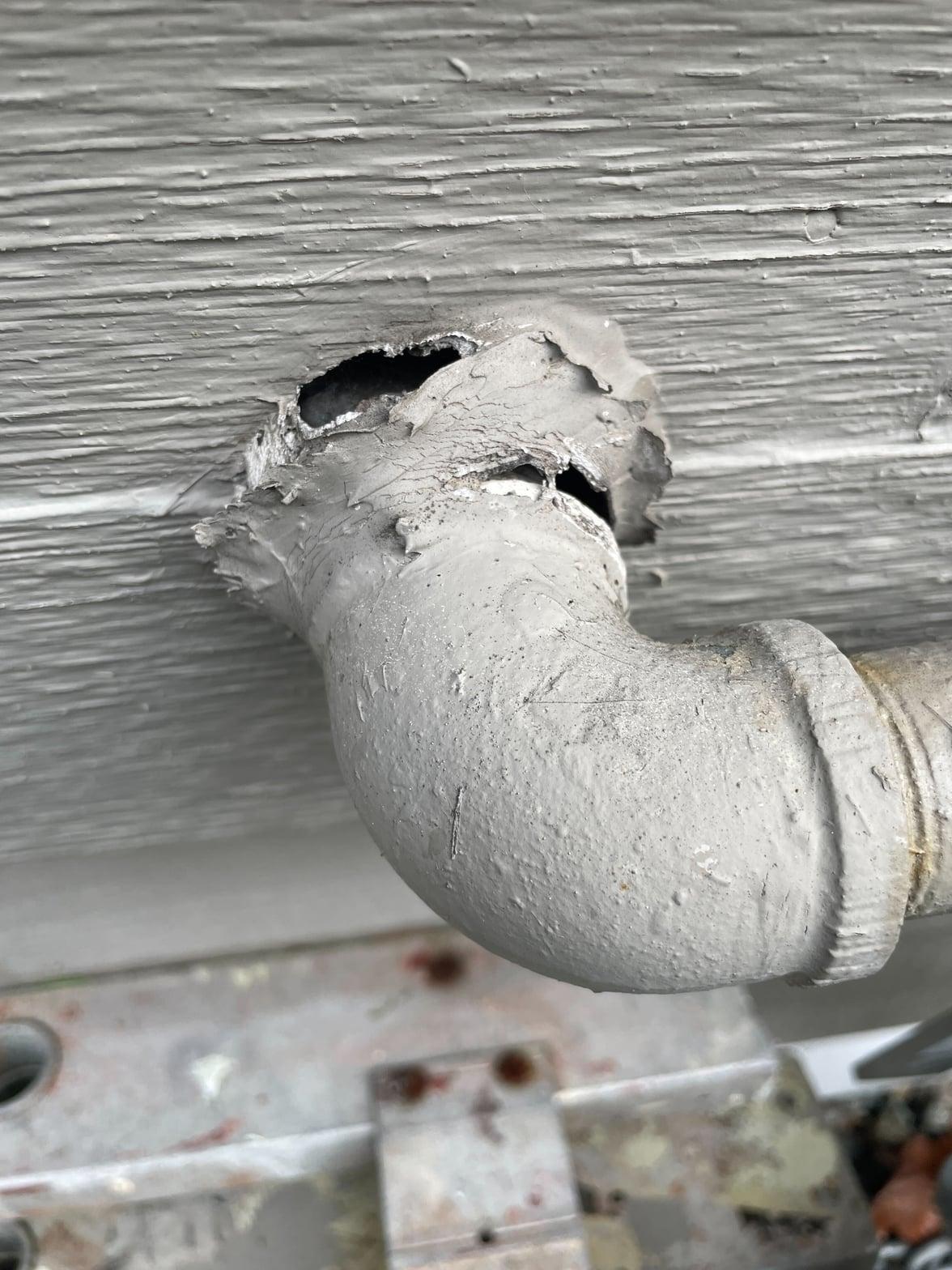
It wasn't the only opening. Gaps in the siding around the perimeter added up to roughly 40 feet of spot treatments, and there were gaps around several utility lines where services enter the house. A mouse can get through an opening about a quarter inch across, so small gaps around a service line are real entry points. The roof needed no treatment.
Sealing the outside, then trapping the inside
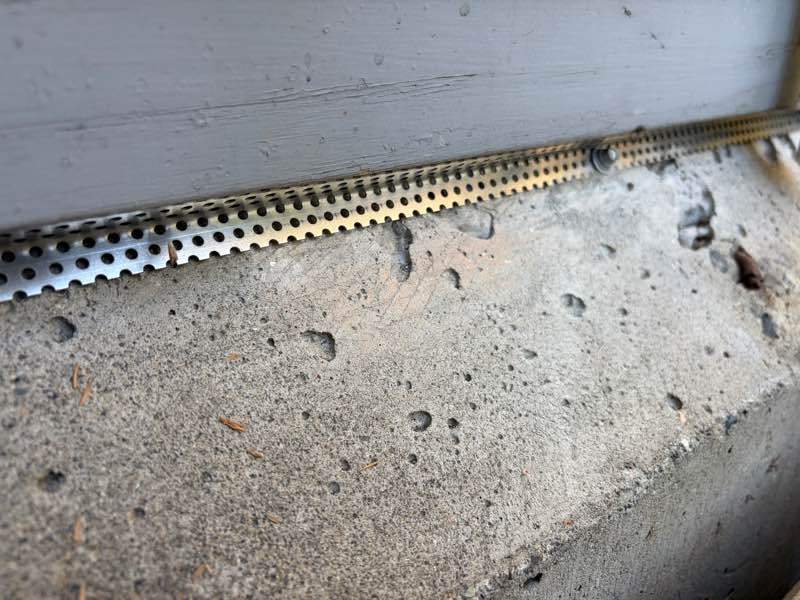
We sealed the exterior first so that no new mice could come in while we cleared the house. Trapping then removed any mice that sealing had shut inside. We closed the smaller gaps with quarter-inch and half-inch screen, fixed with screws and washers and finished with sealant. For permanent proofing we used heavy-duty perforated angle flashing. The perforations let water drain and air move where it needs to.
Before we started, we asked the homeowners to move planters away from the house and clean up pet waste in the yard. Keeping food out of reach of the mice inside matters just as much. If mice can find food, a trapping program takes longer.
The trapping program used six stations inside the home and four outside near the main point of entry. The stations are poison-free, use a food-grade bait and are enclosed so they stay out of sight, with no risk to children, pets or wildlife. At each visit the technician checked, reset and rebaited the stations and looked for new access points. The homeowners received an inspection report after every visit. One technician did the work over two visits, in late January and early February 2024.
The Outcome
We were hired to stop mice getting into the house and to remove any left inside. Both parts are done, and the job closed in mid-February 2024.
Mice sealed out, house cleared
- The route mice were using through the flashing beside the garage pedestrian door is closed.
- The gaps in the siding and around the utility lines are sealed, so mice no longer have a way in from outside.
- The trapping program to clear mice left inside the house is complete.
- The sealing and proofing carry a one-year workmanship warranty.
The job ran in a fixed order: seal the outside, then clear the inside. Sealing alone can leave mice shut inside, and trapping alone leaves the entry points open. For homes with the same problem, start with our pest-proofing service and entry-point exclusion work. Our rodent control service covers the trapping side.
Some photos on this page are representative photos from similar jobs our crews have done, not photos of this property.
Need Pest Proofing?
Comprehensive exclusion audit and sealing of all entry points. The last pest service your property needs.
View Pest Proofing More pest proofing in Richmond