Bats slipping in under a laneway home's roofline
Bats were getting into a laneway home in Richmond. The entry points had to be closed in a way that did not shut any bats inside. Bats are protected under the BC Wildlife Act, so exclusions can only be carried out between September 1 and April 30. Any work on the openings has to fit inside that window.
Loose soffit left gaps at the corners
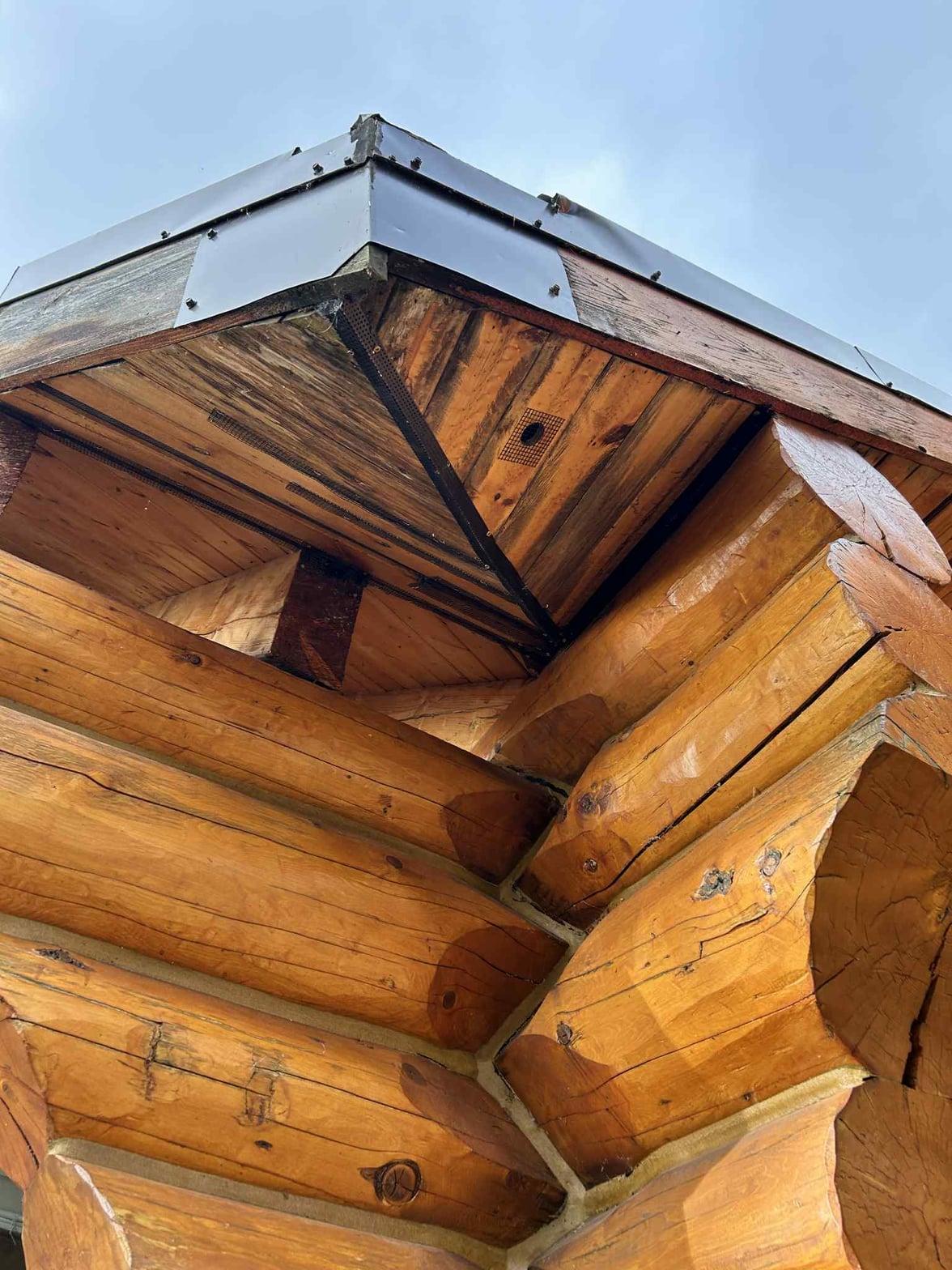
Our inspection found the bats coming in through gaps at the soffit angles. The cause was soffit that had worked loose along the roofline, opening gaps around the fascia board. Five soffit angle gaps and three roof vents were marked for treatment. The scope also covered the rest of the roofline and a check that no ground-level or interior entry points needed treatment. The findings and photos went to the owner in a written assessment with the quote.
Sealing the roofline around one-way bat cones
Two technicians worked the roofline on September 4, a visit of about eight hours using a 40-foot ladder and long and short hook ladders. They pushed the loose soffit back and secured it wherever gaps showed along the fascia, then covered the five soffit angle gaps and the three roof vents with quarter-inch steel mesh. Sealing materials and mesh went onto the remaining bat entry points along the roofline.
Two one-way bat cones went onto entry points at the soffit. A cone lets bats inside the structure leave but stops them getting back in, so no bats are sealed into the building. The plan allowed 10 to 14 days with the cones in place. The crew returned on September 18 to take the cones off and seal those last openings permanently.
The Outcome
We were hired to stop bats getting into the laneway home through the soffit. That work is finished: every entry point on the roofline is closed.
Bats shut out for good
- The soffit angle gaps the bats were using are covered with quarter-inch steel mesh.
- The loose soffit along the fascia is secured, so the gaps along the roofline are closed.
- The three roof vents are meshed, so they still vent but bats cannot get through them.
- The openings that held the one-way cones are permanently sealed.
- The work carries a two-year warranty against bat re-entry through treated areas and a five-year warranty on workmanship.
In bat work, the order of steps matters most. The mesh and soffit repairs closed every gap the bats could use. The cones gave any bats still inside a way out, and the final openings were sealed only after that. This is how we run entry-point exclusion and pest-proofing on homes: seal the structure, provide a one-way exit, then close the building for good.
Some photos on this page are representative photos from similar jobs our crews have done, not photos of this property.
Need Entry Point Exclusion?
Professional-grade sealing of gaps, vents, soffits, and utility penetrations across the entire structure.
View Entry Point Exclusion More entry point exclusion in Richmond