

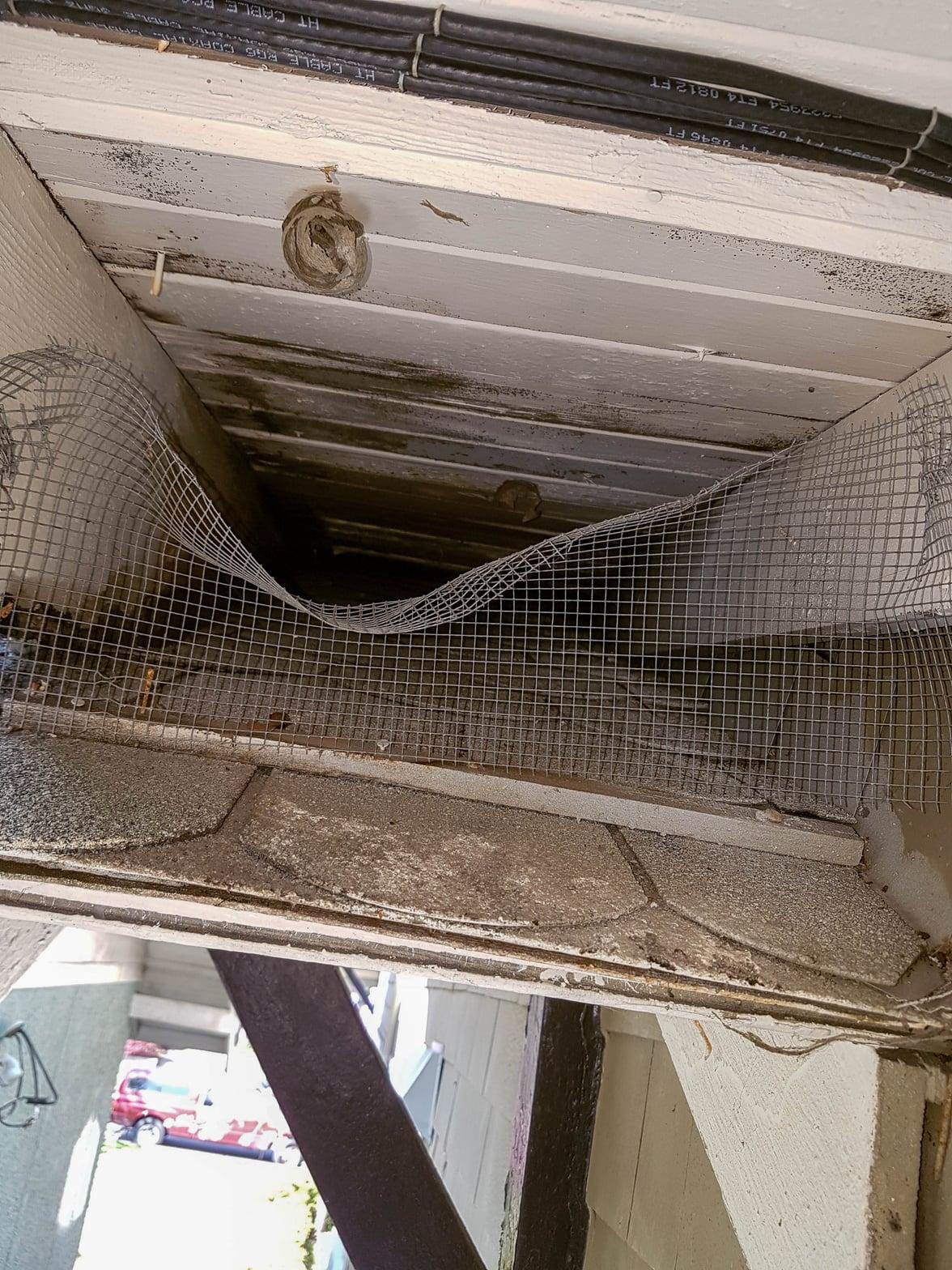
Wasps disappearing into a gap two metres up
The homeowner called about wasps going into a hole on the side of the house, about two metres off the ground. The opening sat where the wood panel siding meets the soffit.
An active nest sealed inside the soffit void
On the first visit in August, our technician confirmed an active wasp nest inside the soffit void. The nest itself couldn't be reached. With a concealed nest like this, the colony sits out of sight, and the entrance is the one part you can work on. Steady traffic in and out tells you the nest is live and shows exactly where the wasps go in.
Treating the way in, then leaving it open
We worked Drione® insecticidal dust in through the active entrance so returning wasps carry it to the nest. Activity at the opening can rise for 24 to 48 hours after treatment, so we asked the homeowner to leave the entrance alone during that window. The open gap is what gets returning wasps back to the treated nest.
We came back for a second service in October. Wasps were using a crack at the rear roofline to reach a concealed nest in the structural void. We confirmed the activity from the traffic at the crack and treated it the same way. This nest was out of reach too.
The rule for both openings is the same: don't seal them while wasps are still active. Sealing too early can send surviving wasps looking for another way out. Once activity has stopped, each opening should be assessed for sealing so the same void doesn't get used for nesting again.
The Outcome
We were hired to deal with wasps going into a hole on the side of a Vancouver house, about two metres up. That job is done.
Wasp nesting at the soffit dealt with
- The nest in the side soffit was treated through the wasps' own entrance, with no need to open up the siding or soffit.
- A second active nest site, reached through a crack at the rear roofline, was treated the same way in October.
- The homeowner knows to leave both openings unsealed until wasp activity stops, so surviving wasps aren't pushed to find another exit.
- Once the openings go quiet, assessing them for sealing reduces the chance of wasps nesting in the same voids again.
Getting the timing right matters as much as the treatment: treat the entrance, let the dust work, then close the gap. Our wasp and hornet control work follows that order, and entry point exclusion is how openings like these get closed for good once they're inactive.
Some photos on this page are representative photos from similar jobs our crews have done, not photos of this property.
Need Wasp & Hornet Control?
Safe removal of active nests from eaves, attics, and wall voids.
View Wasp & Hornet Control More wasp & hornet control in Vancouver

