

Brown drips from a bedroom vent for a week
A resident in a Vancouver unit noticed brown liquid coming from a small vent above the bed. It had been dripping for about a week. The vent is normally covered by a plastic cover, so the drips had no obvious source until the cover came off. The nest turned out to be roughly palm-sized and sitting just inside the opening.
Finding the nest just inside the vent
The resident opened the vent and located the nest about three to four inches inside. It was reachable from the interior of the unit, so no ladder was needed. The technician inspected the vent and the surrounding area, confirmed the nest location, and checked that it was accessible and safe to treat during the visit.
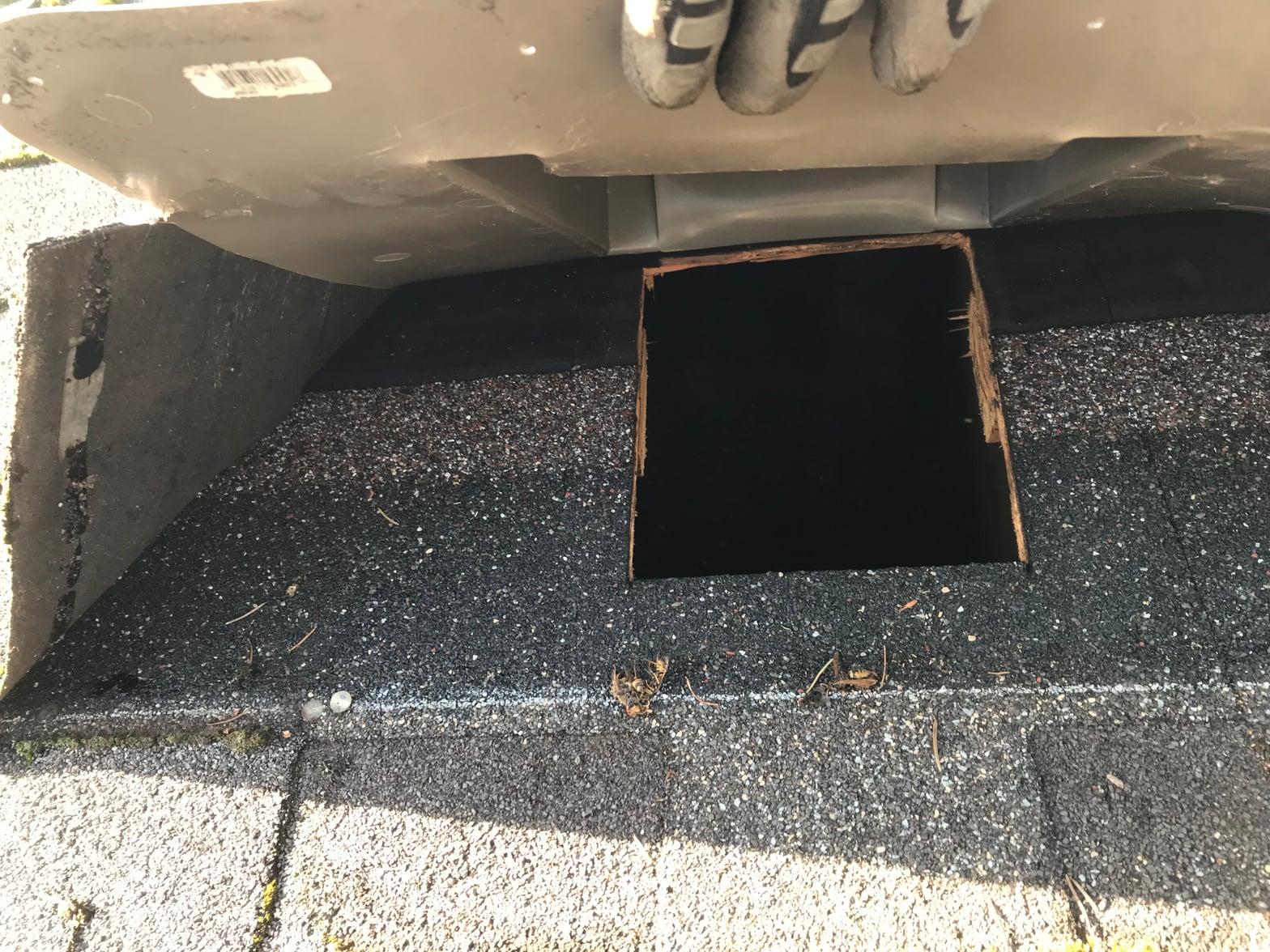
The inspection also turned up a second route. Wasps were using a gap around an exterior pipe penetration to get in. The gap was found and treated during the visit.
Dusting both ends and leaving the nest alone
Insecticidal dust went onto the interior nest access and onto the exterior entry point. The nest was left in place on purpose. Foragers needed time to come into contact with the treatment, so the nest was not to be disturbed for at least 48 hours. The resident was advised to stay out of the bedroom for four to six hours after the work.
Sealing the pipe gap comes last. It should only happen once wasp activity has completely stopped and the nest has been removed. Closing an active entry point too early can redirect surviving wasps toward the interior, so the seal waits for the wasps to be finished with the route.
The Outcome
We were hired to deal with a wasp nest inside a bedroom vent and stop the drips. The nest was treated where it sat, the exterior entry was dusted as well, and the visit is closed. The last step, sealing the pipe gap, is recommended once activity has stopped.
Treated at both entry points, sealing recommended once activity stops
- The nest in the bedroom vent was treated where it sat, and the exterior pipe gap the wasps were using received treatment too.
- The resident was given clear instructions on staying out of the bedroom while the dust settled and on leaving the nest undisturbed for 48 hours.
- Sealing the pipe gap is recommended once wasp activity has completely ceased and the nest has been removed.
If a pipe or utility penetration is feeding a nest, the entry point exclusion work is what makes the fix last. For the treatment itself, see our wasp and hornet control service.
Some photos on this page are representative photos from similar jobs our crews have done, not photos of this property.
Need Wasp & Hornet Control?
Safe removal of active nests from eaves, attics, and wall voids.
View Wasp & Hornet Control More wasp & hornet control in Vancouver

