

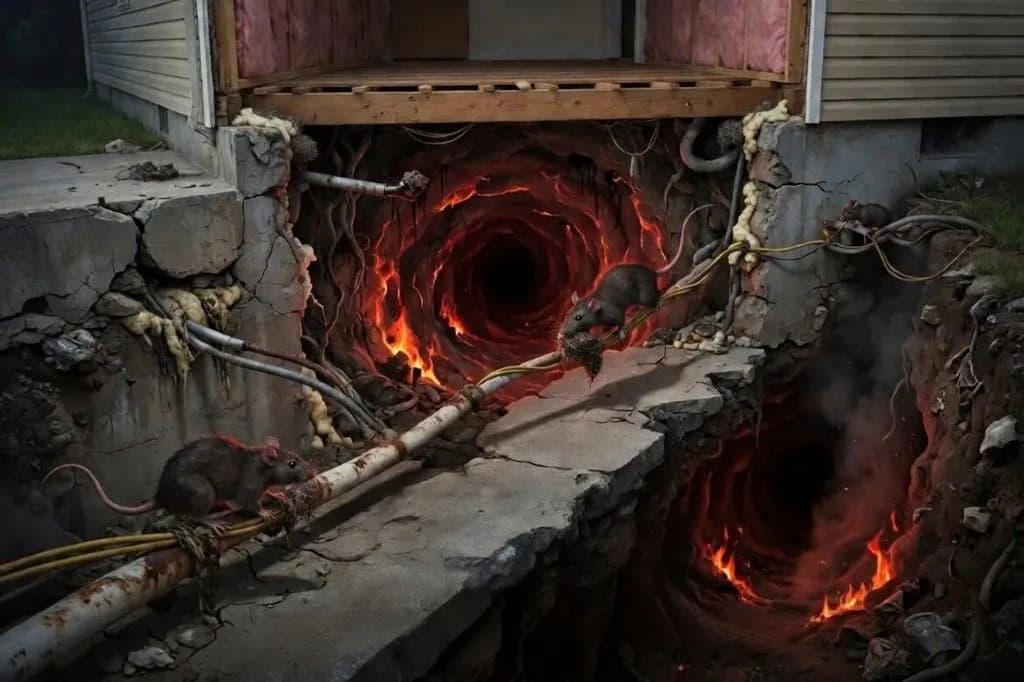
Why we coined the term "hell pit" for these buildings
After returning to the same property endless times and feeling like we were banging our head against the wall, we said "it's like they're coming from the depths of hell" — and we had our breakthrough moment. This realization made us start thinking about all possible ways rodents could enter the structure from underground, completely bypassing our surface-level exclusion work.
Since then we have completed hundreds of hell pit remediation projects, helping people with homes and commercial structures that have struggled for years with persistent rodent issues. These property owners had hired multiple pest control companies that simply applied poison or traps after promising results, then disappeared when they failed to deliver lasting solutions.
The term "hell pit" emerged because standard pest control language failed to capture this unique challenge. A hell pit isn't just a hole in the foundation — it's an entire building compromised by subterranean access routes that bypass all surface-level exclusion work. The dramatic name reflects the frustration these structures cause for both pest control professionals and property owners who watch conventional approaches fail repeatedly.
What makes a building a hell pit: defining the problem
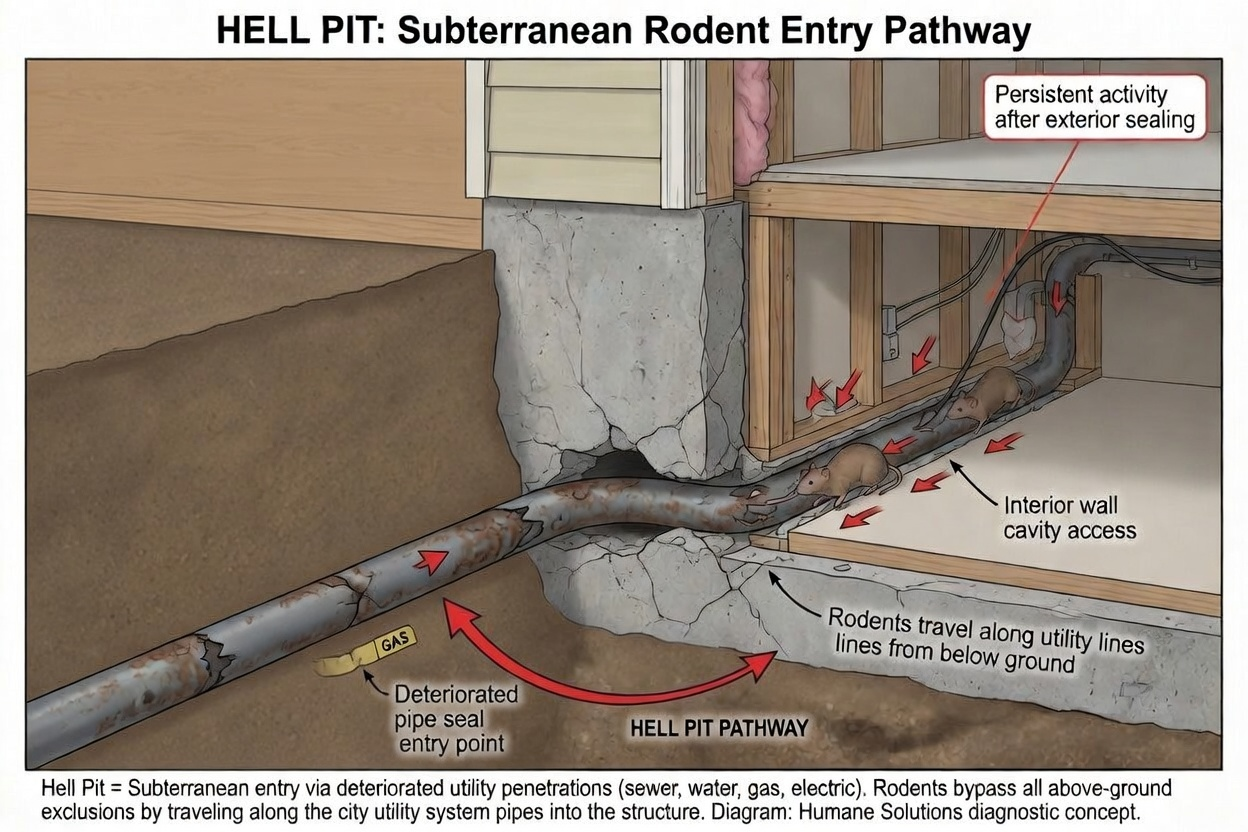
A hell pit building contains deteriorated foundation penetrations where utility lines enter the structure, creating subterranean rodent access routes. These pathways form when seals around pipes, conduits, or cables break down over time, allowing rodents to travel along underground utility corridors and enter the building's interior wall cavities without any visible exterior entry point.
The key characteristic that makes a building a hell pit is the presence of active subterranean access routes. Rodents reach these pathways from below ground level, often traveling considerable distances along utility lines before emerging inside the structure. This underground approach means there are no gaps, holes, or damage visible on the building's exterior walls or foundation — the compromise exists entirely within the foundation structure itself.
Hell pit buildings typically develop around utility penetrations that were either improperly sealed during initial construction or have deteriorated due to age, ground movement, or environmental factors. The deterioration creates pathways that connect the building's interior to underground utility corridors, essentially providing rodents with hidden highways directly into the structure. Until these foundation flaws are identified and properly sealed, the building remains a hell pit.
Why hell pit buildings defeat conventional pest control approaches
Standard pest control methods fail against hell pit buildings because they target visible access points and interior populations rather than the hidden source of entry. Conventional exclusion work focuses on sealing gaps, cracks, and holes that can be identified during exterior inspections. When rodents enter through subterranean pathways, this approach addresses symptoms while leaving the root cause untouched.
Trapping programs become exercises in futility with hell pit buildings. While traps may capture rodents already inside the structure, new individuals continuously enter through the same underground routes. Property owners often report catching dozens of Norway rats or house mice without any reduction in activity levels. The population pressure from the exterior remains constant because the entry pathways stay open.
Pesticide programs face similar limitations. Rodenticides may eliminate current populations, but replacement rodents quickly occupy the territory. The underground access routes ensure a steady supply of new individuals, making poison programs a temporary solution at best. Additionally, the continuous influx of rodents from exterior populations means resistance and secondary poisoning risks increase over time.
The diagnostic challenge compounds these failures. Property owners and pest control professionals often assume incomplete exclusion work when activity persists after treatment. This leads to repeated attempts to find and seal non-existent exterior entry points, wasting time and resources while the actual problem remains hidden below ground.
Common utility penetrations that create hell pit conditions
Sewer and drain lines represent the most frequent source of hell pit conditions. These large-diameter pipes require substantial foundation penetrations, and the seals around them deteriorate due to ground settling, seismic movement, and the corrosive environment around wastewater systems. Older buildings with clay or cast iron sewer connections are particularly susceptible, as these materials crack and separate over time.
Water main entries create hell pit conditions when the sealing around service lines fails. Ground movement, freeze-thaw cycles, and age-related deterioration compromise the integrity of these penetrations. Buildings that have undergone water service upgrades often have multiple penetrations where old and new lines enter, increasing the likelihood of seal failure.
Gas service lines present another common vulnerability. The penetrations for natural gas or propane lines must accommodate thermal expansion and ground movement, making long-term seal integrity challenging. Older installations may lack proper sealing materials or have experienced deterioration due to soil conditions or seismic activity.
Electrical conduits and telecommunication cables create smaller but equally problematic foundation compromises. Multiple utility upgrades over a building's lifetime often result in numerous foundation penetrations, each representing a potential failure point. Cable and internet installations frequently add new penetrations without properly sealing abandoned ones, creating multiple access routes.
Foundations with multiple utility penetrations face compounded risk. Each additional penetration increases the probability of seal failure, and buildings with complex utility arrangements may develop multiple subterranean access routes simultaneously. This scenario creates a network of underground pathways that can be extremely challenging to diagnose and resolve.
Diagnostic indicators that identify hell pit buildings
The primary diagnostic indicator for hell pit buildings is persistent interior rodent activity after complete above-ground exclusion work has been performed. When professional rodent control teams have systematically sealed all visible entry points and activity continues, this strongly suggests the building has subterranean access routes.
Multiple failed pest control attempts by different companies provide another key warning sign. Property owners who report hiring several pest control firms without achieving lasting results are often dealing with hell pit buildings. The pattern of temporary success followed by renewed activity indicates that surface-level treatments are addressing symptoms rather than the source.
Activity patterns within the building can also indicate hell pit conditions. Rodents entering through subterranean pathways often emerge in specific areas near utility penetrations — typically basements, crawlspaces, or utility rooms. If activity consistently originates from these areas despite exterior exclusion work, underground access becomes more likely.
Seasonal persistence offers another diagnostic clue. Hell pit buildings provide year-round access routes that remain unaffected by weather conditions or seasonal behavior changes. Buildings with consistent rodent pressure regardless of season may have subterranean entry routes, as these pathways remain accessible even when exterior conditions would normally limit rodent movement.
The absence of exterior evidence despite confirmed interior populations should trigger hell pit investigation. When thorough exterior inspections fail to identify entry points proportional to the level of interior activity, the discrepancy suggests hidden access routes that bypass all visible areas.
Systematic investigation methodology for hell pit buildings
Hell pit diagnosis requires methodical investigation of crawlspaces, utility penetrations, and foundation structures. The process begins with mapping all utility entries to the building, identifying each penetration point where pipes, conduits, or cables pass through the foundation. This mapping establishes the scope of potential problem areas and guides the inspection sequence.
Crawlspace inspection forms the core of hell pit diagnosis. Each utility penetration must be examined for signs of deterioration, gaps, or compromised sealing. This work often requires accessing confined spaces with limited visibility, making proper lighting and inspection tools essential. The investigation looks for both obvious gaps and subtle signs of seal failure that may not be immediately apparent.
If hell pit conditions are suspected but not confirmed through initial inspection, standard exclusion work is performed first. This approach eliminates all above-ground access points, creating a controlled environment where persistent activity confirms subterranean pathways. The exclusion work also prevents false positives from missed exterior entry points.
Persistent activity after complete above-ground exclusion confirms the building's hell pit status and shifts the investigation below ground level. At this point, the focus moves to utility corridors and foundation penetrations, with systematic examination of each potential problem area. This phase may require opening walls or accessing utility spaces to trace pathways and identify the specific penetration points.
Documentation throughout the diagnostic process ensures systematic coverage and prevents overlooked areas. Each penetration point, inspection finding, and remediation step must be recorded to maintain investigation continuity and support the final remediation plan.
Specialized remediation techniques for hell pit buildings
Transforming a hell pit building requires identifying all compromised penetrations and developing a comprehensive sealing plan based on the utility types and structural considerations. Unlike standard exclusion work that uses universal materials and techniques, hell pit remediation must account for the specific characteristics of each utility penetration and the surrounding foundation structure.
Sealing materials for hell pit remediation must withstand below-ground conditions including moisture, soil pressure, and potential ground movement. Standard exclusion materials like steel wool or basic sealants often fail in these environments. Specialized materials designed for foundation applications provide the durability needed for permanent closure.
The remediation process often requires working in confined crawlspace conditions with limited access and visibility. This environment demands specialized tools and techniques that differ significantly from standard pest proofing work. The physical challenges of hell pit remediation require both technical skill and the ability to work effectively in restricted spaces.
Structural considerations play a crucial role in hell pit remediation. The sealing solution must maintain the integrity of utility penetrations while preventing rodent access. This balance requires understanding both pest exclusion principles and basic structural requirements to avoid compromising building systems or utility function.
Quality assurance for hell pit remediation involves confirming that the sealing work eliminates rodent access without creating new problems. This verification process may require monitoring periods to ensure the remediation remains effective over time and that no secondary access routes develop as a result of the closure work. Only after successful remediation can the building shed its hell pit status.
Frequently Asked Questions
NewGen Pest Control Team
Pest control specialists serving Greater Vancouver since 2016.7× Consumer Choice Award winners.