

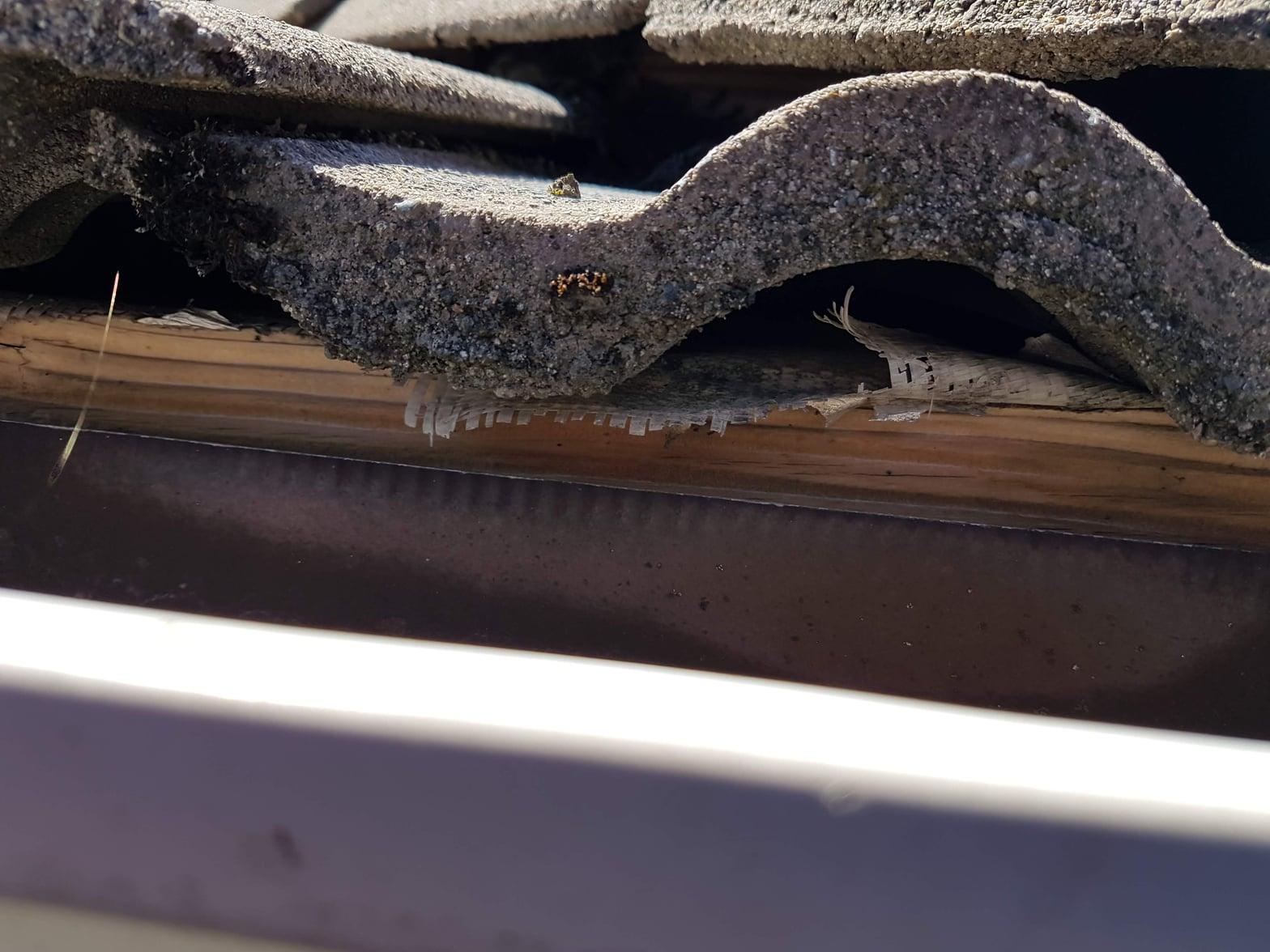
Paper wasps using a crack in a Langley wall
A multi-unit building in Langley had wasps going in and out of a crack in its rear exterior wall. The client reported wasps entering the walls, so the first question was where the nest actually sat, not just where the insects were coming from.
The opening was roughly nine and a half feet up the wall, which put it above the reach of a surface spray and well into the structure.
A nest hidden inside the wall void
The colony was built inside a concealed wall void behind that opening. Paper wasps favour sheltered, hidden spots, and a void like this keeps the nest out of sight and out of reach of anything applied to the outside of the wall. That is why the entry point mattered more than the wasps flying around it.
Nothing about this nest could be judged from the outside, so the work had to start at the opening itself.
Treating through the opening, then sealing the gap
The technician inspected the rear wall, identified the colony's entry point, and applied an insecticidal dust through the opening, directly into the nest area. Wasps were seen dropping during treatment, which showed the material was reaching them. Because the nest was out of view, the result could not be fully judged on the spot.
The plan was to watch activity at the rear wall over the following days and return for a second treatment only if significant activity remained. At the follow-up visit three days later, the technician found only two wasps outside and no activity inside. The follow-up deemed the treatment successful, so no further treatment was needed. The exterior crack was then sealed, closing the way the colony had been accessed.
The Outcome
We were hired to stop paper wasps from getting into the walls of a multi-unit building in Langley. The activity has stopped and the entry point is closed.
Wasps stopped, wall opening sealed
- The paper wasps had been using a crack in the rear wall, and that crack is now sealed.
- The follow-up visit found only two wasps outside and no activity inside the building.
- No further treatment was needed after the follow-up.
- The follow-up report noted no structural or sanitation issues requiring remediation.
- The report recommends routine walkthroughs so any new gap is caught early.
Sealing the opening is what keeps this from starting again. A wasp colony can only use a gap it can reach, so once the crack was closed, the wall void stopped being an easy place to build. For buildings with similar openings, our wasp and hornet control work includes locating the nest first, and our entry point exclusion work covers the sealing that follows.
Some photos on this page are representative photos from similar jobs our crews have done, not photos of this property.
Need Wasp & Hornet Control?
Safe removal of active nests from eaves, attics, and wall voids.
View Wasp & Hornet Control More wasp & hornet control in Langley

