

Tenants keeping their windows shut
Tenants in a Vancouver building reported heavy wasp activity on the east side, about midway along the structure and toward the rear. It was bad enough that they had stopped opening their windows, and one occupant had already been stung, so the brief called for caution from the start.
Nobody had seen a nest. The working theory was a break in the aluminum soffit near the downspout, and the visit was set up to inspect that spot and the exterior around it.
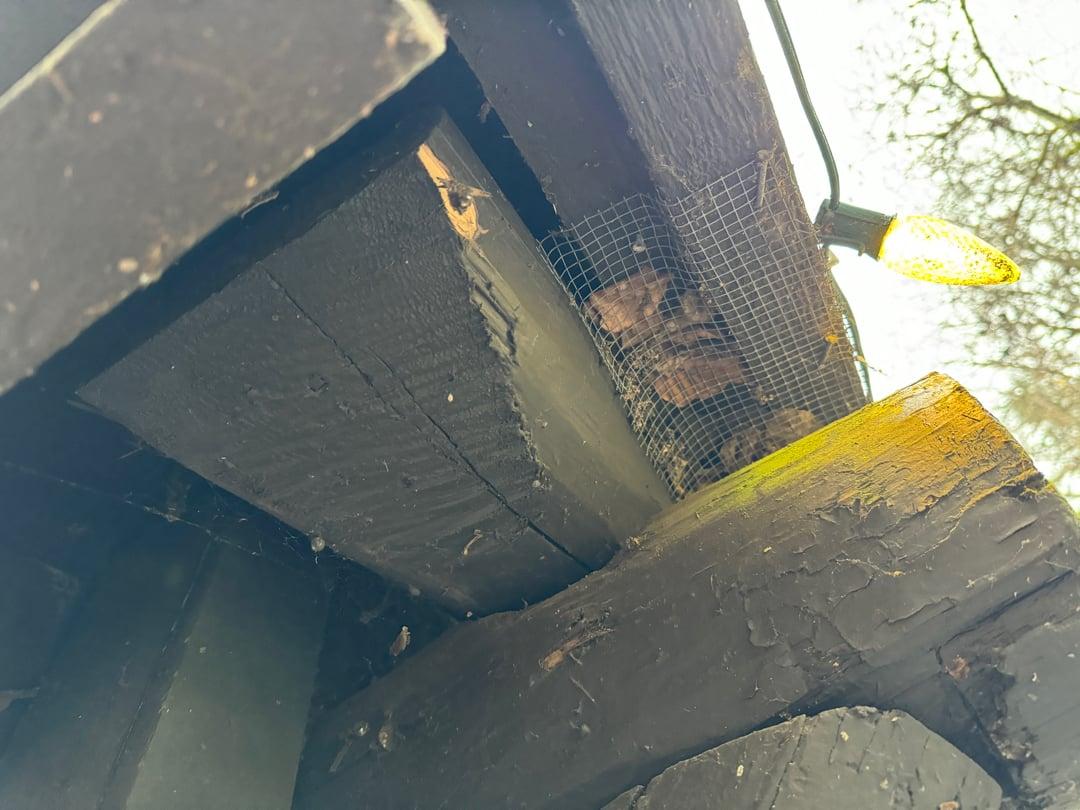
A paper wasp nest hidden in the shingles, 20 feet up
The wasp traffic led somewhere else: a gap in the wooden shingles roughly 20 feet above ground. Wasps were moving in and out steadily, which confirmed an active, concealed paper wasp nest behind the cladding, not just wasps passing along the wall.
Finding the real entrance mattered. Treating the suspected soffit gap would have missed the colony entirely, and a nest tucked behind shingles gives no outward sign beyond the traffic at its opening.
Dusting the entrance from next door
The best angle on that entrance was from the neighbouring property, so the plan was to knock on the east-side neighbour's door and let them know before going onto their side. From there, the technician used a long-reach dusting pole to apply insecticidal dust directly into the opening. Dust suits a single concealed entrance like this because wasps pick it up on their way through and carry it into the nest.
Weather was part of the planning before the visit. This treatment needs 24 hours without rain to work, and our 90-day warranty does not cover a treatment that rain has washed away, so the forecast came up when the appointment was being booked.
The treated entrance was left unsealed on purpose. Closing it while the colony is still active can interfere with the treatment and push wasps to find another way out, possibly toward the windows the tenants wanted to open again.
The Outcome
We were brought in to find and treat the source of the wasp activity that had tenants keeping their windows shut.
Hidden nest found and treated at the source
- The wasp traffic on the east side was traced to one concealed paper wasp nest behind the wooden shingles, not the soffit gap first suspected.
- Insecticidal dust was placed directly in the nest entrance, where the wasps themselves carry it inside.
- The entrance stays unsealed while the colony remains active, so the treatment can work without wasps being forced out somewhere new.
- A follow-up inspection about one week after treatment was recommended to assess how well the treatment worked, and the entrance location and height are on record for that visit.
On this job, the nest sat behind cladding high on the wall, so the activity was obvious but the nest was not. For more on where these wasps like to build, see our paper wasp profile.
Some photos on this page are representative photos from similar jobs our crews have done, not photos of this property.
Need Wasp & Hornet Control?
Safe removal of active nests from eaves, attics, and wall voids.
View Wasp & Hornet Control More wasp & hornet control in Vancouver

