

Activity that kept clustering in two corners
At a commercial waste and organics yard in Metro Vancouver, the year's monitoring data kept pointing at the same two places. Once every check was logged with a GPS point, nearly 9 in 10 activity points fell in two clusters at opposite corners of the yard, both along the fence line. Roughly half sat in one corner and two fifths in the other.
A pattern like that is a clue, not just a hotspot. Rats that live on a site spread their activity around food, cover and burrows across the whole yard. Activity that piles up at the edges, at opposite corners, usually means animals are arriving from outside and the fence corners are where they cross.
Burrows and travel routes on the far side of the fence
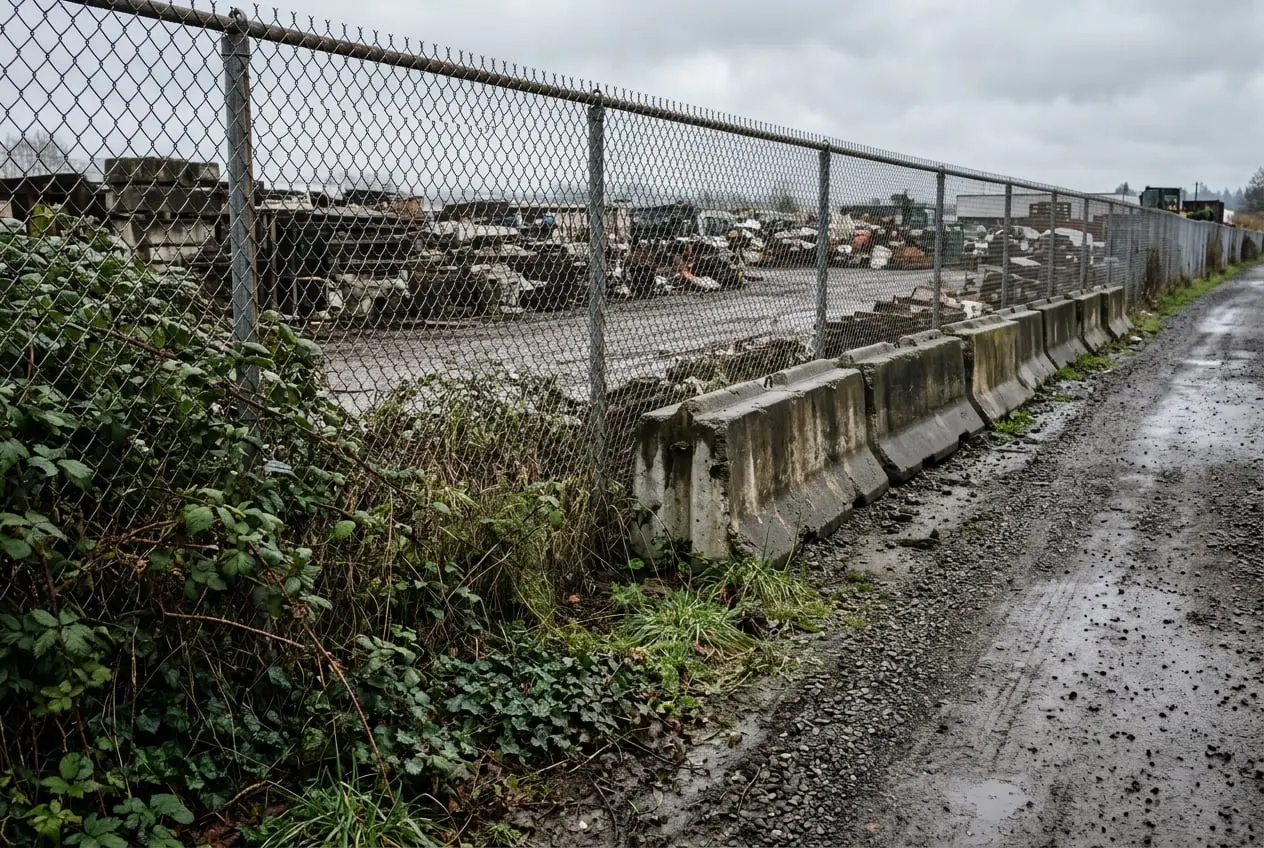
Inspections outside the fence confirmed it. Active burrows and well-used travel routes ran through the brush behind the rear fence and across the road, on neighbouring works yards and land the site doesn't control.
That matters because no amount of work inside the fence reaches a burrow on someone else's property. The yard provides the food. The neighbouring brush provides the cover and the nesting ground. In October the monitoring moved to the fence line, where night activity was heaviest, so the program could see the crossings directly.
A two-night knockdown and a steady return
In November the program ran an intensive phase at night. Activity on the yard fell by more than 90% within two nights. A bloom can be brought down fast when the work is aimed at the right places.
Then the numbers did something more telling: they stopped falling. Every night after, activity held at a steady level, about a third of the first night. Technicians on site watched why, as rats travelled to and from the yard from the neighbouring properties, over the fence and across the road. The established group on the yard had been knocked back, and what remained was a constant inflow from next door.
The Outcome
We were hired to control rodent activity at the yard and find out what was driving it. The program brought activity on site down hard and proved where the ongoing pressure comes from.
Where the program goes from here
- Activity on the yard dropped by more than 90% within two nights of the intensive phase.
- The steady return that followed is mapped to two fence-line corners and the land beyond them.
- Weekly targeted night work at the fence line now stops each new wave before it settles in and breeds.
- On-site treatment every three to four weeks and twice-weekly monitoring keep the yard itself at its low base.
- The next step is sharing the results with the neighbouring yards, so they can see what is crossing the fence and why it matters to them too.
The long-term answer is area-wide. When neighbouring properties run the same program, the source population shrinks instead of refilling the yard every night, and every property needs less work over time. Most industrial and waste sites with shared fences face the same problem, and the same data would show it.
Read the full case study on our rodent control for waste and recycling sites page.
The images on this page are AI-generated illustrations, not photos from this job.
Need Commercial Programs?
Tailored IPM programs for restaurants, food facilities, offices, and multi-unit residential buildings.
View Commercial Programs