

In this article
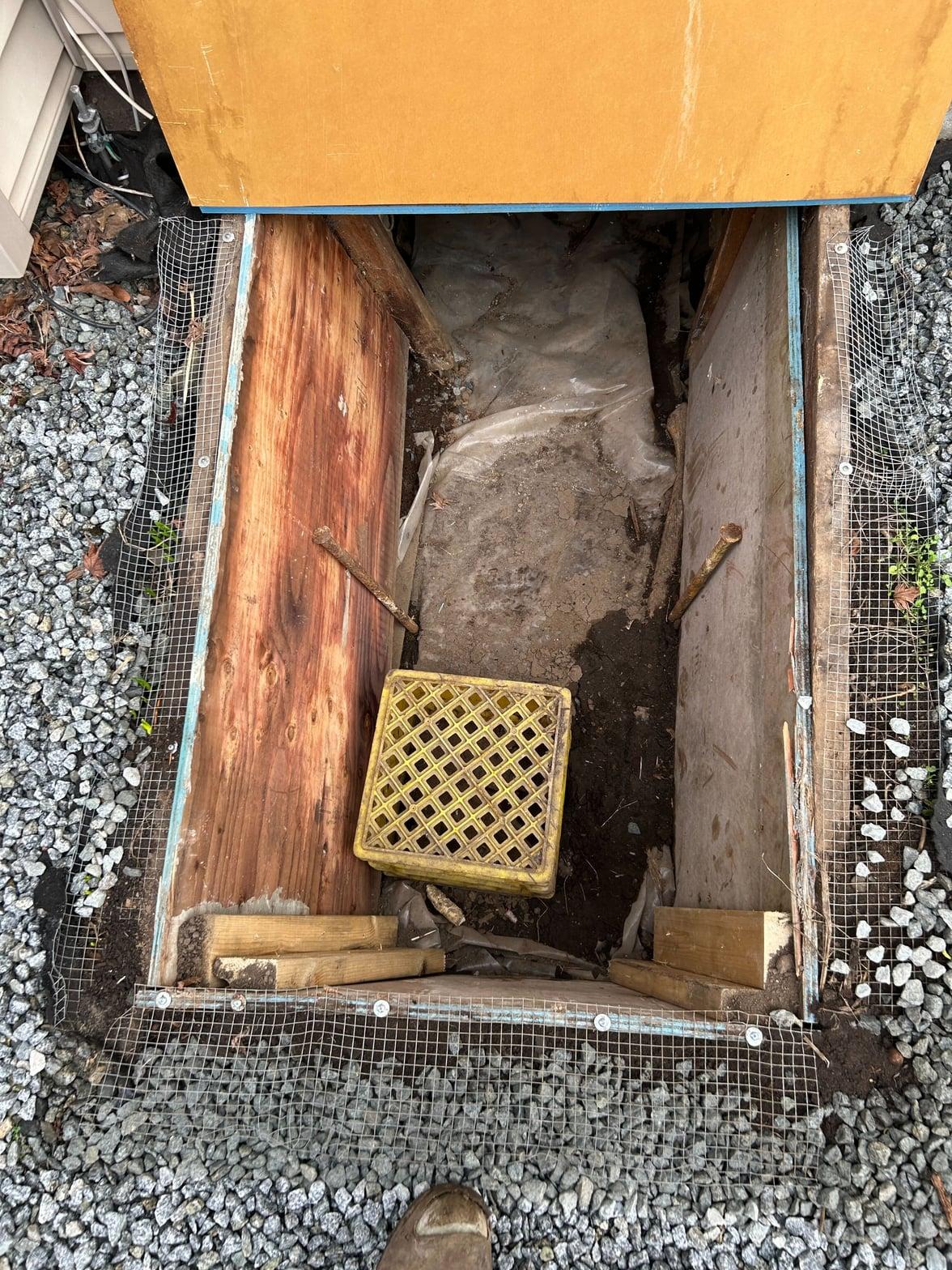
No, not on its own. A polyethylene vapour barrier covers the crawl space floor to hold back ground moisture. It doesn't close the vents, the gaps around utility lines or the openings at the foundation, and those are where mice and rats get in. Keeping rodents out takes exclusion at every entry point, tight mesh on the vents and clearing out the debris they nest in.
Does a poly barrier keep mice out?
No. A poly barrier is a moisture layer. It keeps damp ground from rising into the floor above, and that is all it was designed to do. Mice don't need to come up through the dirt when a vent with missing mesh, a gap at the garage header or a hole around a utility line gives them a direct route in. A barrier also does nothing to stop them once they are inside. Mice and rats will run along it, nest along torn or lifted edges and tunnel underneath it.
What keeps mice and rats out of a crawl space?
Exclusion does. That means finding each opening, closing it with materials rodents can't chew through and checking that it holds. A 1997 training manual on rodent exclusion calls rodent control in buildings an attainable goal, even though many people believe infestations are 'inevitable' ( Rodent Exclusion Techniques, 1997). A 1994 paper by Baker, Bodman and Timm says the most effective way to limit rodent damage is rodent-proof construction. It also notes that poor maintenance can leave even a well-built structure open to rodent entry ( Baker, Bodman and Timm, 1994).
In a crawl space, the work usually includes:
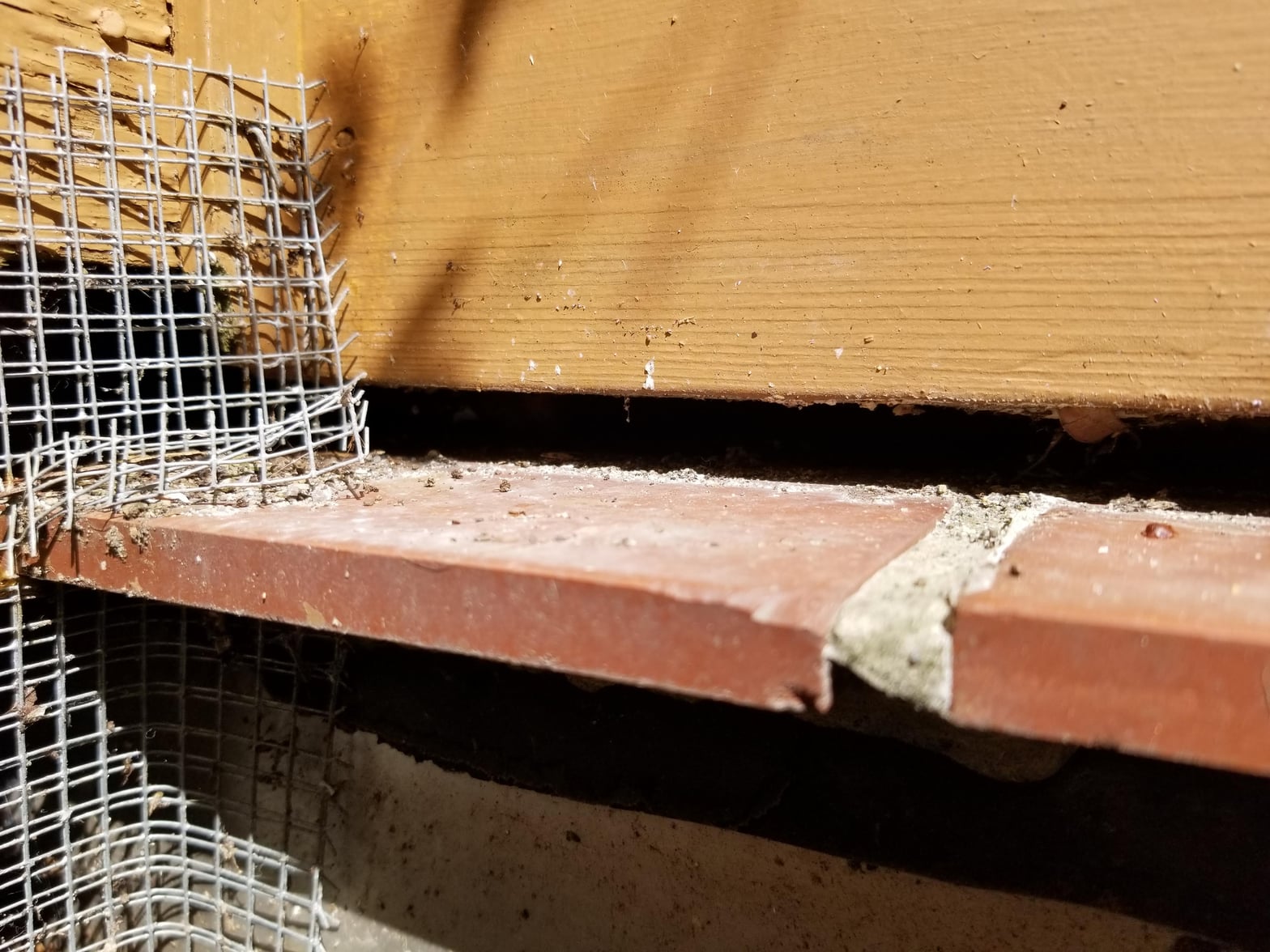
- Mesh on every vent, fitted tight to the frame with no bent or torn corners
- Gaps closed around garage headers, utility lines and pipe or cable penetrations, using non-flammable materials where a line runs near heat
- A check of the rim joist and foundation for cracks, gaps and worn or chewed material
- Torn barrier edges and lifted seams repaired, so rodents can't nest underneath and droppings don't collect out of sight
One missed opening is enough to keep the problem going. On one of our jobs, a technician missed an entry point in the crawl space, and the homeowner found it herself.
Why can a barrier hide mouse activity?
Because it covers the ground, droppings, runways and nesting material can end up underneath it, out of sight. A crawl space that looks tidy from the hatch can still be active. Mouse problems can also run for a long time: on one detached-home job, sightings and droppings were found in the crawlspace and garage, and the problem had been going on for years.
Before a barrier goes down, look for:
- Droppings along the foundation, under the garage door and at the base of stored boxes
- Gnaw marks on wood, wire insulation, pipe wrap and ducting
- Shredded insulation or nesting material in corners
- Greasy rub marks along walls and beams where animals travel
- Scratching from the joists or the vent area at night
Those signs matter when you're unsure. On one call, the homeowner wasn't sure there was an active mouse problem at all before committing to full proofing.
Is cleanup covered by a rodent inspection?
No. Our paid inspection covers exclusion and entry points, and crawl space cleanup is a separate service. On one inspection, the scope covered the crawl space between the first floor and the garage ceiling, the exterior and accessible units.
If you're planning a new barrier along with debris cleanup, get both scoped in writing. Ask who clears the debris, who checks the entry points, and whether the openings will be confirmed closed before the new barrier goes down. Laying fresh poly over an open crawl space only gives returning mice a cleaner place to hide.
Which parts of the job actually stop mice?
Each part does a different job, and none of them does all of it.
| Part of the job | What it does | What it misses |
|---|---|---|
| Poly vapour barrier | Keeps ground moisture off the floor above | Doesn't close vents, gaps or utility openings, and can hide droppings |
| Mesh on crawl space vents | Keeps mice and rats out of vent openings | Only works if it fits tight; torn or bent mesh is an opening |
| Closed gaps and penetrations | Covers garage headers, utility lines and foundation gaps | Only works if every gap is found, not just the obvious ones |
| Debris cleanup | Removes nesting material and food sources | Does nothing to stop new entry |
| Follow-up checks | Confirms the work is still holding | Doesn't prevent entry by itself |
What should you do if mice keep getting in after earlier exclusion?
Find the gap the earlier work missed before adding anything on top. Check for a vent with no mesh, a gap packed with spray foam and steel wool (mice chew through foam, and steel wool rusts and pulls loose), or a penetration nobody looked at. Where earlier exclusion has failed, the fix is to redo the ineffective exclusion, not to pile another layer over it.
On one job, mice were entering through holes behind baseboard heaters. The technician removed the heaters to close the penetrations with non-flammable materials. Heaters, pipes and utility holes are a good place to start when mice keep turning up indoors.
On another job, mice returned after the initial treatment, and black rats were also seen in the yard. Rats need their own check of the perimeter, the foundation and the yard, because the crawl space is only one of the places they travel. Our rat control for homes page covers that work.
When should you check a crawl space in the Lower Mainland?
Late summer, before cooler weather pushes mice toward warm buildings. In our call records for our service area, mice calls peak in August, September and October. Check vent mesh, garage header gaps and utility penetrations before then. Our pest library has species pages for rodents.
Sources
- Baker, Bodman and Timm, Rodent-Proof Construction and Exclusion Methods (1994): https://digitalcommons.unl.edu/icwdmhandbook/27/
- Rodent Exclusion Techniques (1997), digitalcommons.unl.edu: https://digitalcommons.unl.edu/icwdmother/52/
Frequently Asked Questions
NewGen Pest Control Team
Pest control specialists serving Greater Vancouver since 2016.7× Consumer Choice Award winners.