

In this article
No, not on an open site. Rats move on and off a waste or recycling yard every night, so the group never holds still long enough to count. Anyone who gives you a headcount is guessing. What a site manager can track instead is a weekly activity index from mapped monitoring points. It shows when a surge starts, how hard it hits and how fast it responds to the work.
Why can't anyone count the rats on a waste site?
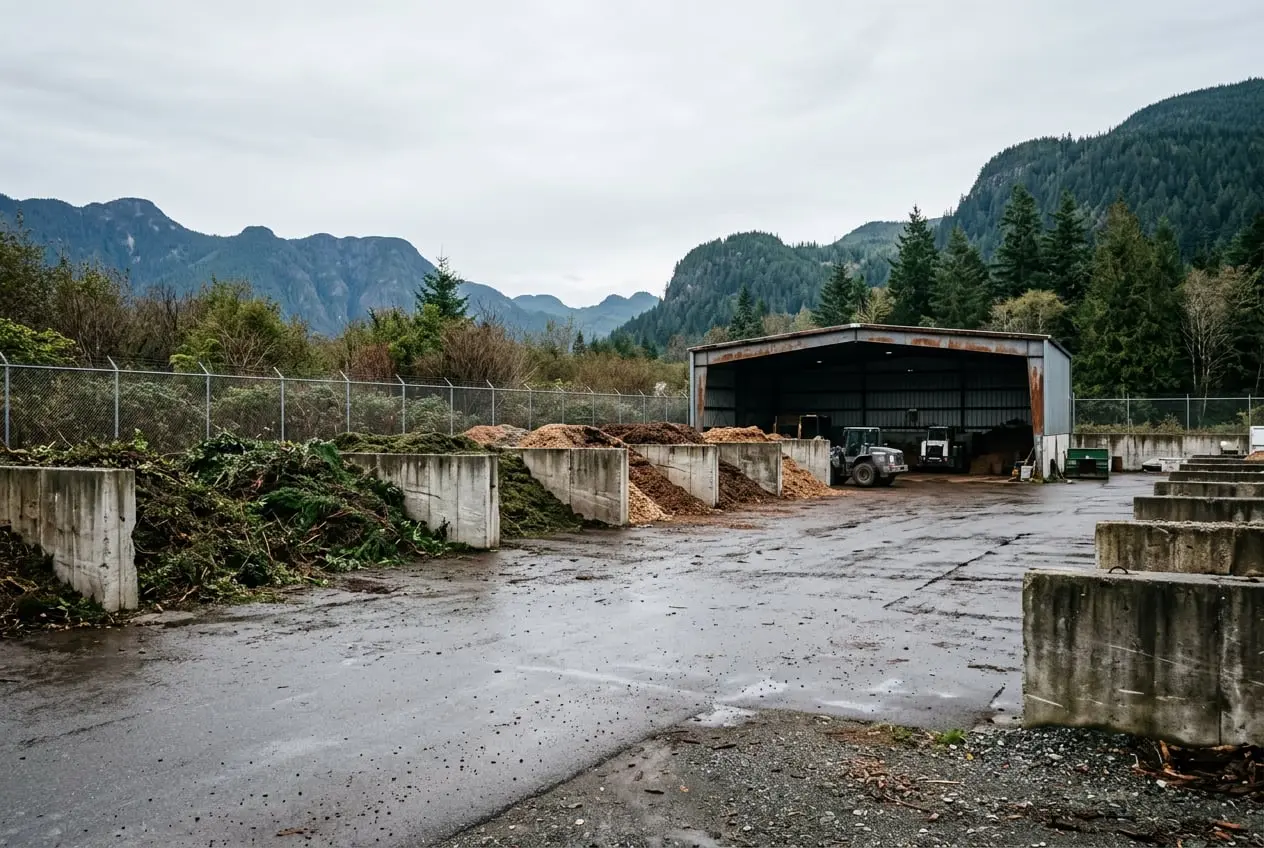
A headcount only means something when the animals stay put while you count them. In our waste site case study, a year of rodent control at a commercial waste and organics yard in Metro Vancouver, the client asked how many rats lived on the property. Nobody can answer that honestly for a yard like this. Rats move freely between the yard and the neighbouring works yards every night, over the fence and across the road, so the group on site is never the same group twice.
How do open and closed populations differ?
A closed population stays in one place while it is studied. Biologists can mark a sample of animals, let them mix back in and estimate the total from how many marked animals turn up in a later sample. An open population gains and loses animals all the time through movement, so a number taken on Tuesday describes Tuesday, not the site.
Researchers measuring rat activity around human refuse made the same call. Because they did not mark or capture any animals, they focused on activity rather than abundance to avoid resampling bias.
What should a site manager track instead?
Track activity, recorded the same way every week. On this yard, every monitoring check from spring on was logged with a GPS point in FieldHive, the system NewGen built and runs on every job. The weekly activity index is the total activity recorded at those points each week. It rises and falls with real pressure on the site, and because every point is mapped, it shows where that pressure sits as well as how much of it there is.
What does the activity index actually tell you?
It tells you when to act. On this yard, most weeks sat at a low base, then activity climbed for two to five weeks before falling back. Read the index for five things:
| Signal | What it tells you | What to do with it |
|---|---|---|
| Weekly count holds at a low base | Pressure is steady and manageable | Keep the scheduled work going |
| Count climbs for two to five weeks | A surge is building | Step up night work at the hot points |
| Height of the peak | How hard the surge hits | Compare it with the usual weekly level |
| Days to fall after work | How fast the response works | Adjust timing and frequency |
| Clusters on the map | Where pressure is coming in | Focus monitoring and night work there |
Timing mattered on this yard. The quietest month of the year came right after two rounds of on-site work a month apart. The longest gap between rounds, about six weeks in late summer, was followed by the build-up into the October peak. That bloom, the biggest of the year, peaked in late October at several times the usual weekly level, and the fall rise happened two years running, in fall 2025 and fall 2026. Left alone for a few weeks, a low base turns into a full bloom.
The map showed where it came from. Nearly nine in ten recorded activity points fell in two clusters at opposite corners of the yard, along the fence line: about 48% in one corner and 40% in the other. Both clusters grew in the fall. Inspections found active burrows and travel routes in the vegetation outside the fence, behind the rear fence and across the road. In October we moved the monitoring points to the fence line, where night activity was heaviest.
How fast can a surge be knocked down?
Fast. During the intensive phase in November, night-time activity on the yard fell by more than 90% within two nights. It then held at a steady level every night after that. Technicians on site at night saw why: a constant flow of rats moving to and from the yard from the neighbouring properties, over the fence and across the road. Most of the pressure starts next door, on land we can't treat.
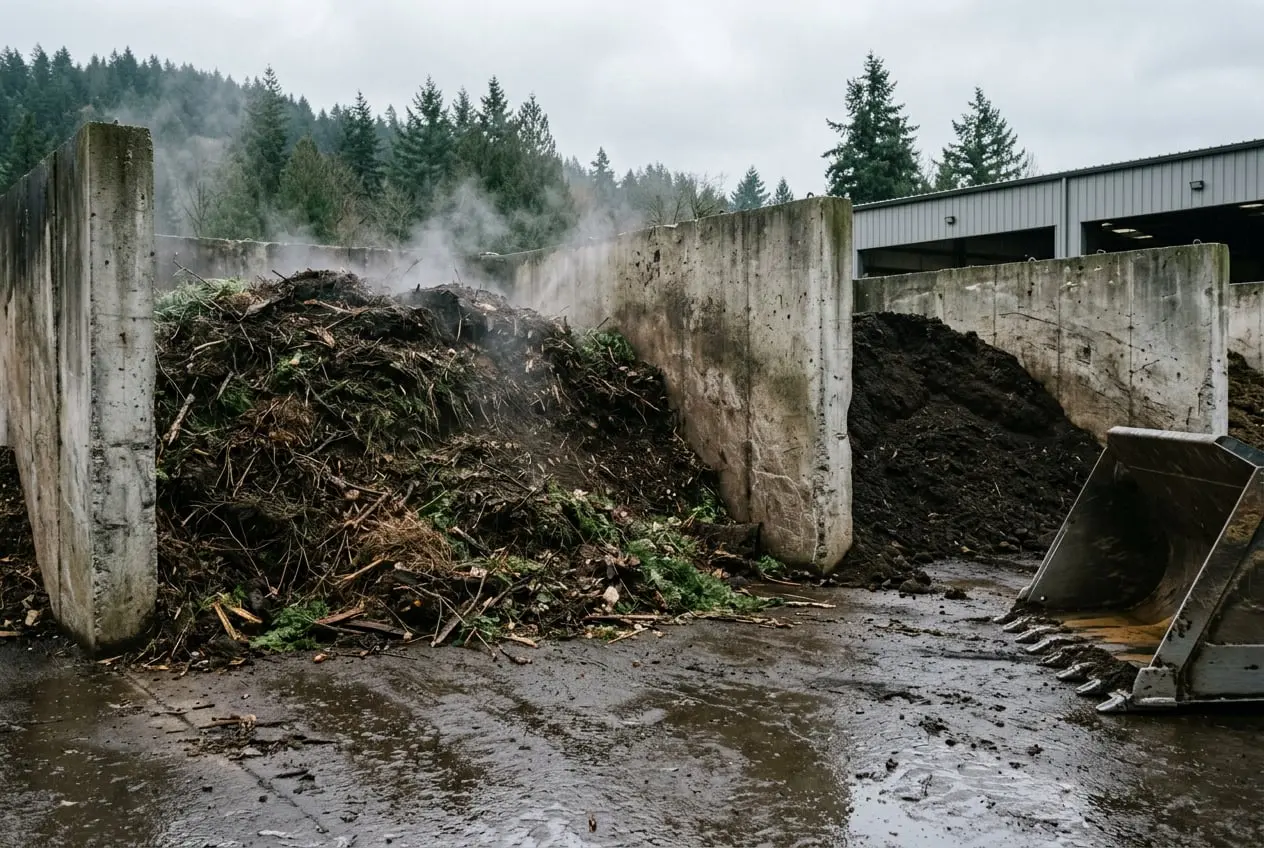
Food is the draw on sites like this. Research has found that urban rats congregate around garbage receptacles and that rat activity dropped after human refuse was removed.
Why doesn't poison alone fix a waste site?
Poison only works when rats choose it over everything else on offer, and a waste or organics yard is food from fence to fence. Even when it knocks activity back, it does nothing about the rats crossing in from next door the following night. That is why our commercial rat control uses several methods matched to where the activity shows up, rather than one product across the whole yard.
What is the program going forward?
The plan has five parts:
- Regular work on the property every three to four weeks, with an extra round each September ahead of the fall bloom.
- Weekly targeted night work at the fence line, to stop each new wave from the neighbouring yards before it settles in and breeds.
- Monitoring twice a week as the early warning. A rising weekly count is the signal to step up before a bloom takes hold.
- Sharing the results with the neighbouring yards.
- Best of all, one program across the neighbouring properties, so the source population shrinks instead of refilling the site every night, and every property needs less work over time.
Most sites with the same traits would benefit from the same approach: food everywhere, open ground, fences rodents cross at will and neighbours with the same problem. That covers waste transfer stations, organics and compost yards, recycling depots, landfills, works yards and food or feed handlers.
What can you say with confidence?
You can say whether activity is rising, how high a surge peaks, how long it takes to fall back after the work and which stretch of fence it concentrates on. You can't say how many rats are on the site. The biggest long-term gains come from working with the neighbours, because most of the pressure starts on land no single program can treat.
If your site has food, open ground and neighbours with the same problem, read our waste site case study and ask us to set up a weekly activity index for your property.
Sources
- PLoS One, Waste reduction decreases rat activity from peri-urban environment (2024): journals.plos.org/plosone/article?id=10.1371/journal.pone.0308917
Frequently Asked Questions
NewGen Pest Control Team
Pest control specialists serving Greater Vancouver since 2016.7× Consumer Choice Award winners.