Raccoon signs in the attic of a newly bought Coquitlam house
The owners had recently bought this house in Coquitlam and rented it out. Up in the attic were droppings left behind by animals: old and hardened, with nothing to show anything was still living there. The history pointed to a mix of rodents and raccoons, but the owners didn't know when the animals had moved in, how they were getting up there, or whether they were still around.
With tenants living in the house, they wanted the roof dealt with properly. The goal was to close every way a raccoon could get back in.
The program was scoped as exterior exclusion: find and close the openings on the outside of the building. That framing matters. Old droppings in an attic tell you something used the space at some point. The openings on the roofline tell you how it got in, and that's what decides whether it can come back.
Six open soffit angles, one with clear use
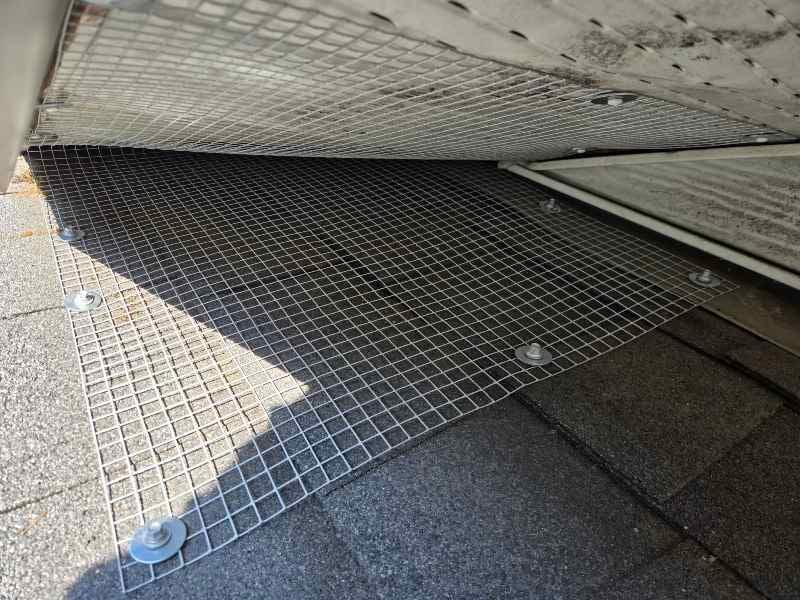
The weak points were the soffit angles, the corners where the soffit returns meet the roof. On many houses these joints are never fully closed when they're built, or the soffit works loose over the years. The gap that's left sits up high and out of sight, and it leads straight into the attic. To a raccoon, it's an easy way in.
The quote covered four soffit angles. Once the crew was on the roof, they found six. One of them stood out: the angle on the rear-facing roof near the centre of the house had a gap that had already been used as an entry point. A rope hung from that spot down into the backyard.
The tenant told the crew they hadn't heard any raccoon activity in the attic for the past couple of months. That fit with the old droppings. But quiet doesn't prove the attic is empty, so the job was planned on the assumption that an animal could still be inside.
Mesh on five angles, a one-way door on the sixth
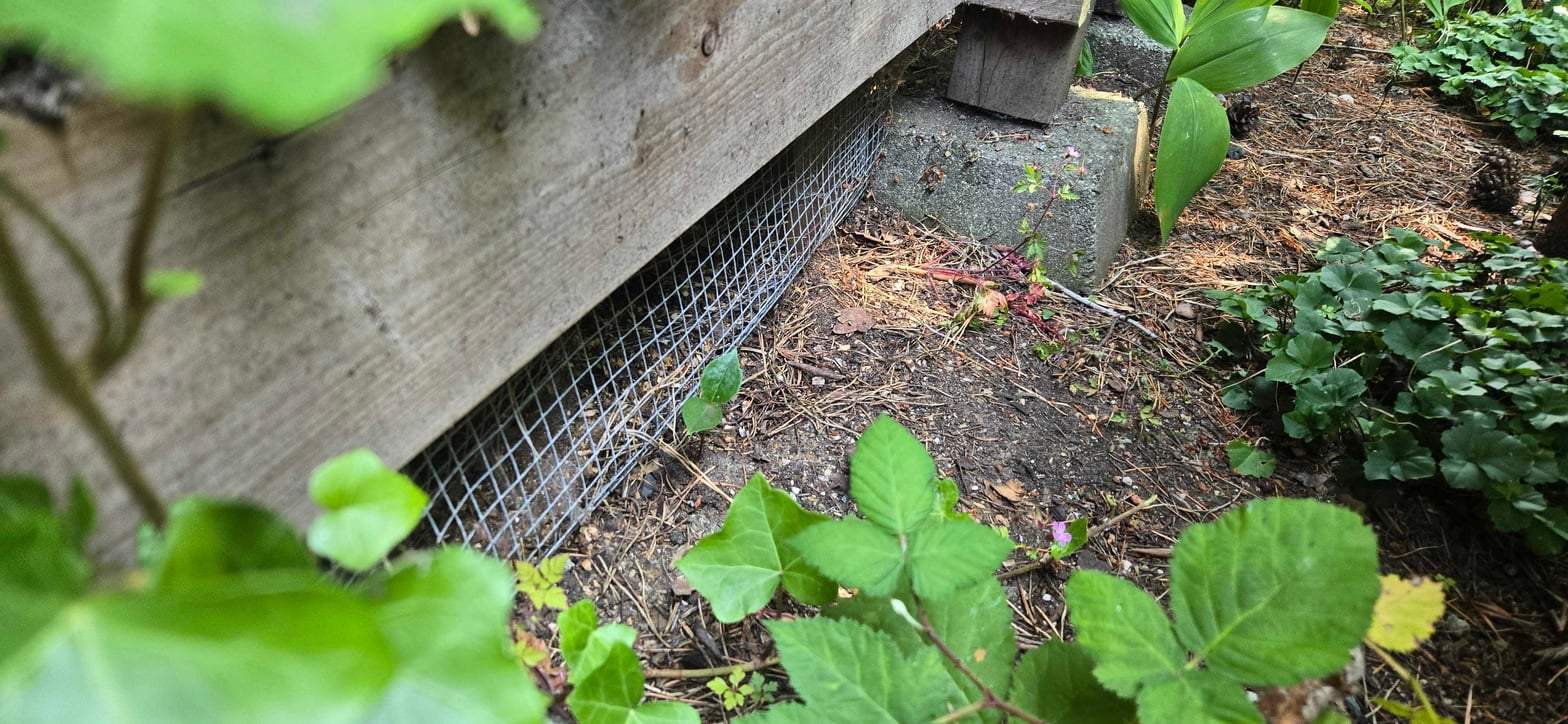
The five angles with no sign of current use were sealed with 1/2" mesh.
The sixth angle, the one that had been used, got a one-way door instead of mesh. The order of the work is the key part. If you seal an entry point while an animal is still inside, it will tear its way back out through the roof or soffit, and you end up with a new hole. A one-way door lets anything still inside leave, and it can't get back in. Once enough time has passed for that to happen, the door comes off and the last angle is sealed like the others.
The crew photographed every sealed angle and the door so the owners had a record of what was done to the outside of their building.
The Outcome
We were hired to close the roofline to raccoons and make sure nothing ended up trapped in the attic. All six soffit angles were dealt with, and the house is sealed.
Roofline closed to raccoons
- Every soffit angle that gave a raccoon a way into the attic is now closed, including the two the original scope didn't cover.
- The angle that raccoons had actually been using was closed off only after any animal still inside had a way out, so nothing was left behind in the roof.
- The five angles without current use are sealed with 1/2" mesh.
- The treated areas carry a two-year warranty against raccoons getting back in through them.
The job's main lesson is useful for any homeowner: the droppings in the attic were not the real problem. The open corners on the roofline were. Once the outside of the house is closed, old signs inside are just history, not an ongoing problem.
For more on how we handle these jobs, see our raccoon control service and our entry-point exclusion work. The raccoon pest library page explains why rooflines and soffits are where raccoons usually get in.
Need Raccoon Control?
Humane one-way door eviction with full structural exclusion. Raccoons out, permanently.
View Raccoon Control More raccoon control in Coquitlam